12 Water Table Activities for Toddlers (By Prep Level)
Quick Answer: The best water table activities for toddlers include pouring and scooping games, bubble play, foam sensory exploration, ice melting experiments, and color mixing — all using simple household items. Most activities work for toddlers aged 18 months to 3 years and take less than 10 minutes to set up.
There is exactly one toddler activity that consistently delivers 30+ minutes of uninterrupted play while you actually sit nearby and drink a warm beverage. It involves water, a container, and a toddler who hasn’t discovered the word “bored” yet. Water table play is the closest thing to a magic trick you’ll find in parenting — and the setup is far simpler than anyone on Pinterest wants you to believe.
These 12 activities are organized by prep level, from zero-effort to worth-every-minute, so you can pick what fits your day. Some need only water. A few need two extra supplies. None of them require a trip to the craft store the night before.
Scroll through, pick your energy level, and go get that cup of coffee while it’s still hot. If you’re building a simple daily rhythm for your little one, these activities fit perfectly into a predictable toddler routine.
Heads up: This post may include affiliate links. As an Amazon Associate, I earn from qualifying purchases—at no extra cost to you. Full privacy policy and disclosure here.
Our Favorite Water Table Supplies
You don’t need an expensive setup to create memorable water play. A quality water table paired with a few simple accessories can keep toddlers happily exploring for weeks.
- Step2 Rain Showers Splash Pond Water Table — Our top recommendation for toddlers because it includes spinning wheels, waterfalls, and multiple play stations that encourage independent sensory exploration.
- Water Wheel Toy Set — A fun add-on that lets kids experiment with gravity, pouring, and cause-and-effect while creating miniature waterfalls.
- Bath Dropz Color Tablets — An easy, less messy way to create colorful water for science experiments and color-mixing activities.
- Mini Silicone Cups & Scoops — Perfectly sized for little hands learning to scoop, pour, measure, and transfer water between containers.
- Toy Boats & Sea Creatures Set — Adds imaginative storytelling to your water table while encouraging pretend play and early vocabulary development.
You can absolutely use measuring cups and recycled containers from your kitchen, but these simple additions make it easy to refresh water table play without having to invent brand-new activities every week.
1. The Classic Pour and Dump

Why You’ll Love It
This is the foundational water table activity — the one toddlers return to again and again even after you’ve tried every other idea on this list. Pouring, dumping, and refilling builds fine motor skills and hand-eye coordination without a single teachable moment required. Let them do it. Let them be proud.
Best For
Ages 18 months and up. Perfect for toddlers who are brand new to water tables and for days when you have approximately zero patience for setup. Grab whatever containers you have — measuring cups, small pitchers, a colander, a ladle — and you’re done.
2. Bubble Foam Sensory Play

Why It Stands Out
A small squeeze of dish soap and a whisk (or hand mixer for serious foam volume) transforms a regular water table into a full sensory experience. The texture is completely different from plain water, which means toddlers who’ve grown used to pour-and-dump suddenly have an entirely new problem to solve: what is this, and what happens when I squish it?
Styling Tips
Use a hand mixer on low for dense, long-lasting foam that holds its shape for 20+ minutes. Add a drop of food coloring to the water before frothing for pastel pink or blue bubbles that photograph beautifully. If your child enjoys tactile play like this, they’ll also love these summer sensory activities for toddlers that use simple household materials.
3. Ice Melt Discovery Experiment

Why You’ll Love It
Freeze water with food coloring the night before, and the activity sets itself up. Toddlers will spend the next 30 minutes watching the ice melt, moving it around, and witnessing colors bleed and blend in the water. Ice play is packed with sensory benefits. You can explore even more frozen fun with these ice play activities for toddlers or try this colorful ice painting activity.
Mom Tip
Freeze the cubes in a muffin tin for a perfect grab-sized shape. Make at least 8–10 cubes — toddlers go through them fast. Use complementary colors (blue and yellow, red and blue) so the color mixing in the water creates a satisfying secondary color reveal.
Which Style Is Right for Your Toddler?
Not every water activity works equally well for every age or temperament. Use this quick guide to match the activity to your toddler before you set up.
| Activity | Best Age | Prep Time | Cleanup Level | Toddler Temperament |
|---|---|---|---|---|
| Classic Pour and Dump | 18 mo+ | 0 min | Low | Any — great starter |
| Bubble Foam Play | 18 mo+ | 5 min | Low | Sensory-seeking, tactile |
| Ice Melt Experiment | 2 yr+ | 5 min + overnight freeze | Low | Curious, observational |
| Color Mixing Lab | 2 yr+ | 5 min | Medium | Active, experimental |
| Car Wash Station | 2 yr+ | 10 min | Medium | High energy, imaginative |
| Waterfall Funnel Setup | 2.5 yr+ | 10 min | Low | Problem-solving, focused |
| Mini Fishing Pond | 2 yr+ | 10 min | Low | Patient, goal-oriented |
| Kitchen Sensory Bin | 18 mo+ | 10 min | Medium | Role-play, domestic play |
| Sponge Squeeze Relay | 2 yr+ | 5 min | Medium | Physical, high-energy |
| Dinosaur Dig and Wash | 2.5 yr+ | 15 min | Low | Imaginative, story-driven |
| Nature Soup Cauldron | 2 yr+ | 20 min | Medium | Creative, outdoor-loving |
| Watercolor Painting Station | 2.5 yr+ | 15 min | Medium | Artistic, detail-oriented |
4. Color Mixing Lab

Why It Stands Out
Color mixing is one of those rare toddler activities where the outcome is genuinely unpredictable, which means toddlers stay curious for a long time. Fill three small containers with red, yellow, and blue water using either food coloring or Bath Dropz Color Tablets for an easy, low-mess option. Give your toddler a turkey baster, small pitcher, or Mini Silicone Cups & Scoops to pour, experiment, and discover how new colors are created. The mess level is surprisingly manageable because the colors quickly dilute in a full water table.
Styling Tips
Use gel food coloring for vivid saturation. Set out a white paper towel beside the water table so toddlers can “print” their color mixes by pressing the towel to the water surface — it’s a keepsake and doubles the activity time.
5. Toy Car Wash Station

Best For
Toddlers who love imaginative play and especially those who love cars, trucks, and anything with wheels. Ages 2 and up. This one genuinely delights kids who are typically hard to engage, because the play structure mirrors something they’ve watched adults do in the real world.
Mom Tip
Set out the dirtiest, muddiest toy cars you can find — the more cleaning needed, the longer this lasts. Baby toothbrushes are perfect scrubbing tools for small wheels and crevices. Position the clean rack where finished cars can “dry” and toddlers can admire their work.
Looking for another water activity once your toddler is finished washing cars? These bath activities for toddlers keep the fun going indoors.
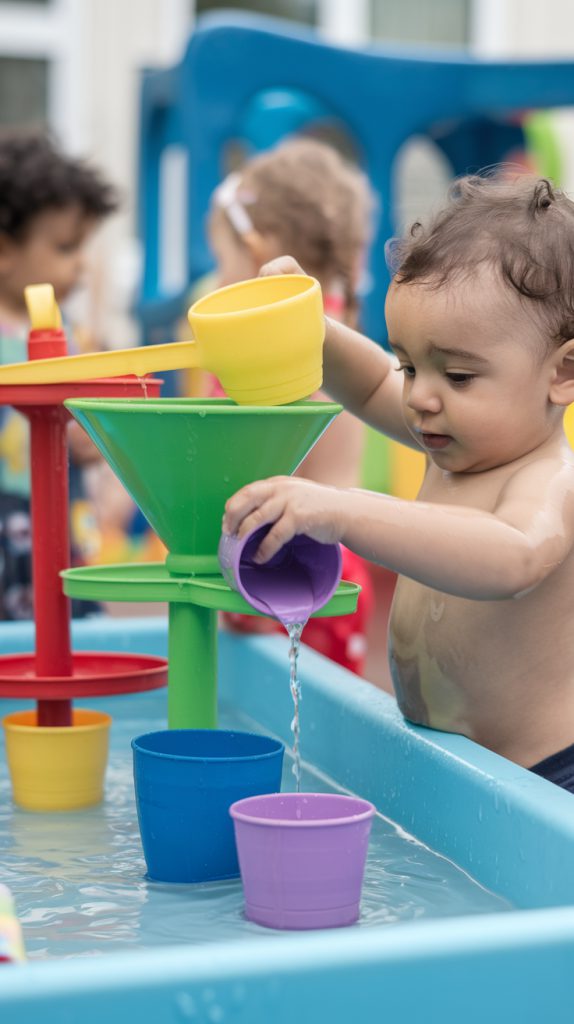
6. Waterfall Funnel Setup
Why You’ll Love It
The materials are almost entirely reusable kitchen items: funnels, colanders, ladles, measuring cups with pour spouts, and empty plastic bottles with holes punched in them. Arrange them at varying heights using stable objects (overturned containers work well) and let your toddler figure out the water routing. This one produces focused, quiet, deeply independent play.
Styling Tips
Punch holes in the bottom of empty yogurt containers using a nail to create “shower heads.” Add a few drops of blue food coloring to the water so the flow is visible and traceable. Introduce new funnel configurations every 10 minutes to reset the challenge.
Seasonal Water Play Guide
Water tables aren’t just for peak summer. Here’s how to adapt them across seasons — and how to bring the fun indoors when the weather doesn’t cooperate.
| Season | Best Location | Setup Tip | Special Add-In |
|---|---|---|---|
| Summer | Outdoors — grass, patio | Add ice cubes to keep water cool | Bubbles, foam, ice melt experiments |
| Spring / Fall | Outdoors with layers or covered porch | Use warm water (lukewarm, not hot) to extend play time | Nature soup, leaves, flower petals |
| Winter (indoors) | Bathroom floor or kitchen with waterproof mat | Use a shallow storage bin instead of the water table | Foam, measuring cups, bath toys |
| Year-round | Any — adjust for temperature | Dress toddler in swimwear or dedicated “water play clothes” | Color mixing, car wash, fishing pond |
When the weather is warm, pair your water table with these backyard games for kids or these pool games without toys for an afternoon packed with outdoor fun.
7. Mini Fishing Pond

Why You’ll Love It
Magnetic fishing sets are inexpensive and available everywhere, and they transform the water table into a goal-oriented game with a clear win state. Toddlers who need a bit more structure in their play tend to thrive with this one — there’s a challenge, there’s a reward, and there’s a satisfying click when it works.
Best For
Ages 2 and up, particularly toddlers with developing fine motor skills or those who lose interest in open-ended play quickly. Also genuinely beloved by older siblings who’ll join in without being asked, which is a bonus no one tells you about.
8. Sensory Kitchen Station

Why It Stands Out
Pairing water with dramatic kitchen play extends session time dramatically because toddlers are reenacting something they see every day. Add floating “ingredients” — bath toys, silicone kitchen utensils, measuring cups, dried pasta or rice (in a contained colander) — and the pretend cooking becomes surprisingly elaborate.
Styling Tips
Set out the supplies in a “prep station” beside the water table before calling your toddler over — the ritual of choosing ingredients extends the activity. Add a small sieve so toddlers can “drain” their cooking creations. This pairs beautifully with foam for “soapy dishwater” after the cooking portion winds down.
9. Sponge Squeeze Relay

Why You’ll Love It
This is a physical activity disguised as water play — squeezing builds hand and forearm strength, and the relay structure (soak sponge, carry sponge, squeeze into bucket, return) provides just enough of a routine to keep toddlers oriented without being bored. High-energy toddlers especially love the sense of movement and mission.
Styling Tips
Use kitchen sponges cut in half for a toddler-friendly grip size. Set two different-colored buckets and assign one to your toddler and one to a sibling — even a one-bucket-to-nothing race is deeply motivating. Place the empty bucket far enough away that walking with a wet sponge is part of the challenge.
10. Dinosaur Dig and Wash

Best For
Ages 2.5 and up, particularly toddlers who love dinosaurs, animals, or imaginative play with a narrative structure. The dig-then-wash setup creates a satisfying loop that older toddlers run themselves without any adult prompting after the first round.
Mom Tip
Bury the dinosaurs in a shallow tray, baking pan, or sandbox corner — not in the water table itself — so the excavation remains distinct from the washing station. Add a few drops of brown food coloring to the dirt to make the cleaning reveal more dramatic. Paintbrushes and toothbrushes work better than hands for this age and add a satisfying sensory element.
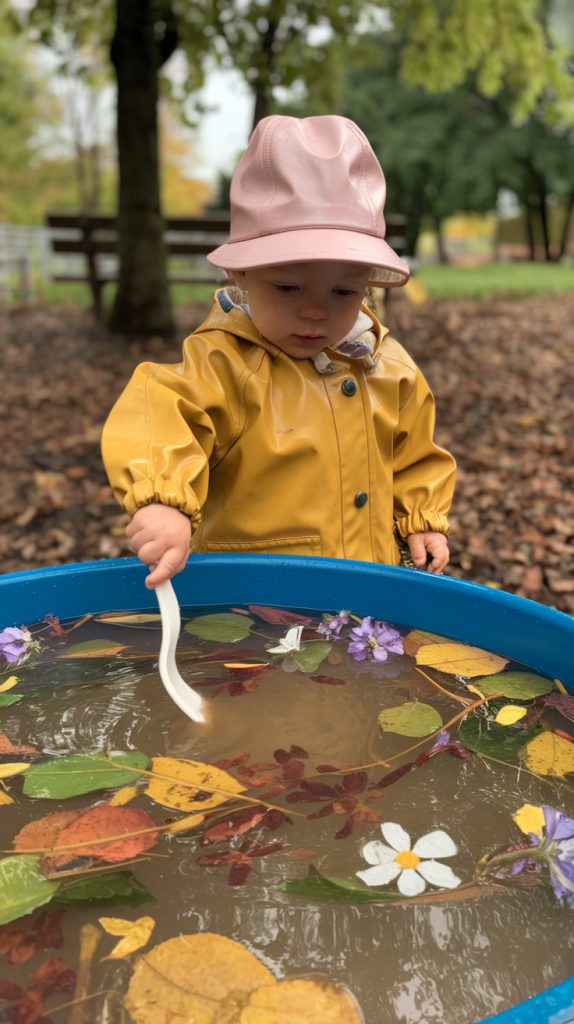
11. Nature Soup Cauldron
Why It Stands Out
This activity starts outside before it reaches the water table — the nature walk to gather ingredients is part of the play. Toddlers who are deeply connected to the outdoors or who love collecting things tend to engage with this one for extraordinary lengths of time because they built the activity themselves.
Styling Tips
You can make gathering materials part of the adventure by taking along this free nature scavenger hunt before setting up your water table.
12. Watercolor Painting at the Table
![A toddler using a wide watercolor brush to paint the surface of the water with watercolor paint, watching swirls of pink and purple bloom across the water surface, completely captivated by what's happening.]](https://tiredmomsupermom.com/wp-content/uploads/2025/04/Watercolor-Painting-at-the-Table-683x1024.png)
Why You’ll Love It
Set out watercolor paint (the solid cake kind, not liquid) and wide brushes, and let toddlers paint the water surface. The colors bloom, swirl, and mix in ways that genuinely fascinate children and adults alike. This naturally extends into painting on white paper using the water-paint mixture, doubling session time.
Styling Tips
Use a white plastic water table or add a white waterproof liner so the colors show up clearly. Provide a separate cup of clean water so toddlers can “rinse” and restart the color. Watercolor paper laid flat beside the table gives them a print-worthy take-home keepsake and unlocks a second round of independent art play.
If your toddler enjoys creative sensory play, they’ll also love these art-based emotional regulation activities.
Water Play Safety: What Every Mom Needs to Know
Water play is low-risk, but a few basics protect your toddler and your sanity in equal measure.
- Never leave toddlers unattended near water: The American Academy of Pediatrics recommends within-arm’s-reach supervision for children under age 4 near any water — even shallow amounts. Designate one adult to be the water play supervisor, not just “nearby.”
- Use warm water, not cold: Cold water shortens play sessions dramatically. Fill the table with lukewarm water (comfortable on your inner wrist) to keep toddlers comfortable and extend engagement.
- Keep water depth shallow: A few inches is plenty for all these activities. A fuller table adds no play value and increases both mess and risk.
- Change the water daily: Standing water grows bacteria quickly in warm weather. Drain and refill daily, and cover the table when not in use.
- Check for sensitivities: If using dish soap for foam or food coloring for experiments, verify your toddler’s skin tolerates both — a quick patch test on the inner arm before the first session is worthwhile for sensitive-skin kids.
Cleanup Hacks That Actually Work
The mess concern is usually bigger than the actual mess. Here’s how to contain it from the start:
- Set up on grass, not concrete: Grass absorbs splash and spill naturally. Concrete puddles and spreads. If you’re on concrete, lay down an outdoor rug or rubber mat beneath the table.
- Station a stack of towels 2 feet from the table: If dry towels aren’t immediately accessible, toddlers will wipe wet hands on everything else available. Two bath towels folded flat on the ground beside the table solves this entirely.
- Dress for the activity: Water play swimwear or a designated “water shirt” removes the post-play clothing scramble. Keep a change of clothes nearby for after.
- End with the splash: Let toddlers dump the water table intentionally at the end as the “cleanup activity” — they love this, it drains the table, and it transitions the session cleanly.
- Indoors: rubber-backed bath mat under a plastic storage bin: This combination contains drips completely and turns any room into a valid water play space on cold or rainy days.
Rainy day? Bring the fun inside with these easy indoor activities for kids until it’s time for another outdoor water play session.
Frequently Asked Questions
What age can toddlers start water table activities?
Most toddlers are ready for supervised water table play around 18 months, when they have enough hand coordination to pour and scoop independently. Always adjust based on your child’s development — some 15-month-olds are ready, and some 2-year-olds still need a shallower, more controlled setup.
Can you use a water table indoors?
Yes, with a little setup. Use a shallow plastic storage bin instead of a full water table, place it on a rubber-backed bath mat or waterproof play mat, and keep a stack of towels nearby. Activities like color mixing, foam play, and the fishing pond work beautifully indoors with minimal mess.
How do you keep a water table clean?
Drain and refill daily during active use — warm weather accelerates bacterial growth in standing water. Once a week, scrub the table with a diluted white vinegar solution, rinse thoroughly, and let it air dry. Cover the table when not in use to keep debris out.
What is the best water temperature for toddler water play?
Lukewarm — comfortable to your inner wrist, not warm enough to feel hot. Cold water shortens play sessions because toddlers become uncomfortable quickly, even on warm days. If the table is in direct sun, the water will heat up naturally; check it periodically and add cool water if needed.
How long should a toddler play with a water table?
There’s no official limit — follow your toddler’s lead and the weather. Most toddlers naturally disengage after 20–45 minutes. Watch for signs of getting cold (shivering, blue lips) and wrap up the session proactively rather than waiting for a meltdown.
Can you add dish soap to a water table?
Yes — a small squirt of regular dish soap is safe for most toddlers and creates satisfying foam. Avoid heavily scented formulas if your toddler has sensitive skin, and rinse the table thoroughly after a foam session before switching to clean water activities.
Final Thoughts
Water table activities don’t have to be elaborate to keep toddlers engaged. Some of the best ideas use everyday kitchen tools, a little imagination, and a few inches of water. Whether your child loves pouring, pretending, experimenting with colors, or discovering how things float and sink, these simple activities encourage creativity, sensory exploration, and independent play.
As your toddler grows, you can easily rotate new themes into your water table to keep it exciting all year long. Pair these activities with our summer sensory activities for toddlers, challenge little minds with these problem-solving activities for toddlers, or keep the creativity flowing with these imagination games for toddlers. No matter which activity you choose, the real magic happens when you step back, let your child lead the play, and enjoy watching their confidence grow one splash at a time.