Best Headphones for Teens: Parent-Tested Picks for Every Budget
Heads up: This post may include affiliate links. As an Amazon Associate, I earn from qualifying purchases—at no extra cost to you. Full privacy policy and disclosure here.
Quick Answer: The best headphones for teens balance safety, durability, and sound quality. The Sony WH-1000XM5 is our top overall pick for comfort and noise-canceling. Budget shoppers should look at the JLab Go Air Pop ANC, while active teens do best with the Beats Fit Pro. Your pick depends on your teen’s daily use and your budget.
You know the drill: you buy a nice pair of headphones, and three months later they’re tangled in a backpack with a cracked headband or missing an earbud entirely.
Headphones for teens need to hit three things at once — they have to sound good enough that your teen will actually want to wear them, hold up to backpacks and gym bags, and not blast their ears at unsafe volumes without you having to nag about it. That’s a taller order than it sounds.
Most “best headphones” lists are written for adults with disposable income and gentle handling habits. Neither of those describes the average teenager. This guide is built around what actually matters for this age group: real durability, honest pricing, and volume habits that protect their hearing without turning you into the headphone police.
By the end, you’ll have five solid picks organized by what your teen actually needs them for, plus a plain-English breakdown of the features worth paying for and the ones you can skip.
Why Headphone Choice Matters More for Teens Than You’d Think
It’s easy to treat headphones like a small purchase. For teens, they’re closer to a daily-use device — homework, gaming, commuting, workouts, decompressing after a long day. That kind of daily wear changes what “good” headphones actually look like.
Volume Safety Is the One Thing Not to Skip
Teens tend to listen longer and louder than adults, often without realizing it. Prolonged exposure above 85 decibels can contribute to hearing damage over time (Source: World Health Organization). You don’t need to buy specialty “kid” headphones to manage this — most modern headphones let you cap maximum volume through their companion app or a device-level setting.
What to look for: Bluetooth headphones with a companion app that includes volume monitoring, or ones that pair with your phone’s built-in headphone safety features (both iOS and Android now include these).
Durability: Built for Backpack Life, Not a Display Shelf
A $30 pair that survives three years of actual use is a better investment than a $200 pair that snaps at the hinge after two months. Look for reinforced headbands, sweat resistance if your teen is active, and a case or pouch that actually gets used.
Comfort Over Long Wear
Homework sessions, gaming marathons, bus rides — teens wear headphones for hours at a stretch. Lightweight builds and breathable ear cushions matter more here than they do for someone using headphones in 20-minute bursts.
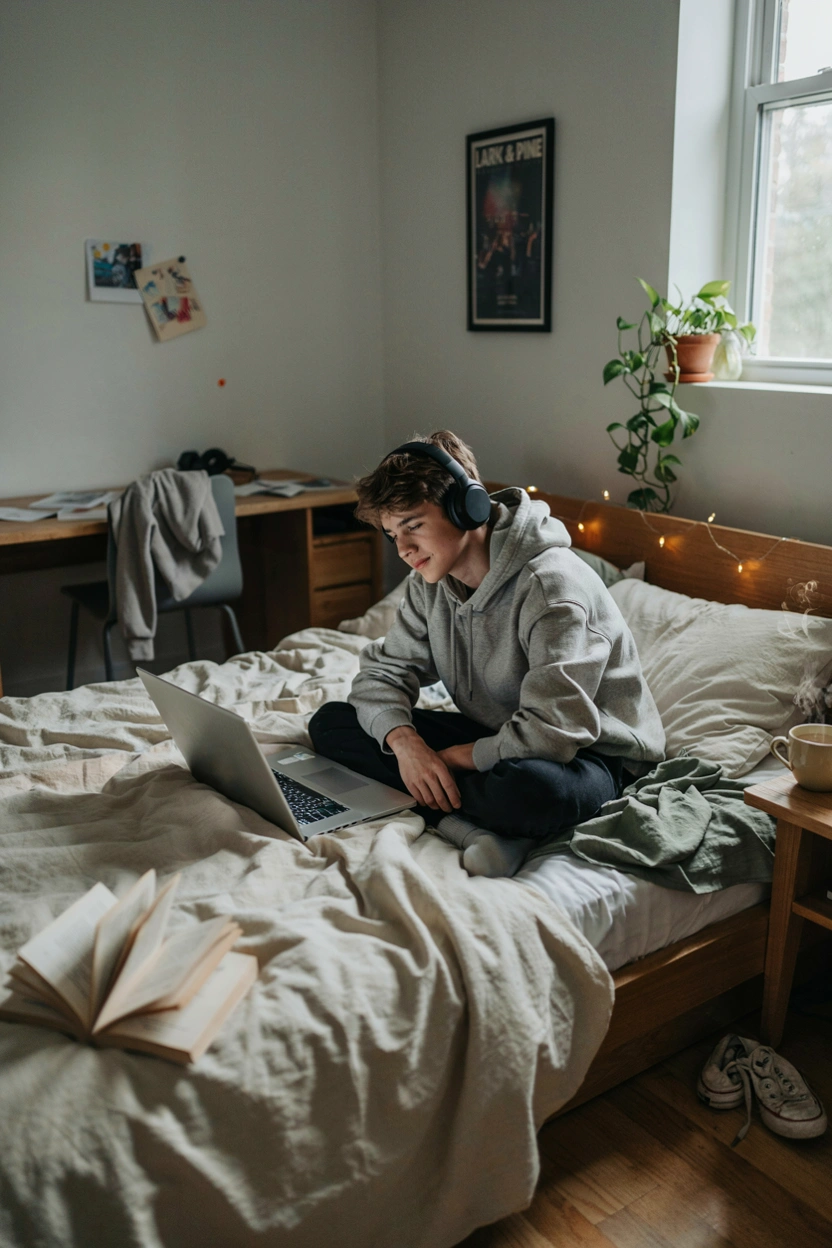
[IMAGE: A teenager doing homework at a desk while wearing over-ear headphones, showing comfortable long-wear use.]
How to Choose the Right Headphones for Your Teen
Before you start comparing models, get clear on three things. This takes two minutes and saves you from buying the wrong pair.
1. Figure Out the Primary Use Case
Gaming headsets prioritize microphone clarity and low latency. Everyday headphones prioritize comfort and battery life. Sports earbuds prioritize a secure fit and sweat resistance. Buying the wrong category means a technically “good” pair that still won’t work for your teen’s routine.
2. Set a Real Budget
Decide what you’re actually willing to spend before you start browsing, including the mental math on “what happens if this gets lost or broken in six months.” That number should shape your shortlist more than any single feature.
3. Pick Your Non-Negotiable
You can’t optimize for everything. Decide whether volume safety, durability, or sound quality matters most for your specific teen, and let that be the tiebreaker between similar options.
Best Headphones for Teens: 5 Picks Worth Buying
These five cover the range of what most teens actually need — from an everyday workhorse to a genuinely wallet-friendly option.
Best Overall: Sony WH-1000XM5
If you only read one recommendation in this article, make it this one. The Sony WH-1000XM5 is an over-ear, noise-canceling pair that’s genuinely comfortable for hours-long wear, which matters if your teen is doing homework or studying with them on. Battery life comfortably covers a full school day, and the noise cancellation is strong enough to help a teen focus in a noisy house or on a loud bus.
They’re pricier than most “teen” headphones, but the Sony WH-1000XM5 tends to go on sale often enough that patient shoppers can catch it well below list price. If your teen is responsible with their belongings and you want one pair that does everything well, the Sony WH-1000XM5 is worth the investment.
Best Budget Pick: JLab Go Air Pop ANC
Not every teen needs — or will take care of — a premium pair. The JLab Go Air Pop ANC earbuds deliver active noise cancellation and a genuinely low price point, which makes them a smart choice if this is your teen’s first pair of wireless earbuds, or if past headphones have had a habit of disappearing. They won’t compete with premium options on sound depth, but for the price, they’re hard to beat.
Best for Everyday Style: Beats Solo 4
Beats has stayed a favorite with teens for a reason — the Beats Solo 4 looks good, folds flat for backpacks, and pairs easily across Apple and Android devices. The on-ear design is lighter than full over-ear headphones, which some teens prefer for shorter wear sessions like commuting or hanging out with friends.
Best Premium Noise-Canceling: Bose QuietComfort Ultra Headphones
If your teen deals with sensory overload, loud sibling households, or just wants serious quiet for studying, the Bose QuietComfort Ultra Headphones are one of the strongest noise-cancellation options on the market. They’re an investment-tier purchase, but the comfort and sound quality make them a pair your teen could realistically use for years.
Best for Sports and Active Use: Beats Fit Pro
Standard earbuds fall out during workouts, practice, or anything more active than walking to class. The Beats Fit Pro use a wingtip design built to stay put, plus sweat and water resistance that regular earbuds don’t offer. If your teen plays sports or works out regularly, this is the pick that will actually survive that use.
[IMAGE: Side-by-side comparison graphic showing all five headphone picks with their icons for use case — everyday, budget, style, noise-canceling, and sports.]
Quick-Pick Comparison Table
Use this table to shortcut the decision if you already know your priority.
| Headphones | Style | Best For | Price Tier |
|---|---|---|---|
| Sony WH-1000XM5 | Over-ear, wireless | Everyday use, focus, comfort | Premium |
| JLab Go Air Pop ANC | Wireless earbuds | Budget-conscious first pair | Budget |
| Beats Solo 4 | On-ear, wireless | Style, everyday commuting | Mid-range |
| Bose QuietComfort Ultra Headphones | Over-ear, wireless | Serious noise-canceling, studying | Premium |
| Beats Fit Pro | Wireless earbuds | Sports, workouts, active use | Mid-range |
Headphone Features Explained: What Teens Actually Need
Specs sheets can be overwhelming. Here’s what’s actually worth paying attention to.
Noise-Canceling: Worth It?
For teens who study around siblings, commute on loud buses, or share a bedroom, active noise cancellation genuinely helps with focus. It’s less essential for teens who mostly use headphones at home in a quiet room.
Battery Life vs. Marketing Claims
Advertised battery life is usually measured under ideal conditions. In real-world teen use — higher volume, noise cancellation on, frequent Bluetooth switching — expect actual battery life to run shorter than the number on the box.
Water and Sweat Resistance
Look for an IPX rating if your teen plays sports or works out. Anything IPX4 or higher handles sweat and light rain; it’s not the same as being fully waterproof.
Bluetooth and Device Compatibility
Most modern headphones pair easily across iPhone and Android, but multi-device switching (going from phone to laptop without re-pairing) varies by model. If your teen splits time between a phone and a school laptop, this feature saves real daily frustration.
The Durability Factor: How Long Will These Actually Last?
This is the question most headphone reviews skip, and it’s often the one that matters most to parents footing the bill.
What to Check Before Buying
- Hinge and headband construction — Look for reinforced or metal-core headbands rather than all-plastic hinges, which are the most common failure point.
- Charging case durability — For earbuds, a case that survives being tossed in a backpack matters as much as the earbuds themselves.
- Warranty length — Most brands offer one year; some third-party retailers offer extended protection plans worth considering for premium purchases.
The Real Cost-Per-Year Math
A $250 pair that lasts three years works out to roughly $83 a year. A $40 pair that breaks in four months costs more per year of actual use, even though it looked like the “cheaper” choice at checkout. When you’re comparing options, think in cost-per-year of realistic use, not just sticker price.
Safety Deep Dive: Protecting Teen Hearing
This part isn’t meant to be alarming — it’s meant to give you real numbers so you’re not just guessing at “not too loud.”
How Loud Is Too Loud?
The World Health Organization recommends keeping daily listening under 85 decibels for extended periods to protect hearing long-term (Source: World Health Organization). For reference, that’s roughly the volume of city traffic — noticeably loud, but not painful.
| Sound Level | Comparable Everyday Sound | Safe Daily Exposure |
|---|---|---|
| 60 dB | Normal conversation | Unlimited |
| 75 dB | Average headphone volume | Several hours |
| 85 dB | City traffic, loud restaurant | Up to 8 hours |
| 100+ dB | Concert, motorcycle | Minutes, not hours |
Built-In Safety Tools You Already Have
Both iPhone and most Android phones now include headphone safety features that track weekly listening volume and warn when levels get too high (Source: Apple; Google). Turning these on takes less than a minute and works with any Bluetooth headphones, not just specialty “volume-limited” models.
A Simple Habit Worth Building
Most audiologists recommend the 60/60 rule as an easy guideline: 60% volume for no more than 60 minutes at a stretch, with breaks in between (Source: American Academy of Pediatrics). It’s an easy thing to mention once rather than nag about constantly.
Common Mistakes to Avoid
- Buying “kid” headphones for an older teen. Sizing and style matter for whether they’ll actually wear them — a 16-year-old doesn’t want cartoon-branded headphones.
- Assuming a higher price guarantees longer life. Build quality and how carefully your teen handles their things matter more than the price tag.
- Skipping the volume safety conversation entirely. A one-time mention of safe listening habits goes further than most parents expect.
- Choosing a gaming headset for everyday school use. Gaming headsets prioritize mic quality over comfort and portability — the wrong tool for daily wear.
- Not checking water resistance before workouts. Sweat damage is one of the most common (and most avoidable) reasons headphones die early.
Frequently Asked Questions
Can loud headphones damage a teen’s hearing?
Yes — prolonged exposure to sound above 85 decibels can contribute to hearing damage over time (Source: World Health Organization). The risk comes from consistent loud, long-duration listening, not occasional louder moments.
Are AirPods safe for teens?
AirPods work fine for teens when paired with iPhone’s built-in headphone safety settings, which let you track and cap volume exposure. They don’t have a hardware volume limiter on their own, so the safety feature needs to be turned on manually in Settings.
What age can teens use regular adult headphones?
There’s no strict age cutoff — most teens can safely use standard headphones as long as volume habits are reasonable. The bigger factor is teaching safe listening habits, not restricting headphone type by age.
Do expensive headphones really sound better?
Generally yes, but with diminishing returns. The jump from a $30 pair to a $150 pair is noticeable. The jump from $150 to $400 is smaller and matters more to audiophiles than to most teens.
How long should teens wear headphones per day?
There’s no universal cutoff, but taking breaks during long listening sessions and keeping volume moderate matters more than a strict time limit.
What’s the difference between noise-canceling and volume-limiting?
Noise-canceling blocks outside sound so you can hear your audio clearly at a lower volume. Volume-limiting caps the maximum output level. They solve different problems — noise-canceling headphones can still be played unsafely loud without a volume cap in place.
Are wireless headphones safer than wired ones?
There’s no meaningful safety difference between wired and wireless headphones when it comes to hearing health — volume level and duration are what matter, not the connection type.
How much should you realistically spend on teen headphones?
Most families land somewhere between $40 and $250, depending on how responsible the teen is with belongings and what features matter most (noise-canceling, sports use, everyday comfort).
What warranty coverage is typical?
Most major brands offer a one-year manufacturer warranty. Retailers often offer optional extended protection plans, which can be worth it for premium purchases your teen will use daily.
Key Takeaways
- Volume safety matters more than sound quality — turn on your phone’s built-in headphone safety settings regardless of which headphones you buy.
- Durability and real-world cost-per-year often matter more than the sticker price.
- Match the headphone type to your teen’s actual daily use — gaming, sports, and everyday wear all call for different features.
- A one-time conversation about safe listening habits goes further than ongoing reminders.
You’ve Got This — Headphone Shopping Doesn’t Have to Be Complicated
Picking headphones for your teen doesn’t require becoming an audio expert overnight. Match the use case, set a realistic budget, and don’t skip the two-minute volume safety setup — that’s genuinely most of the decision.
Whatever you land on, your teen will appreciate that you actually thought about what they’ll use it for, not just grabbed whatever was on sale.
If this guide helped, bookmark it for the next round of tech shopping — birthdays and holidays have a way of sneaking up.
You might also love: