
Discriminative Stimulus in Parenting: The Secret Cue That Changes Everything
Quick Answer: A discriminative stimulus is a cue—a visual signal, routine, or phrase—that tells your child when a behavior will result in a specific outcome. Think of your bedtime routine, a 5-minute warning before transitions, or a specific tone of voice that means “I’m serious.” These cues teach kids what comes next without constant reminding, and kids learn them faster than you’d expect.
Your mornings are chaos. Your bedtime is a battle. Your kid ignores warnings, resists transitions, and everything takes three times longer than it should.
Here’s what most parents don’t realize: you’re already using cues with your kids—you’re just doing it inconsistently. The concept is called a discriminative stimulus, a term from behavioral psychology, and understanding it can cut your kid’s resistance in half. It’s not about being stricter or louder. It’s about being clearer.
This isn’t another behavior-management framework or a new parenting philosophy. It’s practical, immediate, and grounded in how kids actually learn. By the end of this article, you’ll know exactly how to use this one concept to bring calm to your most stressful moments—mornings, bedtimes, transitions, homework, and everything in between.
Heads up: This post may include affiliate links. As an Amazon Associate, I earn from qualifying purchases—at no extra cost to you. Full privacy policy and disclosure here.
What Is a Discriminative Stimulus? (And Why It Matters)
A discriminative stimulus is a cue that signals to your child when a behavior will (or won’t) get a certain result. The cue comes first. The behavior follows. The outcome happens next. Your kid learns the pattern, and compliance becomes automatic instead of something you have to negotiate.
This is different from punishment or reward. You’re not threatening your kid or bribing them. You’re creating a signal they learn to recognize.
A Simple Example You’re Already Using
Imagine your morning routine. You say the same thing every day at 7:30 AM: “It’s time to get dressed.” Your kid knows that when they hear this, getting dressed is about to happen, and breakfast comes after. Over time, that phrase becomes a cue. Your kid’s brain learns: 7:30 + “time to get dressed” = it’s non-negotiable, breakfast is next, moving on.
That’s a discriminative stimulus in action. You didn’t invent anything special. You just repeated a signal until your kid’s brain connected it to what happens next.
The problem is, most parents are inconsistent. Monday morning is calm and routine. Tuesday morning you’re rushing and skip the cue. Wednesday you use a different tone. By Friday, your kid has no idea what to expect, so they push back on every transition.
Why This Is Different From Rewards or Punishments
A reward or bribe comes after your kid does something: “If you get dressed, you get a sticker.” You’re offering something extra to change behavior.
A discriminative stimulus comes before behavior and simply signals what’s about to happen: “It’s time to get dressed.” The signal itself is the cue, not the incentive. Breakfast isn’t a bribe; it’s what comes next in the routine.
A punishment happens after misbehavior and teaches your kid they did something wrong. A discriminative stimulus isn’t punitive—it’s preventive. You’re telling your kid what comes next, not what they did wrong.
| Discriminative Stimulus (Cue) | Reward or Bribe | Punishment |
|---|---|---|
| Timing: Comes before behavior Message: “This is what happens next” Outcome: Kid learns the pattern Your tone: Calm, matter-of-fact Example: “It’s bedtime” (routine signal) | Timing: Comes after behavior Message: “You did this, so you get that” Outcome: Kid becomes dependent on incentive Your tone: Transactional Example: “If you get in bed, you get a sticker” | Timing: Comes after misbehavior Message: “You did something wrong” Outcome: Kid learns to avoid consequence Your tone: Angry or frustrated Example: “You refused bedtime, so timeout” |
How Discriminative Stimuli Actually Work in Your Home
This isn’t magic. It’s how your kid’s brain learned language, learned to recognize your face, and learned that crying in the grocery store gets attention. Kids are pattern-recognition machines. Give them a clear, repeated pattern, and they’ll learn it.
The Three-Part Pattern (Cue → Behavior → Outcome)
Every discriminative stimulus has three moving parts:
- The Cue (Discriminative Stimulus): A signal your child recognizes. It can be visual (your bedtime routine), verbal (your specific phrase), a routine (the same sequence every day), or even your tone of voice. The cue signals: “Something specific is about to happen.”
- The Behavior: Your kid’s response to the cue. They move toward bed. They put their shoes on. They stop playing and come to dinner. This is not something you have to force if the cue is clear.
- The Outcome: What actually happens after the behavior. Bedtime happens. You leave for school. Dinner starts. The outcome is always the same—this teaches your kid the cue is reliable.
Repeat this pattern consistently, and your kid’s brain stops questioning it. The cue becomes automatic, like stopping at a red light. You don’t negotiate with a red light; you just stop.
Why Kids Respond to Cues (Not Your Words)
Here’s the frustrating truth: kids don’t respond well to nagging, reasoning, or long explanations. They respond to patterns they recognize. A cue is a pattern. Your voice explaining why bedtime is important? Not a cue.
Your predictable bedtime routine with the same sequence, the same time, and the same outcome? That’s a cue. Your kid’s brain learns it in weeks, not months. Once learned, the cue requires almost zero enforcement because your kid’s brain has already predicted what comes next.
This is why some kids will move through bedtime like clockwork while others fight you every single night. It’s not about the kid; it’s about the clarity and consistency of the cue.
Everyday Discriminative Stimuli: 5 Parenting Scenarios
Here’s where behavioral psychology meets real life. These are the moments that usually cause friction in your home, and they’re the moments where a clear cue changes everything.
The Everyday Discriminative Stimuli Matrix
| Parenting Moment | Your Cue (The Signal) | Expected Behavior | The Outcome | Why It Works |
|---|---|---|---|---|
| Bedtime | Same routine every night at 8 PM: Bath → Pajamas → Story → Bed. The sequence is your cue, not your words. | Kid moves through each step without negotiation. Less asking “why” or “five more minutes.” | Kid is asleep by 8:30. Routine is predictable. | The routine itself signals bedtime is non-negotiable. Kid’s brain knows what comes next and stops fighting. |
| Transitions (leaving house, screen time shutdown, activity changes) | Visual or verbal warning cue: “Five minutes until we leave,” or a timer going off, or you saying the same phrase every time. | Kid prepares mentally. Less meltdown. Fewer delaying tactics. | Kid transitions without a meltdown or argument. | The cue signals change is coming. Kid has time to accept it mentally instead of being blindsided. |
| Homework or Chores | Specific time and place cue: “Homework happens at 4 PM at the kitchen table” or “Chores happen before screen time, same time every day.” | Kid knows the expectation and does the work with less resistance. | Homework/chores get done. Less nagging. | The time and place become the cue, not your reminders. Kid’s brain has learned the pattern and stops negotiating. |
| Mealtime | Consistent mealtime schedule and a specific signal: dinner bell, a phrase like “Dinner’s ready,” or sitting down yourself. | Kid comes to table without being called multiple times. | Family eats together. Fewer disruptions. | Kids learn that a certain time = mealtime. The cue is the time and the routine, not your voice calling them. |
| Meltdown or Big Emotion | A calm cue you use every time emotion escalates: your tone changes, you move to a specific quiet space, or you say the same phrase (“I see you’re upset”). | Kid knows you recognize their emotion and the pattern that comes next (calming, not punishment). | Kid de-escalates faster. Less acting out. | The cue signals safety and recognition, not anger. Kid learns their emotion is normal and you have a plan to handle it. |
This matrix is your blueprint. Look at the moments in your home where things usually fall apart. That’s where you need to build a cue.
[PRINTABLE: “Everyday Discriminative Stimuli Matrix” — A fill-in-the-blank worksheet where parents can identify their own household moments, design their own cues, and track consistency. Available to download and print.]
Bedtime Routine Cues
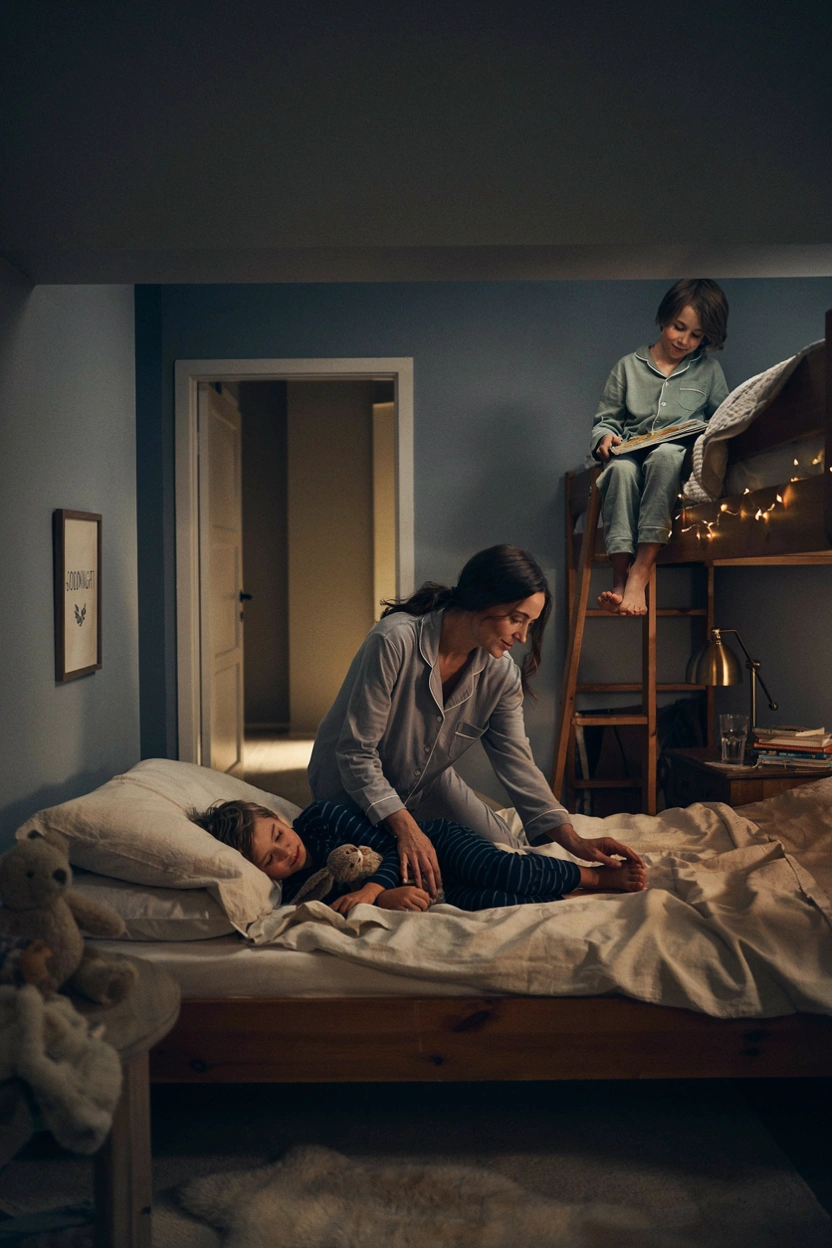
Bedtime is where discriminative stimuli shine. Most kids fight bedtime because parents keep changing the signals. One night it’s a bath, a story, and bed. The next night you’re rushing and skip the routine. The third night you negotiate over bedtime itself.
Your kid’s brain is confused because there’s no clear cue. Build a bedtime routine and use the exact same sequence every single night. The sequence becomes the cue, not your voice. Within three weeks, your kid will move through bedtime like it’s automatic.
The routine doesn’t have to be long. It can be: pajamas → brush teeth → one story → bed. Same order, same time, every night. Your kid learns: pajamas means bedtime is coming, so I stop negotiating and move forward.
Transition and Warning Cues
Transitions are where kids lose it. They’re playing happily, and you say “We need to leave in five minutes.” Your kid hears this as a suggestion, not a signal. Meltdown happens.
Use a physical, visual cue that signals transition is coming. A timer that beeps. You sitting down and saying your specific phrase. Your phone alarm. The same warning, the same time before the transition, every single time.
Over time, your kid learns: The timer beeping means we’re leaving in five minutes. No negotiation. No meltdown possible because my brain already accepted this was coming.
Homework and Chore Cues
Homework doesn’t have to be a nightly battle. Assign a specific time and place, and use the same time and place every single day. Your cue is the time and location itself.
“Homework happens at 4 PM in the kitchen” becomes the signal. Your kid knows it’s coming. Your kid doesn’t wait for you to ask, nag, or remind. The cue is the routine, not your voice.
Same with chores. “Chores happen before screen time, same time every day.” The time becomes the cue. Your kid learns the pattern and stops arguing about when it’s time.
Mealtime Cues
Family dinner doesn’t have to involve calling your kid three times. Set a specific time and use a consistent signal. The same time every day is your cue.
Your kid’s brain learns: 6 PM = dinner time. No negotiation needed. You sit down, your kid joins. The cue is the time and your own behavior (you sitting at the table), not your voice yelling upstairs.
Meltdown and Emotion Cues
When your kid is escalating—crying, yelling, shutting down—you need a cue that signals you are calm and have a plan, not that you’re angry or about to punish.
Your cue might be your tone changing to calm (not fake-calm, but genuinely slower and quieter), moving to a specific quiet space, or using the same phrase every time: “I see you’re really upset. Let’s take a break.”
Kids who escalate need to know the pattern: Big emotion comes, I use my signal, and then safety and help follow—not punishment. A consistent cue during big emotions teaches your kid they can count on you.
How to Create Powerful Cues Your Kids Will Actually Respond To
Now that you understand how cues work, here’s how to build them. This is where the theory becomes action.
Step 1: Identify the Behavior You Want
Don’t start by creating a cue. Start by knowing what behavior you actually want. Not “my kid needs to listen more.” That’s too vague. Be specific.
Examples: “I want my kid to move through bedtime without negotiation.” Or “I want my kid to transition from playing to dinner without a meltdown.” Or “I want my kid to start homework at 4 PM without me asking.”
The clearer your target behavior, the clearer your cue will be.
Step 2: Choose Your Cue (Visual, Verbal, or Routine)
Your cue can be three things:
- Visual: A timer, a chart, a specific hand gesture, your body position (sitting down), a light turning on/off, or a physical object.
- Verbal: A specific phrase you say the exact same way every time. “It’s bedtime.” Not “Hey, don’t you think it’s getting late?” Short, specific, same every time.
- Routine: A sequence of actions that happens the same way every time. Bath → Pajamas → Story = bedtime cue. The routine itself is the signal.
Visual and routine cues are usually stronger than words because kids can see and anticipate them. But a consistent verbal cue works too if it’s the same every single time.
Step 3: Make It Consistent
This is the non-negotiable step. Your cue has to happen the same way, at the same time, in the same context, every single day. If bedtime routine shifts around, your kid won’t learn the cue.
Consistency doesn’t mean perfection. You don’t have to be rigid about it. It means: this cue happens reliably, and your kid can count on it. That’s what makes it a cue instead of a random thing you do sometimes.
Step 4: Pair It With a Clear Outcome
Your cue only works if it’s always followed by the same outcome. If you say “bedtime” but then negotiate for 20 minutes, the cue is broken. If you use a transition timer but then let your kid keep playing, the cue means nothing.
The outcome has to be inevitable. “Bedtime happens at 8:30, every night, period.” Not: “Bedtime is at 8:30 unless you ask to stay up.” The consistency is what teaches your kid.
Step 5: Practice (Even When You Don’t “Need” To)
This is the step parents skip, and it’s why cues fail. You don’t just use a cue when you’re in crisis. You practice it in calm moments too.
Your kid is already in bed happily? Good. Run through the bedtime routine anyway at a calm time. Your kid is already complying with homework? Use the cue anyway. Repetition is what teaches your kid’s brain to recognize the pattern.
Think of it like learning to recognize a song. The first time you hear it, you don’t know what it is. By the 10th time, you recognize it immediately. By the 20th time, it’s automatic. Same with cues.
[CHECKLIST: “Creating Your First Discriminative Stimulus” — Step-by-step checklist:
☐ Identify the specific behavior you want
☐ Choose your cue type (visual/verbal/routine)
☐ Write it down—what is the exact cue?
☐ Decide on your outcome (what happens after the behavior)
☐ Choose a start date and commit to 4 weeks
☐ Tell your co-parent or family members so everyone uses the same cue
☐ Set a phone reminder to be consistent
☐ After two weeks, assess: is your kid responding faster?
☐ After four weeks, evaluate if the cue is “sticking”
☐ Adjust if needed, but don’t abandon yet—kids need time]
Matching Cues to Your Child’s Age & Personality
Cues work at every age, but what works for a toddler won’t work for a teenager. Here’s how to match your cue to your kid.
Toddlers and Preschoolers (18 Months to 5 Years)
What works: Visual and routine cues. Toddler brains are still learning language, so a visual signal or a familiar routine is stronger than words.
Examples: A bedtime chart with pictures (wash, pajamas, story, sleep). A song that means cleanup time. A timer that beeps for transitions. The same sequence every day: snack → playtime → nap.
Why it works: Toddlers see and remember patterns. If bedtime always looks the same, their brain predicts it and resists less.
What doesn’t work: Long verbal explanations. “We’re leaving soon because I have to go to work and you need to go to school and…” Your toddler hears nothing. Keep it short and visual.
School-Age Kids (6 to 11 Years)
What works: Routine cues plus simple verbal cues. School-age kids understand language, but they still respond better to predictable routines than to reasoning.
Examples: A homework schedule posted on the fridge (cue: the posted schedule, same time every day). A specific phrase before transitions (same words every time). A chore chart with specific times.
Why it works: School-age kids are developing logic, but they still live in the moment. A routine cue reminds them of the pattern without requiring them to remember or think about it.
What doesn’t work: Negotiation. “Why do we have to leave?” doesn’t change the cue. The cue is what’s happening next, period. No debate.
Tweens and Teens (12+)
What works: Clear verbal cues with routine backups. Tweens and teens understand logic and can respond to clear expectations. They also respect consistency.
Examples: “Screen time ends at 9 PM on school nights” (clear expectation, stated once, not negotiated). A family calendar everyone can see (visual cue). A specific routine for homework (same place, same time).
Why it works: Teens respond better to transparency and logic than to surprise or punishment. A clear cue signals respect: “Here’s the expectation, it’s consistent, and there’s no hidden drama.”
What doesn’t work: Surprises or changing rules. Teens will fight a cue they don’t see coming. But if you state the expectation clearly and stick to it, resistance drops dramatically.
Tips for Strong-Willed or Sensitive Kids
Strong-willed kids (the ones who argue about everything) actually respond better to clear cues than compliant kids do. Here’s why: they hate nagging and negotiation. A clear, consistent cue with no debate is actually easier for them than constant reasoning.
The key: state the cue calmly and matter-of-factly. No anger, no frustration, no explanation. “Bedtime is at 8:30. That’s what happens next.” Strong-willed kids respect firmness paired with consistency. They fight fuzzy rules and endless negotiation.
Sensitive kids (the ones who get overwhelmed easily) need cues that feel gentle and predictable. They do better with more warning and more visual support, not less.
Examples: A transition timer that gives them five minutes (not a surprise). A bedtime routine they can see coming from a mile away (same sequence every night). A chart or visual reminder they can look at (not relying on remembering your words).
Sensitive kids worry about what’s coming. A predictable cue actually reduces their anxiety because they can see the pattern and prepare mentally.
Common Mistakes Parents Make With Cues
Cues are simple, but parents mess them up in predictable ways. Here’s what to avoid.
Mistake 1: Inconsistent Cues
What this looks like: Monday you use a bedtime routine. Tuesday you’re rushing and skip it. Wednesday you do it differently. By Friday, your kid has no idea what to expect.
Why it fails: Your kid’s brain hasn’t learned the pattern yet. Consistency builds the pattern. Inconsistency scrambles it.
How to fix it: Pick one cue and commit to it for at least four weeks, even when things are chaotic. Even on good nights, even when you don’t “need” it. The repetition is what teaches your kid.
Mistake 2: Changing Cues Too Often
What this looks like: You try a cue for two days, it doesn’t work, and you switch to something different. Three cues in one week.
Why it fails: Kids need 2–4 weeks to really internalize a cue. If you change it every few days, they never learn the pattern.
How to fix it: Give your cue at least three weeks before deciding it’s not working. Set expectations: Week 1 will be hard. Week 2 will be better. Week 3–4 should feel automatic. If nothing shifts by week 4, then adjust.
Mistake 3: Using Words When Cues Work Better
What this looks like: Every day you say, “It’s time to do homework now,” as if your words are the cue. But your kid tunes out because they’ve heard this a thousand times.
Why it fails: Words get tuned out. Routines don’t. A timer beeping is a stronger cue than your voice saying the same thing.
How to fix it: Pair your words with a visual or routine cue. Not just: “Homework time.” Instead: same time every day + same place + maybe a timer + your calm tone. The routine becomes the cue, not the words.
Mistake 4: No Clear Outcome Attached to the Cue
What this looks like: You say bedtime, but then negotiate for 20 minutes. You use a transition timer, but let your kid keep playing if they ask. You set homework time, but don’t enforce it.
Why it fails: If the outcome isn’t reliable, the cue is meaningless. Your kid learns: “The cue doesn’t actually mean bedtime/homework/transition—it means we’re about to negotiate.”
How to fix it: Make the outcome inevitable. Bedtime happens at 8:30, period. Transition happens when the timer beeps, period. Homework starts at 4 PM, period. No negotiation, no delays, no exceptions (except real emergencies). That reliability is what teaches your kid the cue is real.
Mistake 5: Not Practicing the Cue Before You Need It
What this looks like: You introduce a new bedtime routine on a night when your kid is already tired and resistant.
Why it fails: You’re trying to teach a new pattern during a crisis. Your kid’s brain is overwhelmed, not learning.
How to fix it: Practice your cue on calm days. Run through the bedtime routine on a weekend morning when your kid is happy and willing. Use the transition cue on a day when there’s no time pressure. The repetition in low-stress moments teaches your kid the pattern so that when you need it, it’s already embedded.
[CHECKLIST: “Troubleshooting: Why Isn’t My Cue Working?” — Diagnostic checklist:
☐ Am I using this cue consistently? Same time, same way, every single day?
☐ Has it been at least two weeks? (Most cues need 2–4 weeks to stick)
☐ Is the outcome always the same? Does the expected behavior always result in the same outcome?
☐ Am I in a crisis period? (New sibling, school stress, major change—cues break down during chaos)
☐ Did I change the cue or add new ones recently? (Go back to one cue; consistency matters more than variety)
☐ Is my tone of voice consistent? (Angry, frustrated, or inconsistent tone breaks the cue)
☐ Is my co-parent using the same cue? (Different signals confuse kids)
☐ Is the cue clear enough? (Maybe visual cue would work better than words?)
☐ Am I giving my kid enough warning? (Sensitive kids need longer lead times)
☐ Is this the right cue for my kid’s age/temperament? (Review age section above)]
FAQ + Troubleshooting
What’s the difference between a discriminative stimulus and bribery?
A discriminative stimulus is a cue that signals when something will happen—it comes before behavior. Bribery comes after behavior and offers something extra to change behavior. When you use a bedtime routine as a cue, you’re not bribing your kid; you’re signaling what comes next. If the routine happens every night regardless of your kid’s behavior, it’s a cue. If you offer dessert only if your kid eats dinner nicely, that’s a bribe. Cues are about prediction and pattern. Bribes are about exchange.
Can I use discriminative stimuli with a strong-willed child?
Yes—often better than with compliant kids. Strong-willed kids hate nagging, negotiation, and unclear expectations. A clear, consistent cue with no debate actually works better for them than constant reasoning. They respect firmness paired with consistency. The key is state the cue matter-of-factly, with no anger or frustration, and then don’t waver. “Bedtime is at 8:30. That’s what’s happening.” No explanation, no negotiation, no drama.
How long does it take kids to learn a discriminative stimulus?
Most kids learn a new cue in 2–4 weeks of consistent use. But it depends on age, temperament, and how clearly you’ve paired the cue to an outcome. Younger kids (toddlers and preschoolers) often learn faster than older kids because they’re used to learning new patterns. Older kids may test you longer before accepting the cue. The key is consistency, not speed. Don’t expect results in three days; expect them by week 4.
What if my co-parent uses different cues?
Kids are smart—they’ll learn different cues from different parents. It’s okay if yours are slightly different; consistency within your routine matters more than matching your partner’s exactly. But where possible, align on big transitions (bedtime, morning) so your kid isn’t confused. Have a conversation: “We’re both using a bedtime routine, but mine is bath-pajamas-story-bed and you’re doing pajamas-teeth-story-bed. Should we align?” If you align, pick one version and stick with it together.
Do I need to explain this concept to my kids?
No. Kids don’t need to know the terminology or understand behavioral psychology. They just need to learn the pattern: this cue leads to this behavior, which leads to this outcome. Let the cue do the work without explaining it. The more you talk about the concept, the less powerful the cue becomes.
What if I’ve been using punishment instead of cues?
Start fresh. Pick one moment (bedtime, transitions, whatever causes the most friction), design a clear cue, and commit to it for four weeks. You’re not fixing the past; you’re building a new pattern going forward. Your kid will respond to consistency. If you’ve been harsh, the first two weeks might involve rebuilding trust. Stick with it anyway. By week 4, you’ll see the difference.
Can I use discriminative stimuli for emotional behavior or anxiety?
Yes. Kids with anxiety or big emotions actually benefit from clear cues because cues reduce uncertainty. A kid who worries needs to know what’s coming. A calm cue—your voice, your body language, a familiar routine—signals safety and predictability. Use cues to signal: “You’re having big feelings, and I have a plan. We’re going to the quiet space, and we’re going to breathe.” The consistency teaches your kid their emotions are manageable.
What’s the difference between a discriminative stimulus and a habit?
A discriminative stimulus is the cue (the signal). A habit is the behavior that follows the cue. When you brush your teeth every morning at 7 AM, the time (7 AM) is the discriminative stimulus. Brushing your teeth is the habit. Kids learn habits through consistent cues. You can’t build a habit without a clear cue signaling when the habit should happen.
How do I handle it when a cue stops working?
Cues break down during chaos, stress, major change, or inconsistency. First, check: Are you still using it consistently? Has something stressful changed at home? Is your co-parent still using it? If you’ve gone back to inconsistent use, restart: commit to four weeks of strict consistency. If there’s chaos at home, give your kid grace and rebuild slowly. If the cue genuinely stopped working despite consistency, try tweaking it: change the time, add a visual element, or simplify the routine. One small change, then four more weeks of consistency.
Is this the same as positive reinforcement?
Positive reinforcement is adding something your kid likes after behavior happens—praise, stickers, rewards. A discriminative stimulus is a cue that signals when behavior will lead to an outcome. They work together but they’re different. You can use a discriminative stimulus without positive reinforcement. Example: Use a bedtime routine as a cue (no reward needed; bedtime just happens). You can also add positive reinforcement: “When you follow the routine, I’ll praise you.” But the cue works without it. The routine itself is powerful enough.
Key Takeaways
A discriminative stimulus is a cue that signals to your child what comes next. It’s not a punishment, not a bribe, and it’s not new—you’re already using them. The key is making them intentional and consistent.
Build your cue with five steps: identify the behavior, choose your signal, keep it consistent, pair it with a reliable outcome, and practice even when you don’t need to. Give it four weeks before deciding it’s not working. Match your cue to your kid’s age and personality. Watch out for the five common mistakes parents make.
Within four weeks, you’ll notice less negotiation, fewer meltdowns, and more compliance—not because your kid is suddenly “better,” but because your kid’s brain has learned the pattern.
Ready to Build Your Cues?
Start with the moment that causes the most friction in your home. Bedtime? Transitions? Homework? Pick one, use the five-step framework above, download the Everyday Discriminative Stimuli Matrix, and commit to four weeks of consistency.
You don’t need a new parenting philosophy. You need clarity and repetition. That’s it.
If you want to go deeper into positive parenting frameworks that pair beautifully with discriminative stimuli, check out our top positive parenting books for recommendations, or explore the Positive Parenting Solutions online course for structured training. You might also find our guide to positive self-talk helpful for reinforcing the outcomes of your cues, or positive reinforcement phrase examples for exact language to use when your cues are working.
The work of building consistency is yours. But the result—a calmer home, a less anxious kid, and fewer power struggles—is absolutely worth it.
Parenting Resources That Work With Cues
These books and courses align perfectly with discriminative stimulus strategies:
- Positive Discipline by Jane Nelsen — Practical framework for building structure and connection
- How to Talk So Kids Will Listen by Adele Faber & Elaine Mazlish — Communication strategies that pair beautifully with consistent cues
- Parenting from the Inside Out by Dan Siegel — Understanding child development and behavior from a neuroscience perspective
- Positive Parenting Solutions Online Course — Structured training on behavior management and connection-based parenting


