25+ Science Movies for High School Students (With a Real vs. Hollywood Rating for Each)
Quick Answer: The best science movies for high school students blend real scientific concepts with strong storytelling. Top picks include Hidden Figures, The Martian, Apollo 13, and October Sky. This list covers space, physics, biology, and math films, rated for accuracy and classroom appropriateness, with notes on where to stream each one.
Getting a teenager to watch anything with the word “educational” attached to it usually gets you an eye roll and a phone that suddenly needs checking. Honestly, I get it — nobody wants to feel like they’re being taught at during movie night.
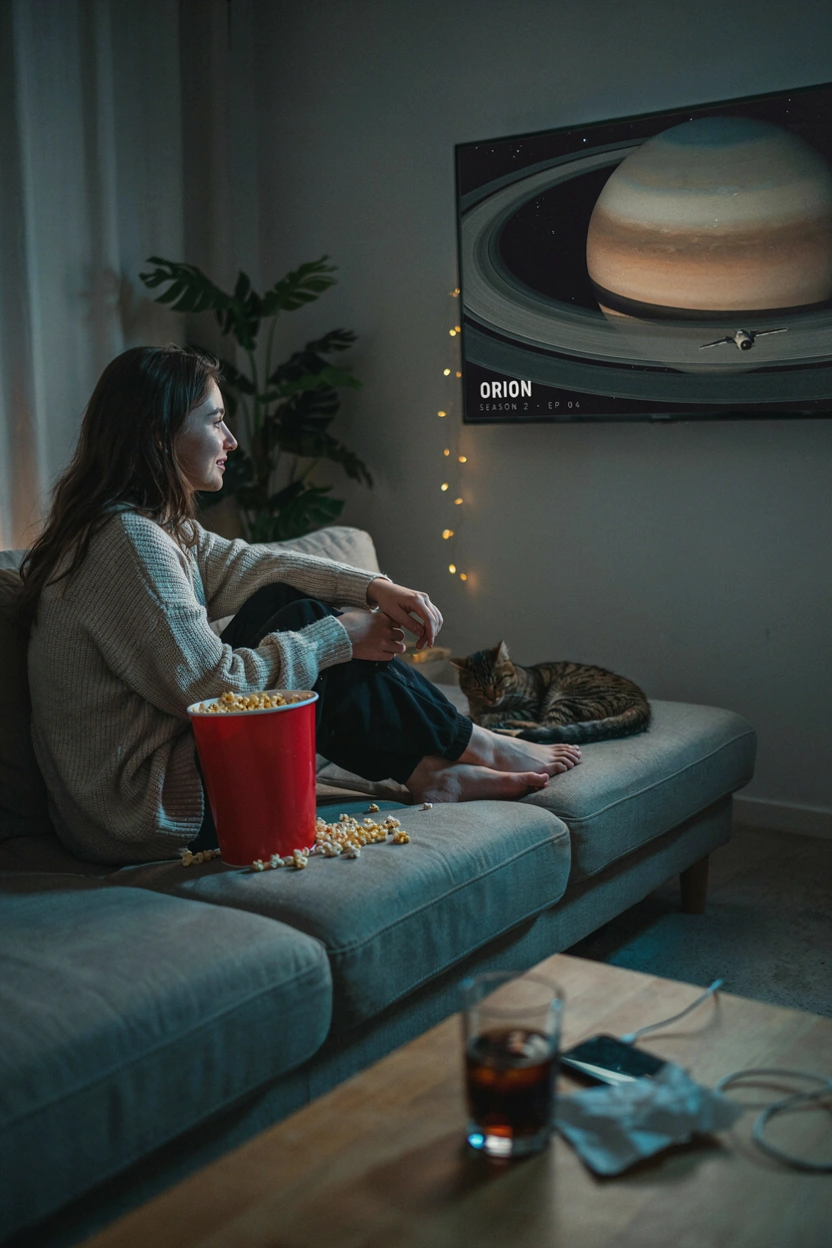
But the right science movie doesn’t feel like a lesson. It feels like a story you can’t look away from, one that happens to be built on real physics, real history, or real medicine. This list rounds up the best science movies for high school students, organized by subject, so you can find one that fits whatever your teen (or your classroom) needs tonight.
Here’s the part most lists skip: not every “based on a true story” movie is actually true. Some take huge liberties with the science to make a better film, and that matters if you’re using one to teach. So every movie below comes with a simple Real vs. Hollywood accuracy rating, plus a heads-up on content and where to stream it.
By the end, you’ll have a shortlist ready to go, whether you’re planning a Friday night at home, a substitute lesson plan, or a rainy-day homeschool unit.
Heads up: This post may include affiliate links. As an Amazon Associate, I earn from qualifying purchases—at no extra cost to you. Full privacy policy and disclosure here.
How to Use This List (And What “Accuracy Rating” Means)
Every movie below gets a quick Real vs. Hollywood rating on a simple 1 to 5 scale. A 5 means the science holds up close to reality. A 1 means the movie borrowed real concepts but ran wild with the plot. Neither end of the scale means “skip it” — dramatized science can still spark real curiosity, as long as you know which parts to fact-check together afterward.
Teachers and researchers have found that watching a story unfold around a scientific concept tends to build more genuine interest than a straight lecture on the same material (Source: National Science Teaching Association). That’s the whole point of this list — movies that make teens want to know more, not just sit through more.
A quick note on ages: “high school” covers a wide range. A freshman and a senior don’t need the same content warnings. Where it matters, you’ll see a note on whether a movie skews better for younger or older teens.
Quick Checklist: Is This Movie Right for My Teen?
- Check the rating. PG-13 films can include violence, language, or intense themes — skim the content note before pressing play with a younger teen.
- Check the runtime. Most of these run 1.5 to 2.5 hours — plan ahead if you’re using one in a single class period.
- Check the subject match. Pair the movie with what your teen is actually studying for the best classroom payoff.
- Check the accuracy rating. Lower-rated movies are still worth watching — just plan for a short “what was real” conversation afterward.
One more tip: if you’re stacking a few of these back to back for a movie marathon, a pair of blue-light filtering glasses can make a real difference for eyes that aren’t used to that much screen time in one sitting.
Best Space and Astronomy Movies for Teens
Space movies tend to be the easiest sell with teenagers — there’s something about the stakes of space that keeps eyes on the screen. These four cover real NASA history, near-future engineering problems, and one honest depiction of what happens when things go wrong in orbit.
Hidden Figures
Hidden Figures tells the true story of Katherine Johnson, Dorothy Vaughan, and Mary Jackson, the Black women mathematicians whose calculations helped launch NASA’s early space missions. It’s one of the most requested classroom films for a reason — it covers real math, real history, and a story that’s still underrepresented in most science curricula.
Real vs. Hollywood rating: 4/5. The core events and mathematics are accurate, though the film compresses some timelines and combines a few real events for pacing (Source: NASA).
Rated: PG | Runtime: 2 hours 7 minutes | Best for: All high school ages
If this one leaves your teen wanting more, a women in STEM biography book featuring Katherine Johnson is a natural next read.
The Martian
The Martian follows an astronaut stranded on Mars who has to use botany, chemistry, and sheer problem-solving to survive until rescue. NASA itself has praised the film’s approach to real orbital mechanics and survival science, making it one of the most scientifically respected space movies on this list.
Real vs. Hollywood rating: 4/5. The science of growing food on Mars and the physics of the rescue plan are largely accurate, though a key dust storm scene was exaggerated for drama (Source: NASA).
Rated: PG-13 (language) | Runtime: 2 hours 24 minutes | Best for: 10th grade and up
Apollo 13
Apollo 13 dramatizes the real 1970 mission that turned into a survival mission after an oxygen tank exploded en route to the moon. It’s a masterclass in problem-solving under pressure, and the engineering scenes — including the famous “square peg in a round hole” carbon dioxide filter fix — really happened.
Real vs. Hollywood rating: 5/5. This is one of the most accurate space films ever made, closely following NASA’s own mission records (Source: NASA).
Rated: PG | Runtime: 2 hours 20 minutes | Best for: All high school ages
Gravity
Gravity follows two astronauts stranded after debris destroys their space shuttle, forcing them to survive using whatever oxygen and equipment they have left. It’s visually stunning and does a strong job showing what zero gravity actually looks like, even though the plot itself is fictional.
Real vs. Hollywood rating: 3/5. The physics of movement in zero gravity is well done, but the odds of surviving the specific chain of disasters in the film are extremely low in real life (Source: NASA).
Rated: PG-13 (intense sequences) | Runtime: 1 hour 31 minutes | Best for: 10th grade and up
If these four have your teen looking up at the night sky afterward, a beginner telescope turns that curiosity into something they can actually do.
Best Physics and Engineering Movies for Teens
These picks lean into real-world problem-solving — the kind of physics and engineering that shows up in a textbook, then shows up again when someone actually has to build the thing.
October Sky
October Sky is based on the true story of Homer Hickam, a coal miner’s son who builds homemade rockets after watching Sputnik cross the sky in 1957. It’s one of the gentlest, most classroom-friendly picks on this list, and it shows the actual process of trial, error, and redesign that real engineering requires.
Real vs. Hollywood rating: 4/5. The core story and rocket-building process are accurate to Hickam’s own memoir, with some characters and events condensed for the film (Source: NASA).
Rated: PG | Runtime: 1 hour 48 minutes | Best for: All high school ages
This is the one on the list practically begging for a hands-on follow-up — a model rocket starter kit lets your teen try what Homer Hickam did, minus the trial and error with the local sheriff.
Twister
Twister follows a team of storm chasers trying to deploy a sensor device inside a tornado to improve early warning systems. It’s more action movie than documentary, but it introduces real concepts in atmospheric science and severe weather prediction.
Real vs. Hollywood rating: 2/5. Actual storm chasing looks far less dramatic, and several depicted tornado behaviors aren’t physically realistic, according to meteorologists (Source: National Oceanic and Atmospheric Administration).
Rated: PG-13 (intense scenes, language) | Runtime: 1 hour 53 minutes | Best for: 10th grade and up
Oppenheimer
Oppenheimer covers the true story of J. Robert Oppenheimer and the Manhattan Project’s development of the atomic bomb. It’s an incredible physics and ethics case study, but it’s also the most mature film on this list — long, intense, and dealing directly with the weight of nuclear weapons and wartime decisions.
Real vs. Hollywood rating: 4/5. The physics discussions and historical events are closely researched, though some scenes compress timelines for narrative flow (Source: Department of Energy).
Rated: R (mature themes, some nudity) | Runtime: 3 hours | Best for: 11th–12th grade, with parental discretion. Not recommended for a general classroom screening without careful review.
For teens who want to go beyond watching, hands-on kits make the physics in this section click a lot faster than any lecture: a STEM activity kit for teens, a chemistry experiment kit, a physics lab experiment kit, or a build-your-own hydraulic arm engineering kit are all solid ways to keep the momentum going.
Best Biology, Medicine, and Environmental Science Movies for Teens
Life sciences don’t always get the Hollywood treatment, but these three do real justice to biology, medicine, and environmental science topics teens are already studying.
Contagion
Contagion follows the rapid spread of a deadly virus and the scientists racing to identify it, trace it, and develop a vaccine. Public health experts have pointed to it repeatedly as one of the more realistic pandemic films, especially in how it depicts the actual process of outbreak investigation.
Real vs. Hollywood rating: 4/5. The virology and public health response are grounded in real epidemiology, though the virus’s specific behavior is fictionalized (Source: Centers for Disease Control and Prevention).
Rated: PG-13 (disturbing content) | Runtime: 1 hour 46 minutes | Best for: 10th grade and up
Lorenzo’s Oil
Lorenzo’s Oil tells the true story of parents who research a treatment for their son’s rare genetic disorder, ALD, after doctors offer little hope. It’s a strong pick for biology or genetics units, showing how real families and researchers work through a scientific problem together.
Real vs. Hollywood rating: 4/5. The disease and the general treatment approach are accurate, though the film simplifies some of the medical research timeline (Source: National Institutes of Health).
Rated: PG-13 (medical content) | Runtime: 2 hours 15 minutes | Best for: 11th–12th grade
An Inconvenient Truth
An Inconvenient Truth isn’t a traditional movie — it’s a documentary built around a presentation on climate change and its scientific evidence. It’s dated in places since newer data exists now, but it’s still a solid entry point for discussing climate science and how scientific consensus gets communicated to the public.
Real vs. Hollywood rating: 5/5 (as a documentary). The core climate science is well supported, though some newer research has updated specific projections since its release (Source: NASA).
Rated: PG | Runtime: 1 hour 36 minutes | Best for: All high school ages
Best Math and Computer Science Movies for Teens
These two picks are proof that math and logic can carry a movie just as well as any action sequence — no explosions required.
A Beautiful Mind
A Beautiful Mind follows mathematician John Nash, whose groundbreaking work in game theory came alongside a lifelong struggle with schizophrenia. It’s a powerful pick for math classes, and it opens up an honest conversation about mental health that most science movies never touch.
Real vs. Hollywood rating: 3/5. Nash’s mathematical contributions are portrayed accurately, but several major plot details about his personal life were altered or invented for the film (Source: National Institute of Mental Health).
Rated: PG-13 (mature themes) | Runtime: 2 hours 15 minutes | Best for: 11th–12th grade
The Imitation Game
The Imitation Game tells the story of Alan Turing and the team that cracked Nazi Germany’s Enigma code, laying groundwork for modern computer science along the way. It’s an excellent entry point for computer science or cryptography units, with real stakes and a genuinely moving story.
Real vs. Hollywood rating: 3/5. The core codebreaking achievement is accurate, but historians have noted the film takes liberties with the timeline and some of Turing’s personal relationships (Source: Smithsonian Institution).
Rated: PG-13 (mature themes) | Runtime: 1 hour 54 minutes | Best for: 10th grade and up
Comparison Table: Genre, Rating, Runtime, and Where to Stream
| Movie | Subject | Rated | Runtime | Where to Stream |
|---|---|---|---|---|
| Hidden Figures | Space / Math | PG | 2h 7m | Disney+ |
| The Martian | Space / Physics | PG-13 | 2h 24m | Prime Video |
| Apollo 13 | Space / Engineering | PG | 2h 20m | Prime Video |
| Gravity | Space | PG-13 | 1h 31m | Max |
| October Sky | Physics / Engineering | PG | 1h 48m | Prime Video |
| Twister | Physics / Weather | PG-13 | 1h 53m | Prime Video |
| Oppenheimer | Physics | R | 3h 0m | Prime Video |
| Contagion | Biology / Medicine | PG-13 | 1h 46m | Prime Video |
| Lorenzo’s Oil | Biology / Medicine | PG-13 | 2h 15m | Prime Video |
| An Inconvenient Truth | Environmental Science | PG | 1h 36m | Prime Video |
| A Beautiful Mind | Math | PG-13 | 2h 15m | Prime Video |
| The Imitation Game | Math / Computer Science | PG-13 | 1h 54m | Prime Video |
Renting a few of these back to back adds up fast — an Amazon Prime Video gift card is an easy way to cover a whole month of movie nights without checking out one title at a time.
Real vs. Hollywood: Accuracy Ratings at a Glance
Here’s every movie on this list ranked by how closely it sticks to real science, from most accurate to most dramatized.
| Movie | Accuracy Rating | Biggest Dramatization |
|---|---|---|
| Apollo 13 | 5/5 | Very few — closely follows NASA’s mission records |
| An Inconvenient Truth | 5/5 | Some data is now outdated as newer research emerged |
| Hidden Figures | 4/5 | Timeline compressed; some events combined for pacing |
| The Martian | 4/5 | The dust storm’s intensity is exaggerated |
| October Sky | 4/5 | Characters and events condensed from the memoir |
| Oppenheimer | 4/5 | Some timelines compressed for narrative flow |
| Contagion | 4/5 | The specific virus and its behavior are fictional |
| Lorenzo’s Oil | 4/5 | Medical research timeline simplified |
| Gravity | 3/5 | The odds of this exact disaster chain are extremely low |
| A Beautiful Mind | 3/5 | Several personal life details altered or invented |
| The Imitation Game | 3/5 | Timeline and relationships altered for drama |
| Twister | 2/5 | Tornado behavior isn’t physically realistic in places |
How to Turn a Movie Night Into a Learning Moment
The movie is the fun part. What happens after is where the real learning sticks. You don’t need a formal lesson plan — a few honest questions go a long way.
Try asking your teen what they think was real versus dramatized before you tell them the accuracy rating above. It turns the whole thing into a mini research project instead of a quiz. Pull up the movie’s Wikipedia page together, or better yet, the original NASA or NIH source, and let them find the answer themselves.
- Ask what surprised them most about the real science behind the story.
- Compare the movie’s timeline to the real historical timeline.
- Pick one scene and ask, “Do you think that’s how it actually happened?”
- Connect the movie’s topic to whatever they’re currently studying in class.
A science movie discussion journal for teens gives these conversations somewhere to live instead of disappearing the second the credits end.
If you’re turning this into a bigger event, round it out with some party food and appetizers that keep hands busy during the slow parts.
Set the Scene: Science Movie Night Essentials
None of this requires a full home theater. A few small additions make the night feel like an event instead of just another thing playing in the background.
- NASA-themed popcorn bowl set — a small detail that makes any of the space picks feel like a real event.
- Mini projector for family science movie nights — turns a bedroom wall or the backyard into a proper screen.
- Portable projector screen — pairs with the projector above for a cleaner picture.
- Galaxy projector / star ceiling light — sets the mood before any of the space movies on this list.
- Cozy space-themed throw blanket — because a 2-to-3-hour movie deserves proper blanket-fort conditions.
- Adjustable lap desk — handy for jotting down notes or filling out the discussion guide without balancing a notebook on a knee.
Common Mistakes When Picking “Educational” Movies for Teens
A few things trip parents and teachers up when building a science movie list. Here’s what to watch for.
- Picking by title recognition alone. A familiar movie isn’t automatically the right fit — always check the rating and content notes first, especially with something like Oppenheimer.
- Assuming “true story” means fully accurate. As the ratings above show, even the most accurate picks take some creative liberties. Treat every “based on a true story” label as a starting point, not a guarantee.
- Using a full-length movie in a short class period with no plan. A 2-hour film in a 50-minute period means splitting it across days or picking a shorter option like Gravity or October Sky.
- Treating the movie as the entire lesson. The movie works best as a launchpad, not the finish line — pair it with a short discussion or the printable guide above.
- Skipping the content warnings. Films like Oppenheimer and Contagion include intense or mature scenes that deserve a heads-up before you press play, especially with younger high schoolers.
Frequently Asked Questions
Are these science movies actually accurate?
Accuracy varies quite a bit by film. Apollo 13 and An Inconvenient Truth stick closest to real science, while movies like Twister take significant creative liberties. Check the Real vs. Hollywood rating above for each pick before using it to teach a specific concept.
What’s the best science movie for a 9th grader versus a senior?
Hidden Figures, Apollo 13, and October Sky work well across all high school ages. Save Oppenheimer, A Beautiful Mind, and Lorenzo’s Oil for 11th grade and up, since they include more mature themes and longer runtimes.
What science movies can I show in class without a permission slip issue?
PG and most PG-13 titles on this list are generally safe for classroom use, but school policies vary. Always check your district’s media policy before screening, especially for PG-13 films with intense content like Gravity or Contagion.
Are there any recent science movies worth adding to this list?
Oppenheimer, released in 2023, is the most recent major addition and one of the strongest physics-focused films in years. Newer space and climate documentaries are also worth checking as they release, since this genre keeps growing.
What’s a good short science movie for a single class period?
Gravity, at just 1 hour 31 minutes, is the shortest pick on this list and fits comfortably into most extended class periods. October Sky and An Inconvenient Truth are also on the shorter side.
Are there female-led science movies for teens?
Hidden Figures is the strongest pick here, centering three real Black women mathematicians whose work was essential to NASA’s early missions. It’s a genuinely important watch for any teen interested in STEM history.
What’s the difference between a science movie and a science documentary?
A science movie is a dramatized story built around real or fictional events, while a documentary presents real footage, interviews, and data directly. An Inconvenient Truth is the one documentary on this list — the rest are dramatized films.
Can I use these movies for a homeschool science unit?
Yes. Many homeschool families build entire units around a movie, pairing it with the printable discussion guide above and follow-up research. Our educational documentaries for kids to inspire young minds roundup is a good next stop if your teen wants to keep going after the movie ends.
What science movies pair well with AP Physics or AP Biology?
For AP Physics, Apollo 13, The Martian, and Oppenheimer all connect directly to real physics concepts. For AP Biology, Contagion and Lorenzo’s Oil offer strong tie-ins to genetics, virology, and public health.
Key Takeaways
- Apollo 13 and An Inconvenient Truth are the most scientifically accurate picks on this list.
- Match the movie’s rating and content to your teen’s age before movie night, not just the subject matter.
- A short discussion afterward turns a good movie into an actual learning moment.
- “Based on a true story” doesn’t guarantee full accuracy — check the rating before treating it as fact.
Your Next Science Movie Night Just Got a Lot Easier
Whatever your teen is into right now, whether it’s space, medicine, math, or storms, there’s a movie on this list that will hold their attention a lot longer than a textbook chapter would.
You don’t need to plan a whole curriculum around it. Just pick one, press play, and let a few good questions do the rest afterward.
Save this list for your next rainy Friday night or lesson plan, and share it with another parent or teacher who could use a solid starting point.
You might also love: