In a small home, the kitchen table might be where you eat dinner, finish homework, and build a LEGO city. That setup works right up until someone needs to set the table and the city has nowhere to go.
The changes that make the biggest difference are the ones that solve a problem you run into every day. Where do the backpacks land? What has to move before you can eat? Can one kid read while another plays? These small-space living ideas for families cover everything from toy storage and shared bedrooms to making the most of the furniture you already own.
Give everyday clutter a place to land
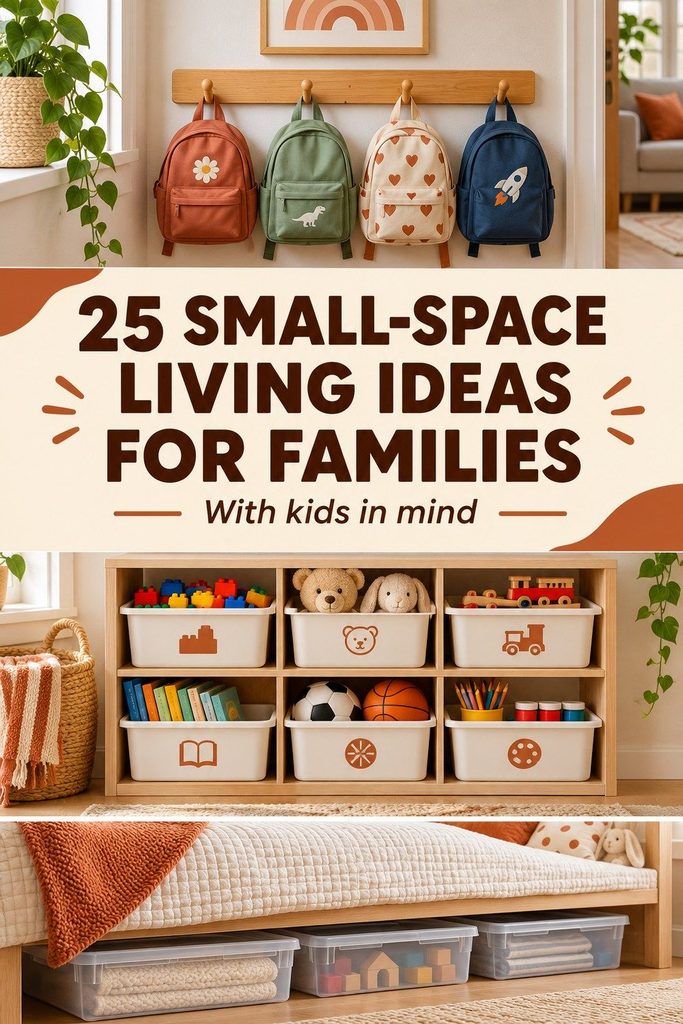
1. Give each kid a spot by the door
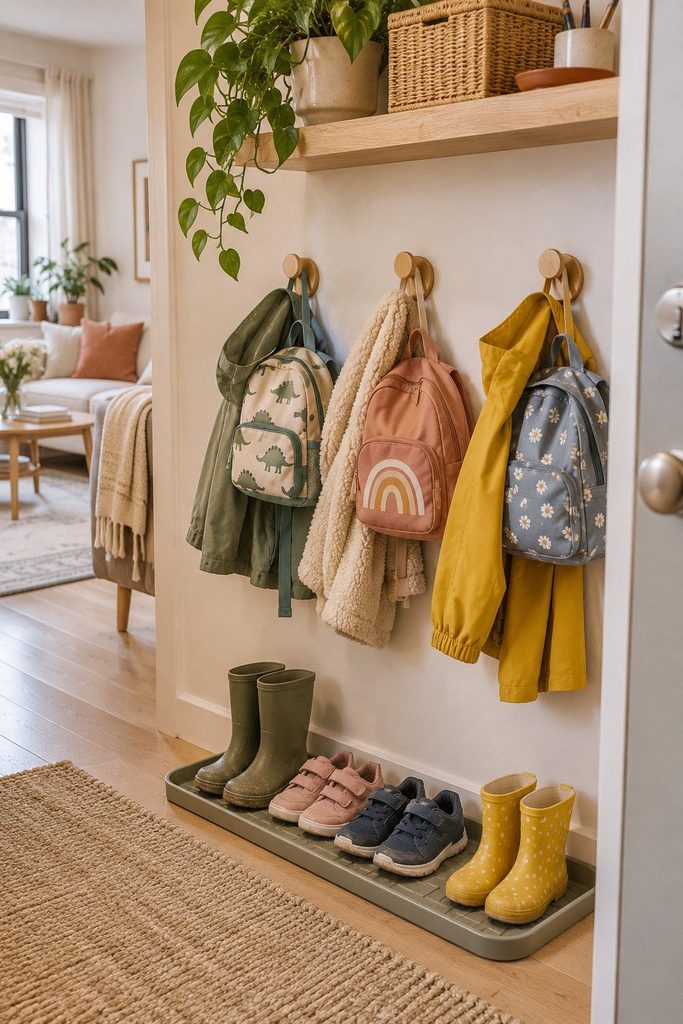
Use a hook for their backpack and coat and a spot on a shared tray for shoes. If you rent or have a narrow entry, try an over-the-door rack or clear one section of the hall closet. Put the everyday stuff where kids can reach it so they can put it away themselves.
2. Keep a small basket where clutter piles up
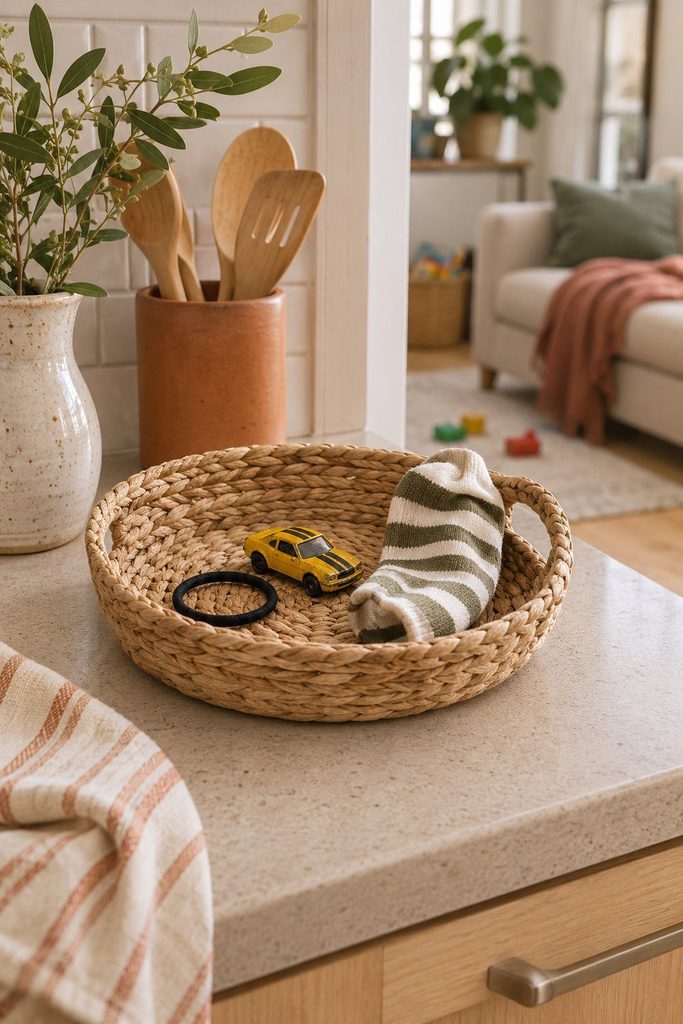
If hair ties, toy cars, and stray socks always wind up on the same counter, put a shallow basket there. Ask each kid to take their things with them when they head to bed. A basket that’s easy to empty will do more for you than a giant bin you have to dig through on Saturday.
3. Choose one place for school papers
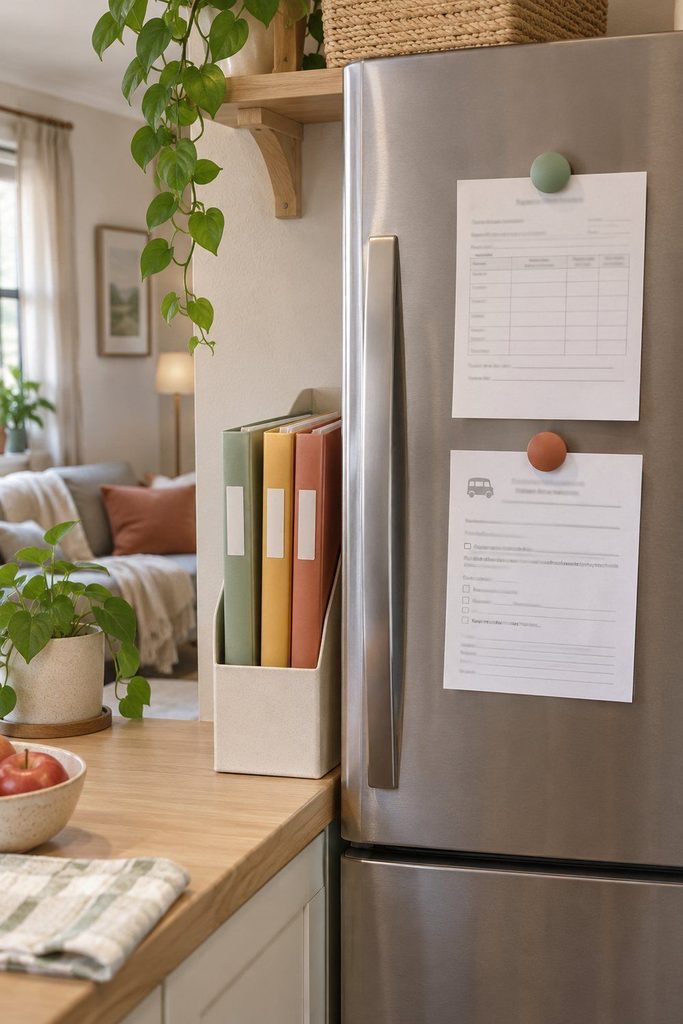
Clip permission slips and forms that need a signature to the fridge. Give each child one folder for artwork or schoolwork they want to keep. When it fills up, look through it together and let them pick what stays.
4. Store things where you actually use them
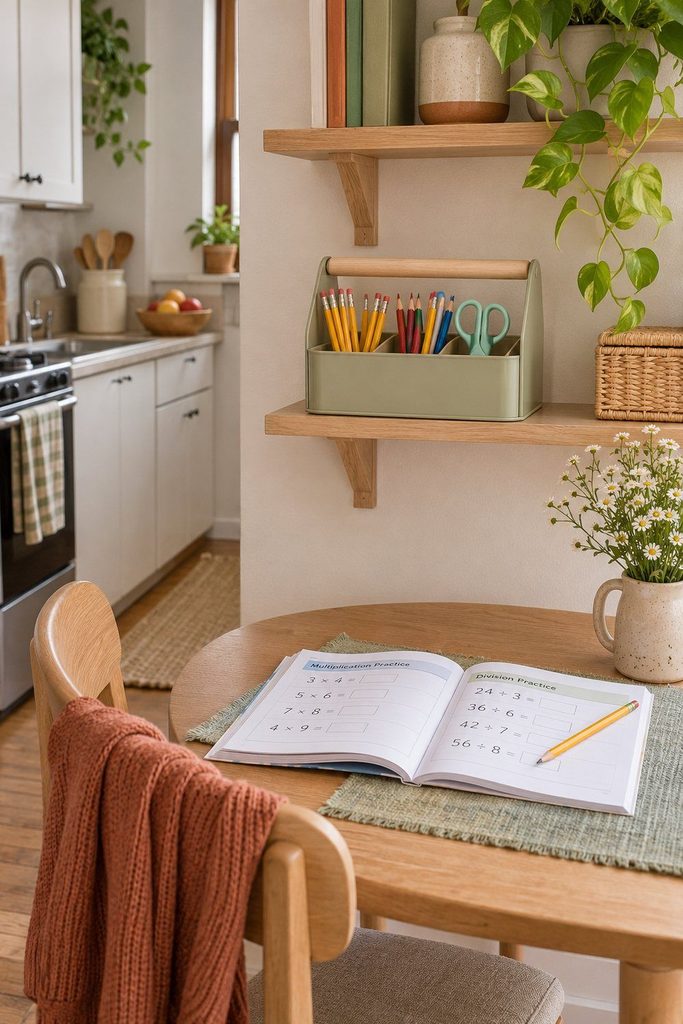
If your kids do homework at the kitchen table, keep pencils and scissors in a caddy on a nearby shelf. If they take off their socks in the living room every evening, put a small laundry basket there. Start with the thing you’re tired of carrying from room to room.
5. Keep one surface easy to clear
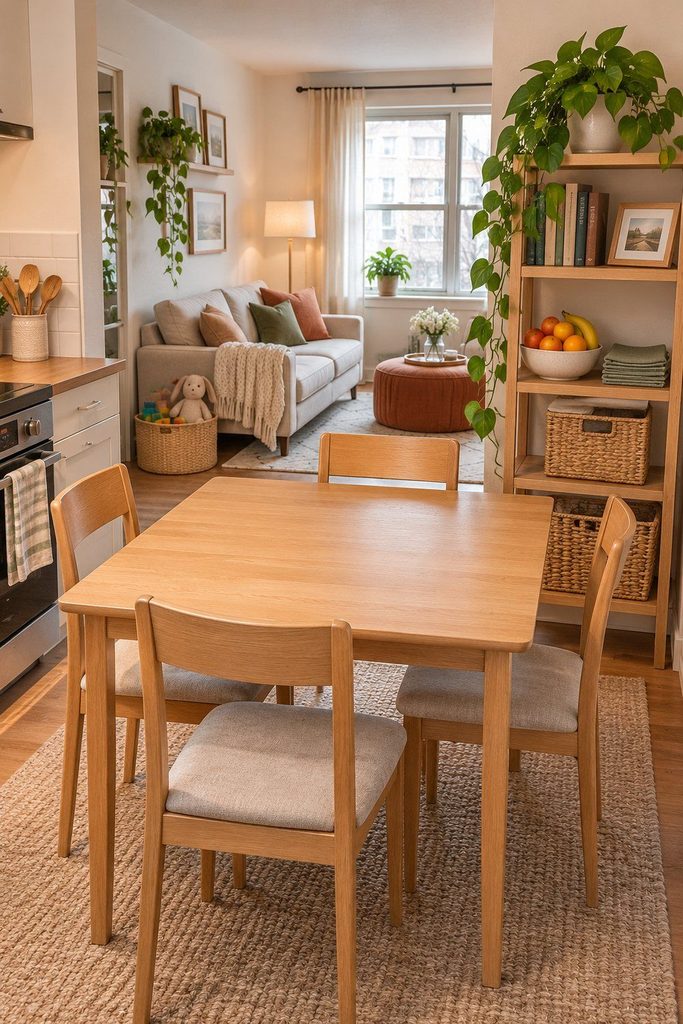
Pick the spot your family needs most often, like the kitchen table. Move anything that lives there full-time, such as the fruit bowl or a stack of placemats, to a nearby shelf. When the table starts out empty, there’s room to roll out cookie dough or spread out a school project without clearing it first.
Make room for toys and play
6. Put the favourite toys within easy reach
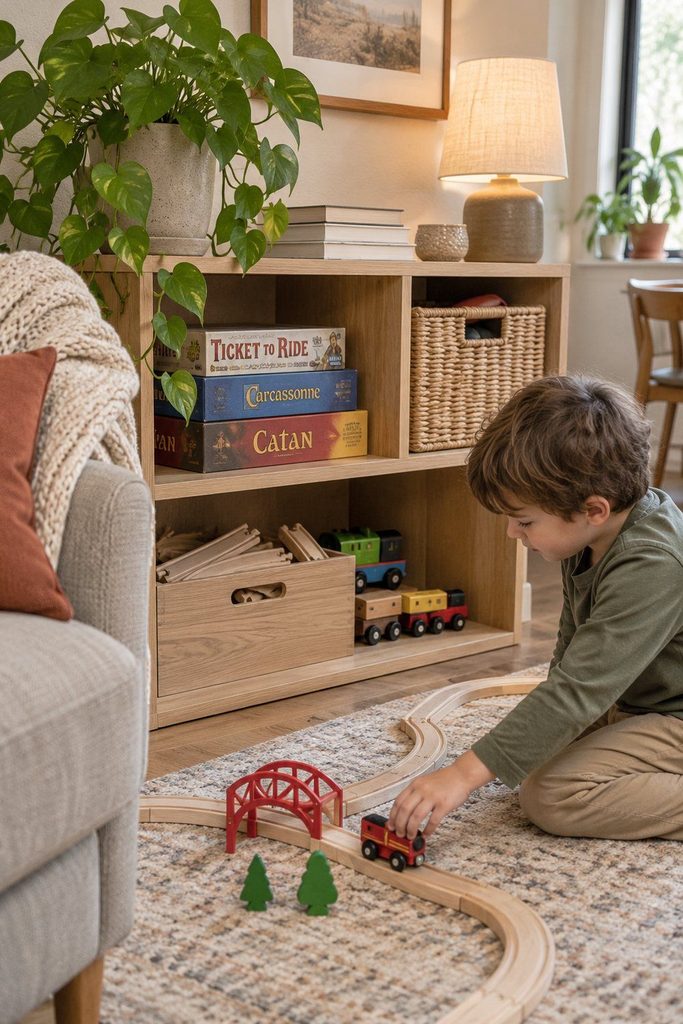
Watch what your kids pull out over the course of a week. Give those toys the easiest spots to reach. If the train set comes out every afternoon, it deserves the front of the shelf more than the board games you play once a month.
7. Rotate toys one bin at a time
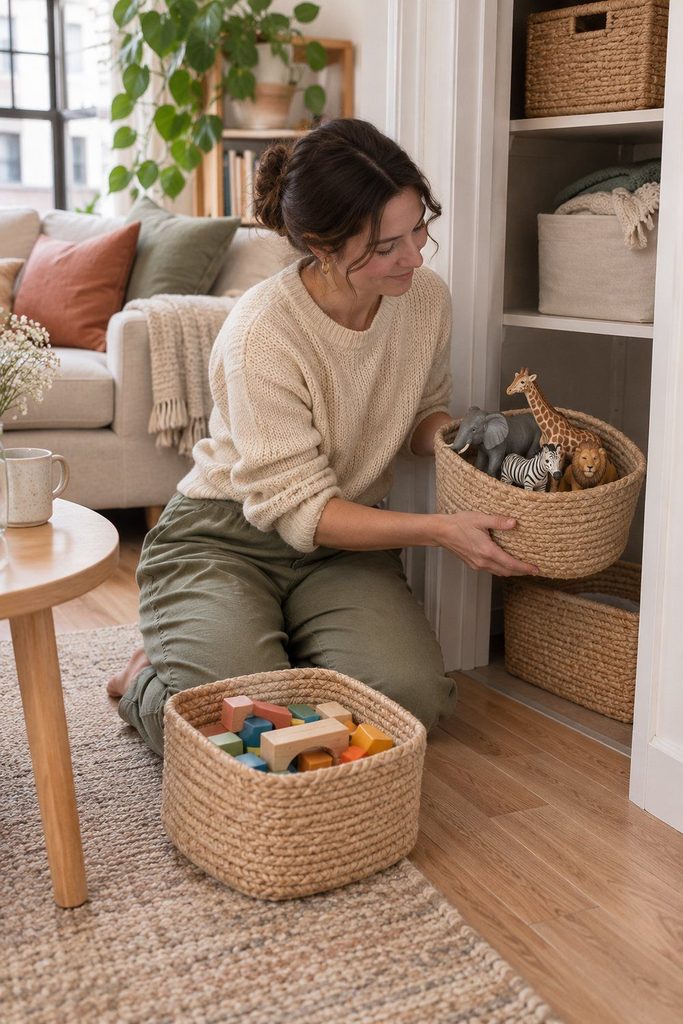
Put a small selection of toys away and bring them back when the current ones lose their appeal. Swap one basket of toys for another while keeping daily favourites out. A single bin is enough to try this in a home with limited closet space.
8. Give each toy category a container it can fit in
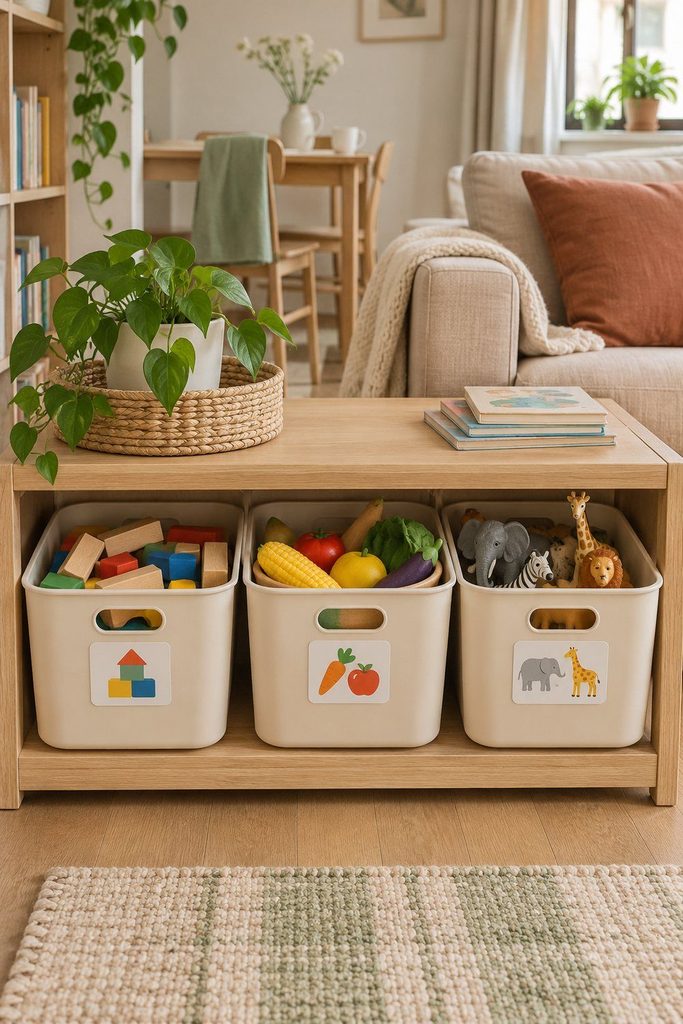
Use one bin for blocks, one for pretend food, and one for toy animals. Tape a simple picture to the front for kids who are too young to read. Leave enough room to toss everything in without having to arrange it just so.
9. Try a play mat that doubles as a cleanup tool
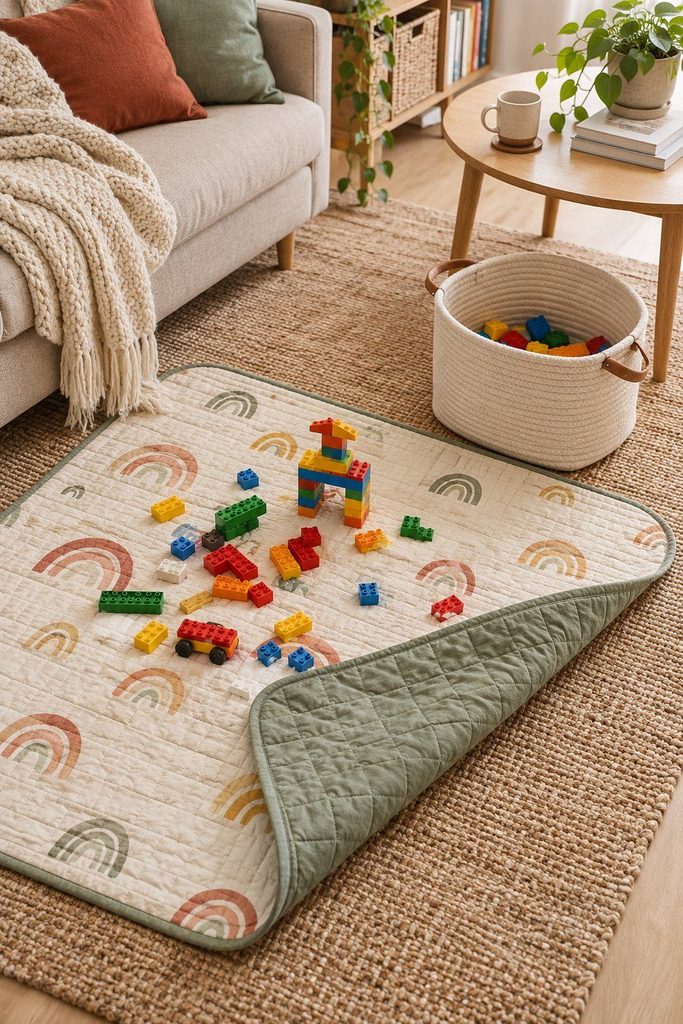
Spread a washable mat or old sheet under building bricks or play sets with lots of pieces. When playtime is over, pick up the corners and tip the pieces back into their bin. This works especially well when the living room rug is the main play space.
10. Make room for works in progress
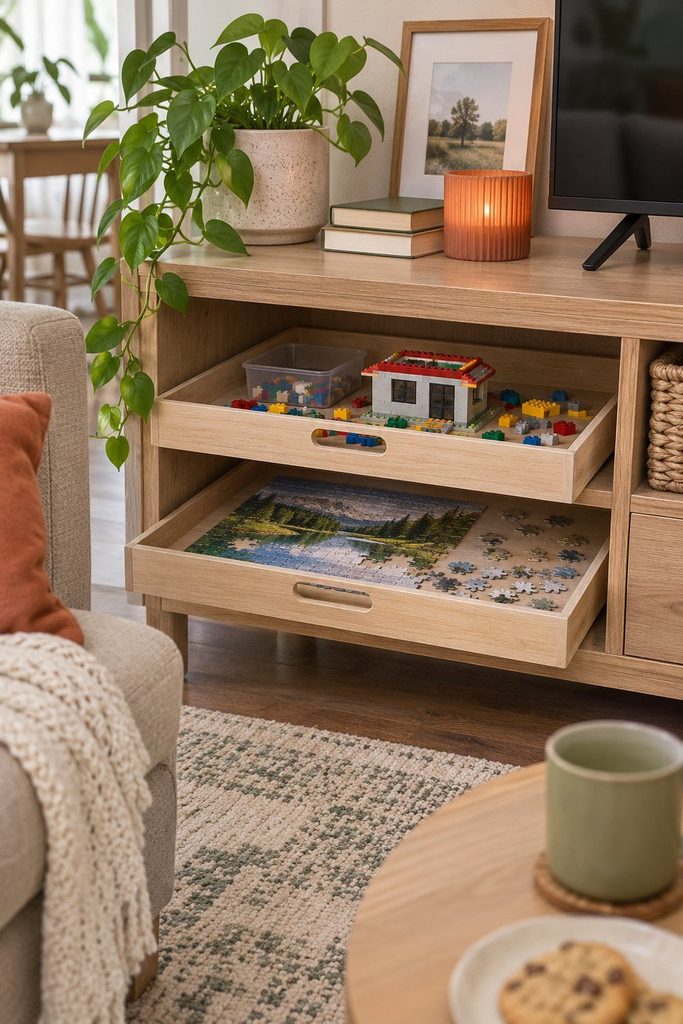
Give each kid a shallow tray for an unfinished build, craft, or puzzle. Slide it onto a shelf between play sessions. It’s easier to get kids on board with clearing the floor when they know they can finish what they started tomorrow.
Make shared bedrooms easier to live in
11. Give each child a spot that’s theirs
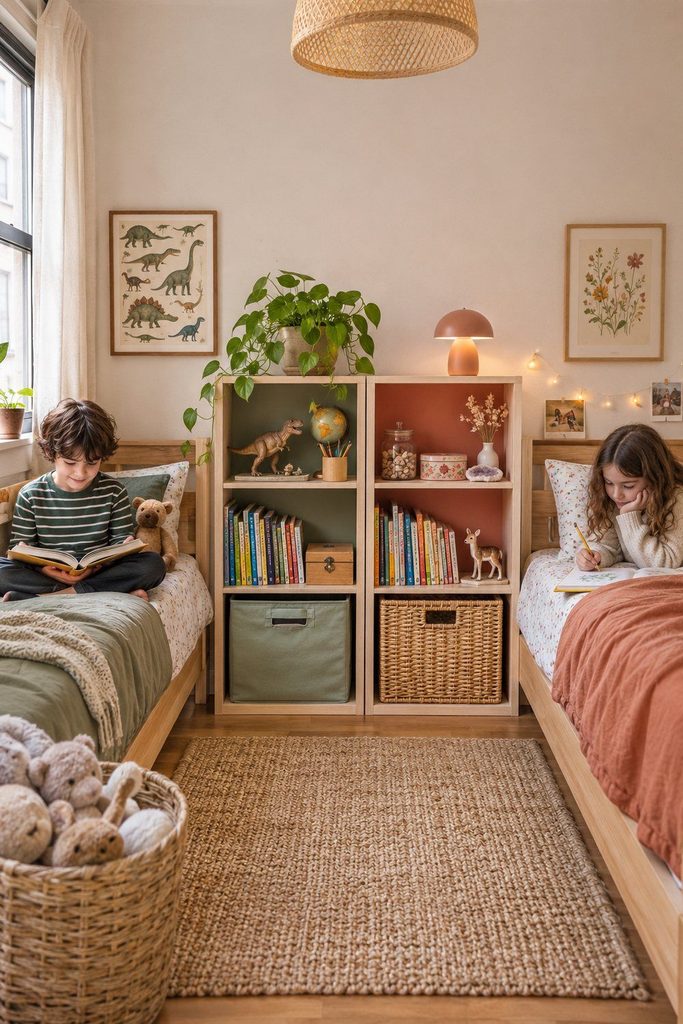
One drawer, cubby, or shelf can hold the books, treasures, and small belongings a child wants to keep to themselves. Let each kid decide what goes in their spot. In a shared bedroom, having a little space of their own can cut down on arguments over who moved what.
12. Use under-bed space for things you reach for less often
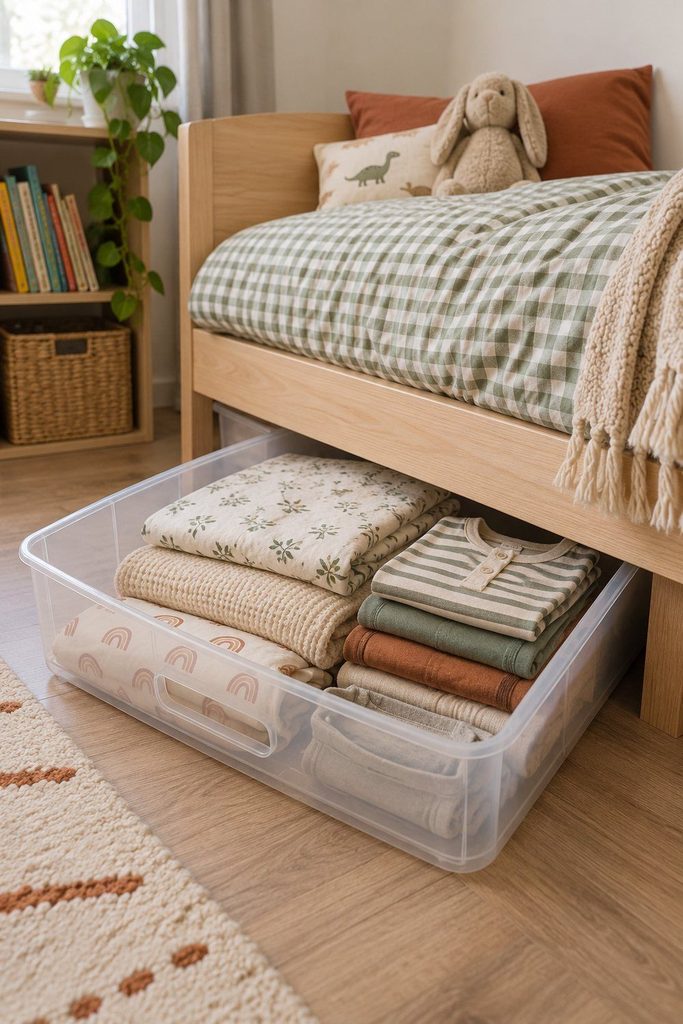
Try shallow bins for spare bedding, next-size clothes, or off-season gear. Measure the clearance under the bed and check how much room you have to pull the bin out. A bin that fits underneath still needs somewhere to go when it’s open.
13. Set up a quiet spot outside the bedroom
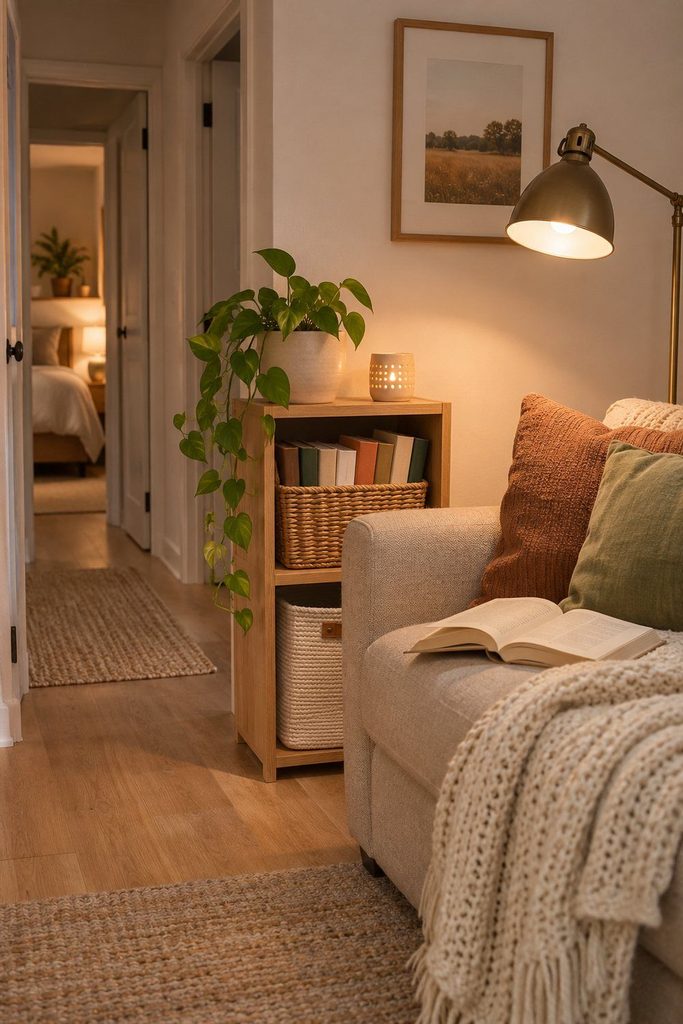
If siblings go to bed at different times, give the older child a place to read or draw after the younger one goes to sleep. A sofa corner with a small basket of books and a reading lamp can make bedtime smoother without taking over another room.
14. Make the easiest drawers the ones kids use daily
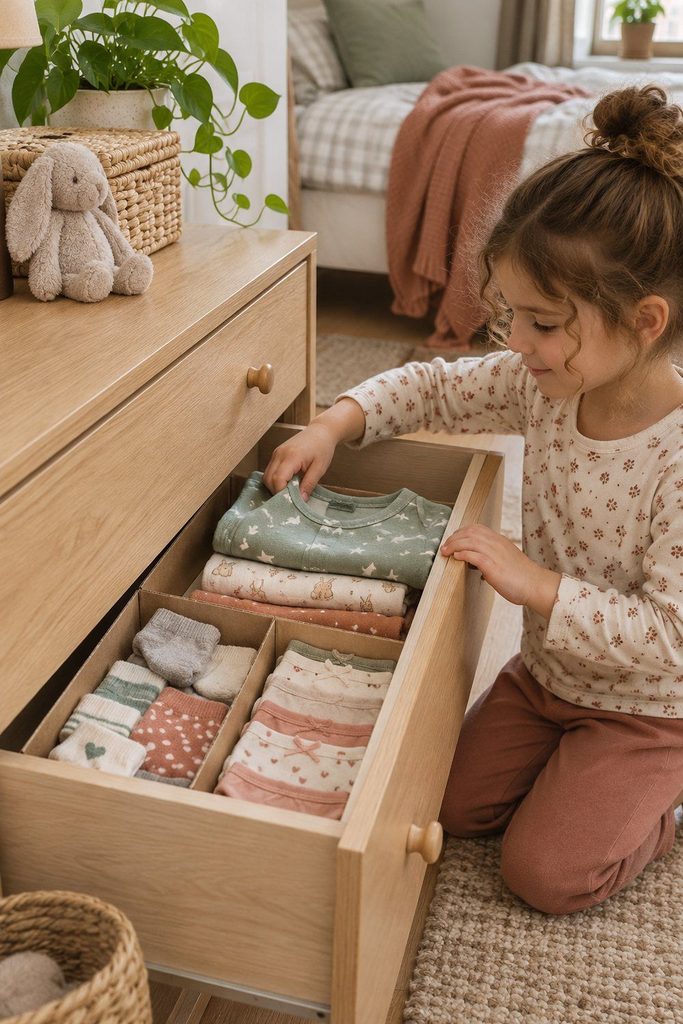
Put underwear, socks, and pyjamas where kids can reach them. Use small boxes you already have to divide a drawer if things tend to get mixed together. Save harder-to-reach spots for backup bedding or clothes they’ll grow into.
15. Put a limit on outgrown clothes
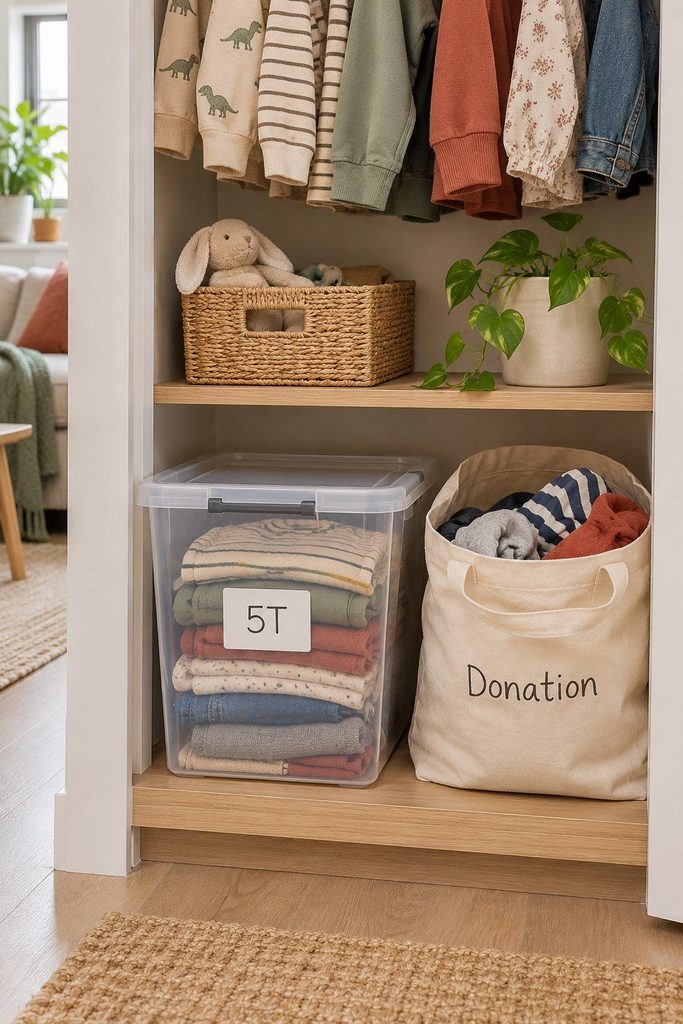
Keep one bag for donations and one clearly labelled bin for clothes a younger sibling will use. Write the size on the side you can see so you know when to pull it out. When the donation bag is full, put it by the door for your next errand.
Make the most of the space you already have
16. Clear a path through your busiest room
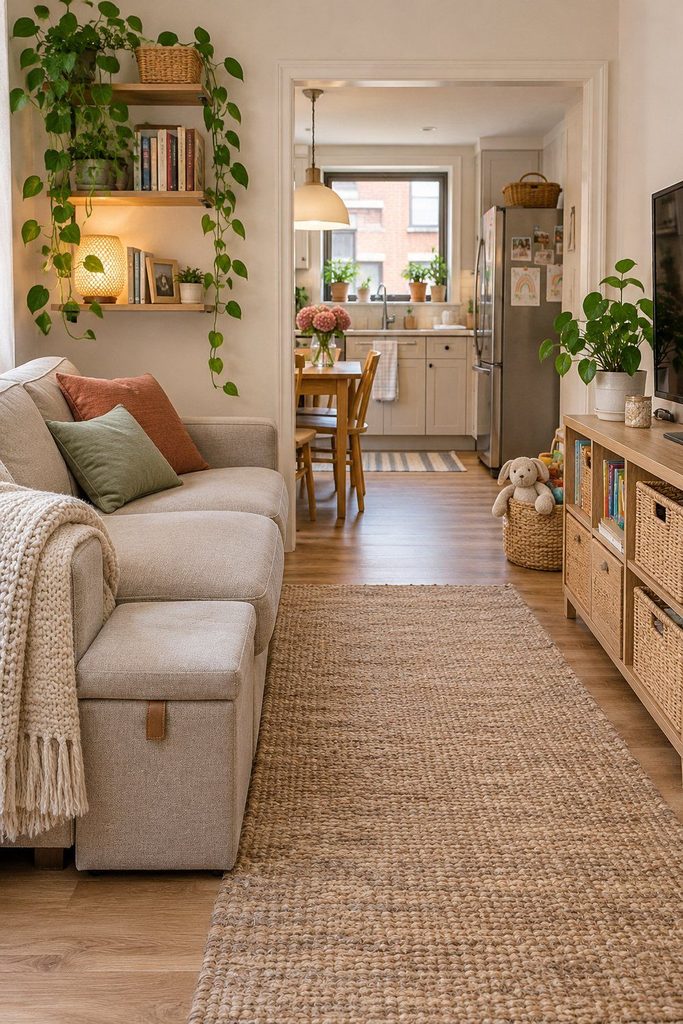
Walk your usual route from the front door to the kitchen or from the sofa to the hallway. Notice where you step around an ottoman, a toy bin, or the corner of a table. Moving one piece can make the room easier to use, especially when everyone is trying to get out the door.
17. Use the backs of doors
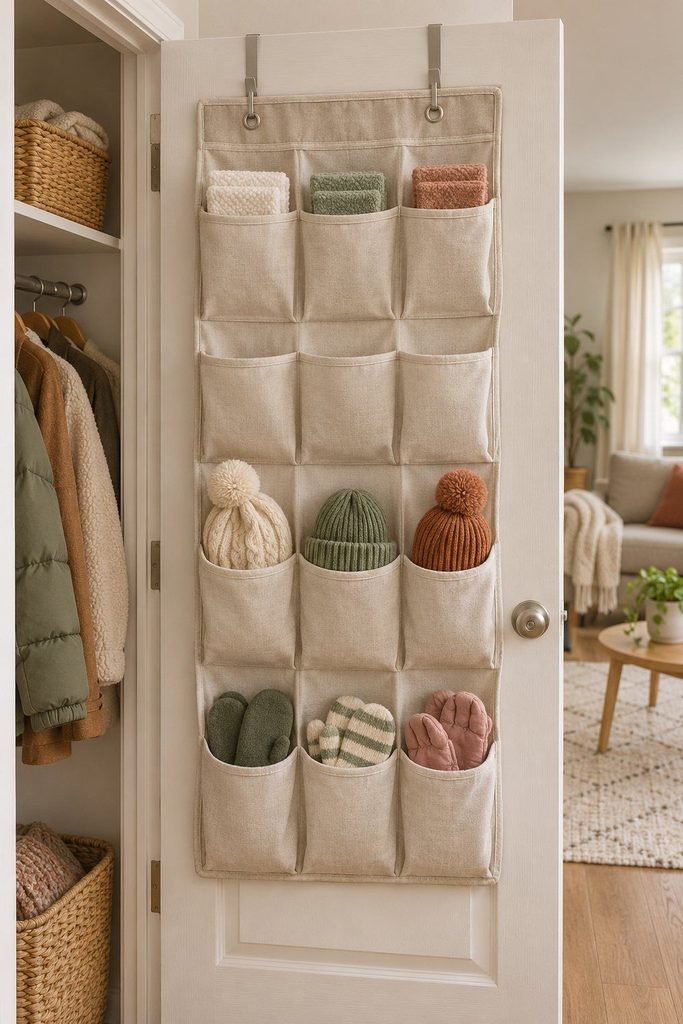
An over-the-door organizer can hold hats, gloves, or extra washcloths in space you already have. Check that the door still closes easily and put everyday items in the pockets your kids can reach.
18. Group books where your kids already read
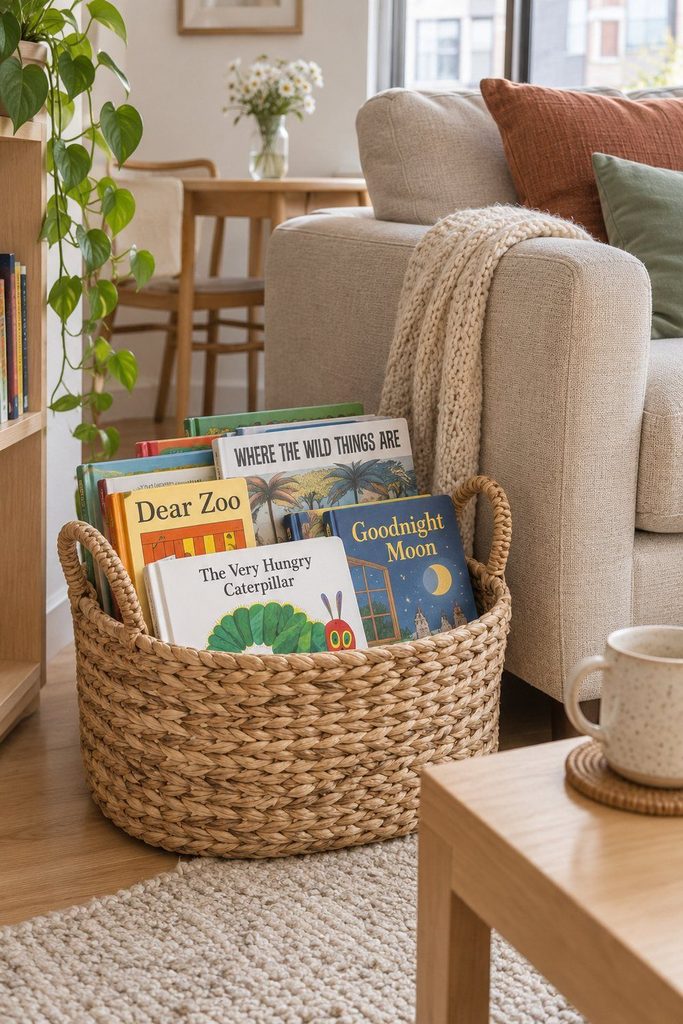
Put a small basket of current favourites beside the sofa or near the bed. Rotate them from the bookshelf when the basket starts getting ignored. If books routinely wind up in the living room anyway, giving them a home there saves a daily trip back to the bedroom.
19. Keep craft supplies in a grab-and-go caddy
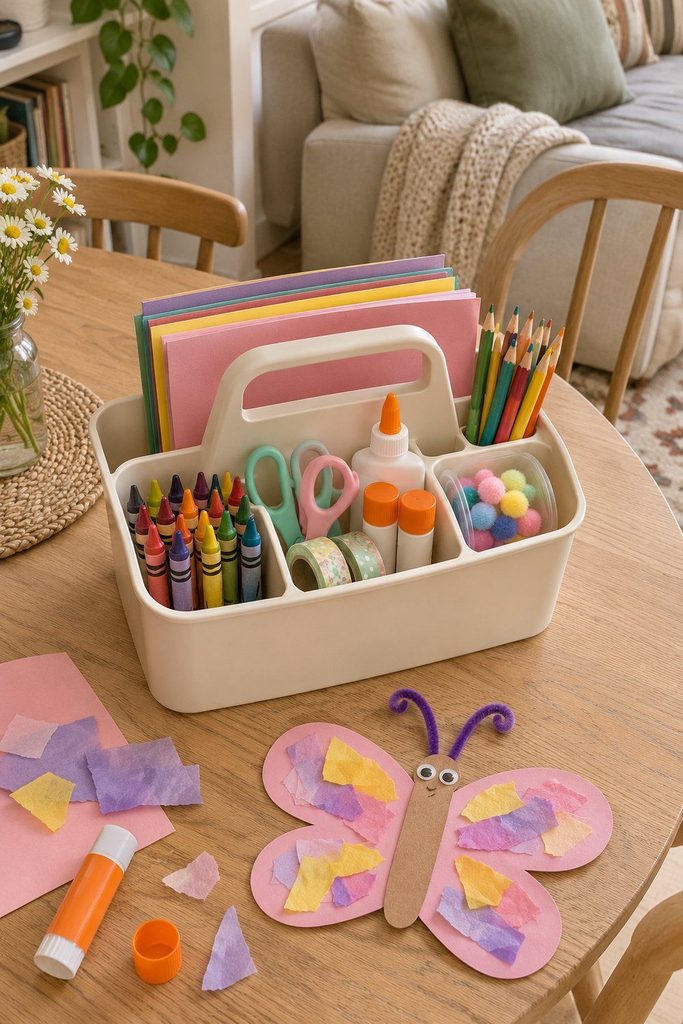
Stock a portable caddy with paper, pencils, crayons, and the supplies your kids use most. They can bring it to the table and carry it back when they’re done. Keep larger items like rolls of paper together in a closet so they’re easy to grab when a project calls for them.
20. Make furniture earn its floor space
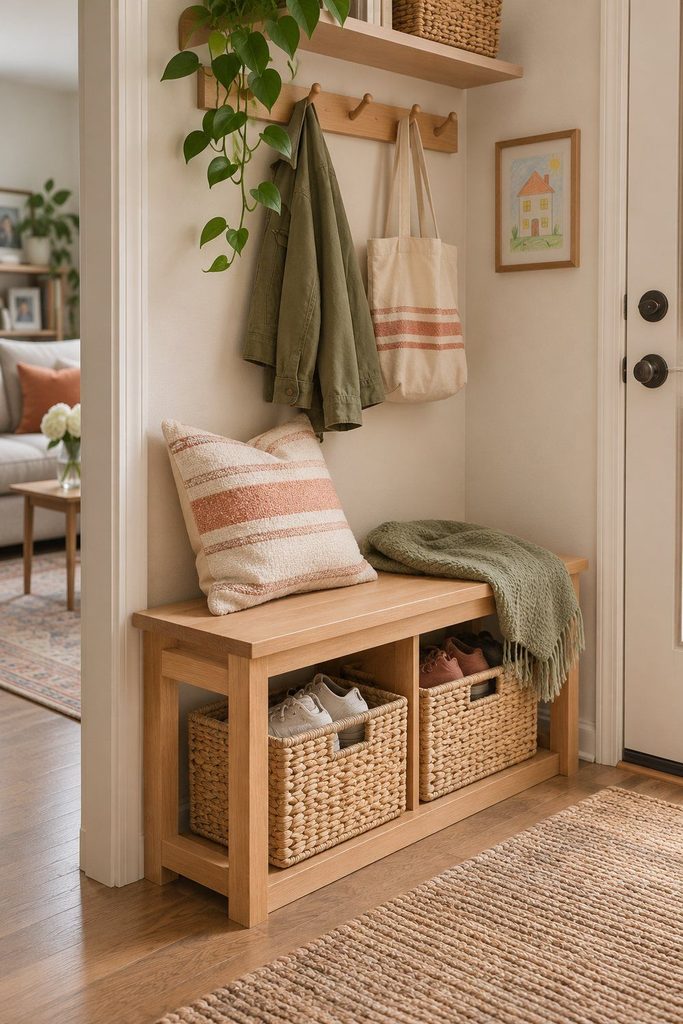
Before buying anything, look at which pieces your family actually uses. A spare chair that mainly holds laundry might be taking up the best spot for floor play. If you’re already replacing something, consider a bench with room underneath for shoe baskets or a table that extends when you have company.
Build routines that keep small rooms usable
21. Give snacks and water bottles one kitchen spot
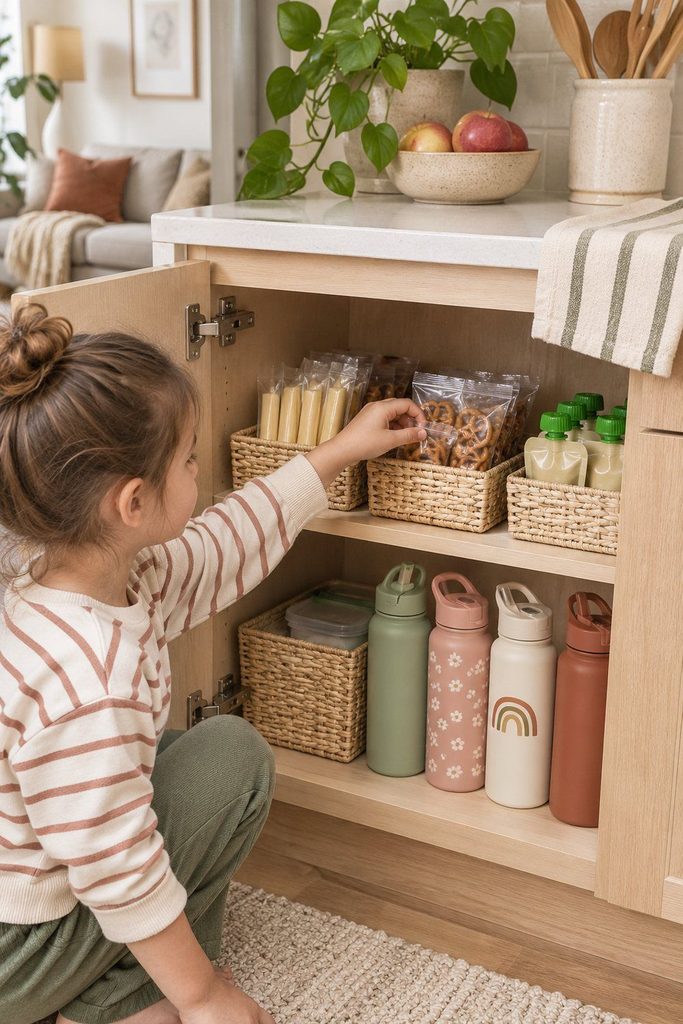
Group everyday snack options and water bottles in a cupboard or drawer your kids can use. Keep enough there for the next few days and refill it from wherever you store extras. It makes lunch packing easier and leaves more counter space for cooking.
22. Keep laundry sorted by where it goes
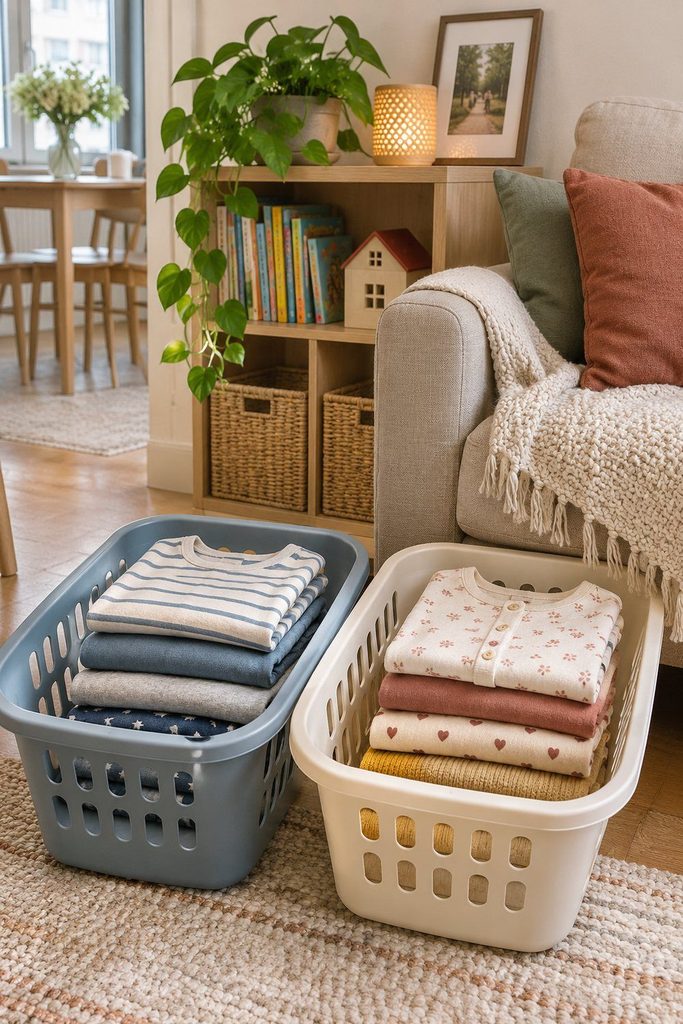
Try a small basket for each bedroom or hand each child their pile right after folding. If clean laundry usually sits on the couch all day, fold one load when there’s time to put it away. Getting the couch back is worth more than folding three loads at once.
23. Check your cupboard before buying in bulk
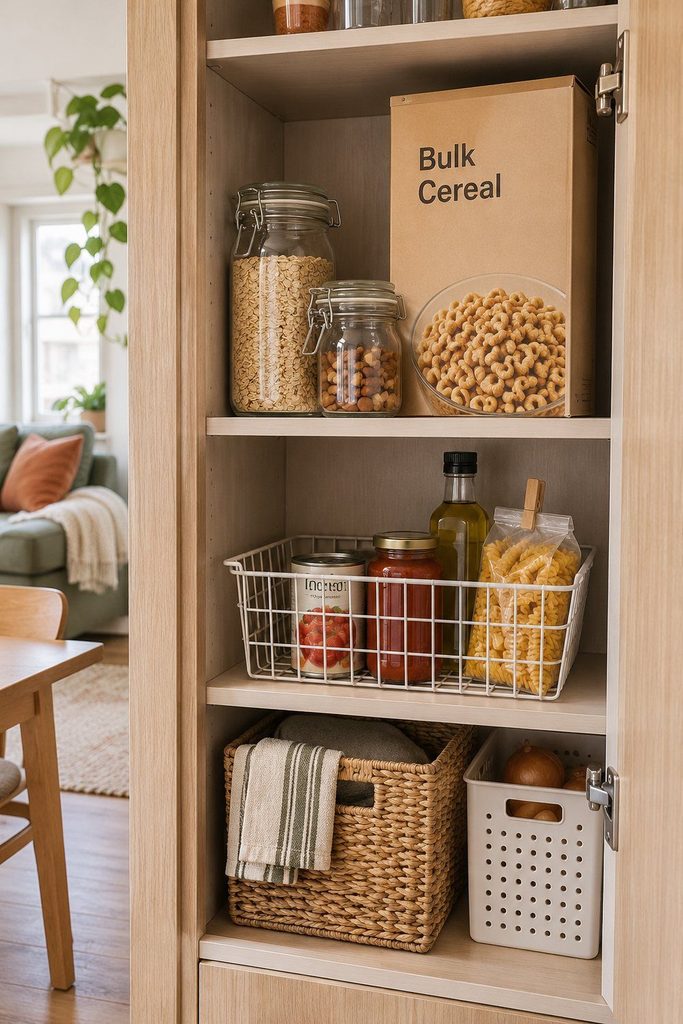
Think about where the open package will go after you’ve taken out what you need. A big box of cereal might fit the grocery budget but take up half the pantry shelf. If you use an item quickly and have a spot for the extras, buying in bulk can still make sense.
24. Give bulky gear a seasonal home
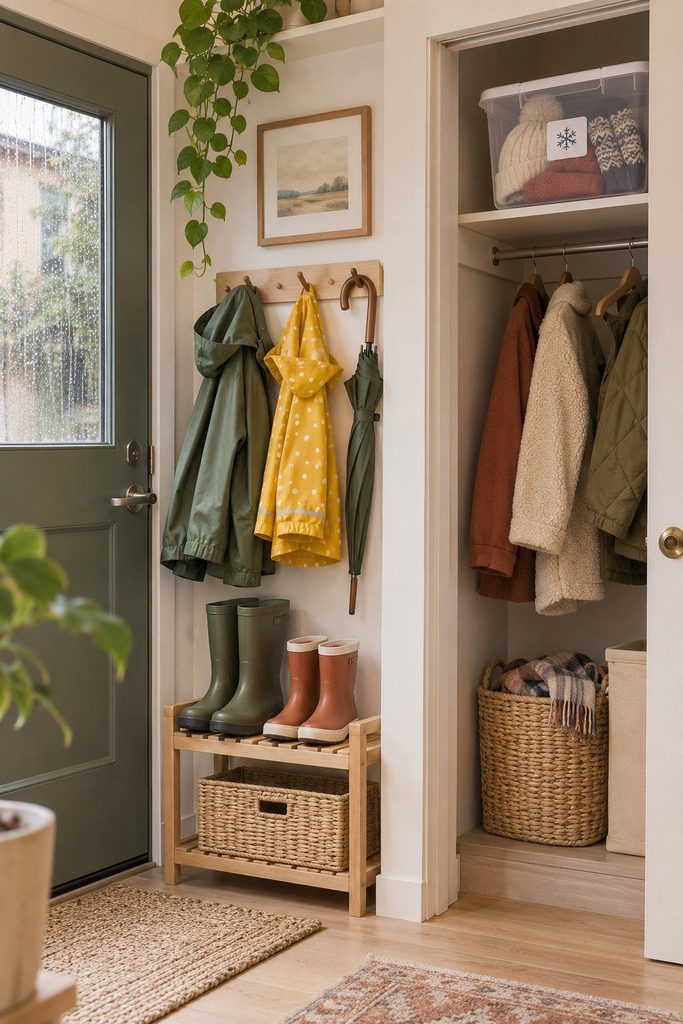
Keep the boots, jackets, and outdoor gear you’re using now near the door. Move the rest into one labelled bin in the closet or under a bed. Do the swap when the weather changes so next season’s gear is easy to find and everyday items have room to dry.
25. Do a five-minute reset before the next part of the day
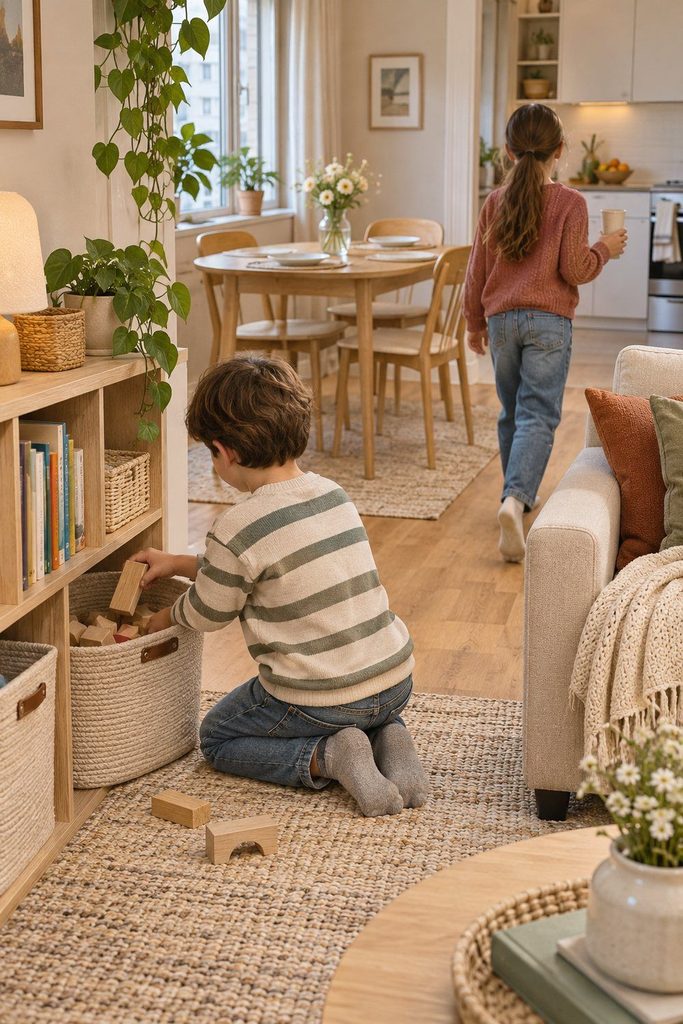
Pick a natural stopping point, like before dinner or before bedtime. Give each kid one job they can finish, such as putting blocks in their bin or bringing cups to the kitchen. Focus on getting the table, sofa, or floor ready for whoever needs it next.
Start with the spot that frustrates you most
If getting out the door is the hardest part of your morning, start with the entry. If you clear the table three times a day, give unfinished projects a place to go. Try one change for a week and see what gets easier. That will tell you more about what your family needs than a full afternoon spent shopping for storage bins.