There’s something almost cinematic about winter mornings with little ones—soft light spilling across the floor, the scent of warm cocoa nearby, and tiny hands eager to explore anything that sparkles, crunches, or glows. When the world outside turns frosty, sensory bins become an easy way to bring that magic indoors, transforming ordinary materials into small wonders that feel as enchanting as the first snowfall.
Heads up: This post may include affiliate links. As an Amazon Associate, I earn from qualifying purchases—at no extra cost to you. Full privacy policy and disclosure here.
Winter Sensory Bin Ideas
Snowy Small World Village
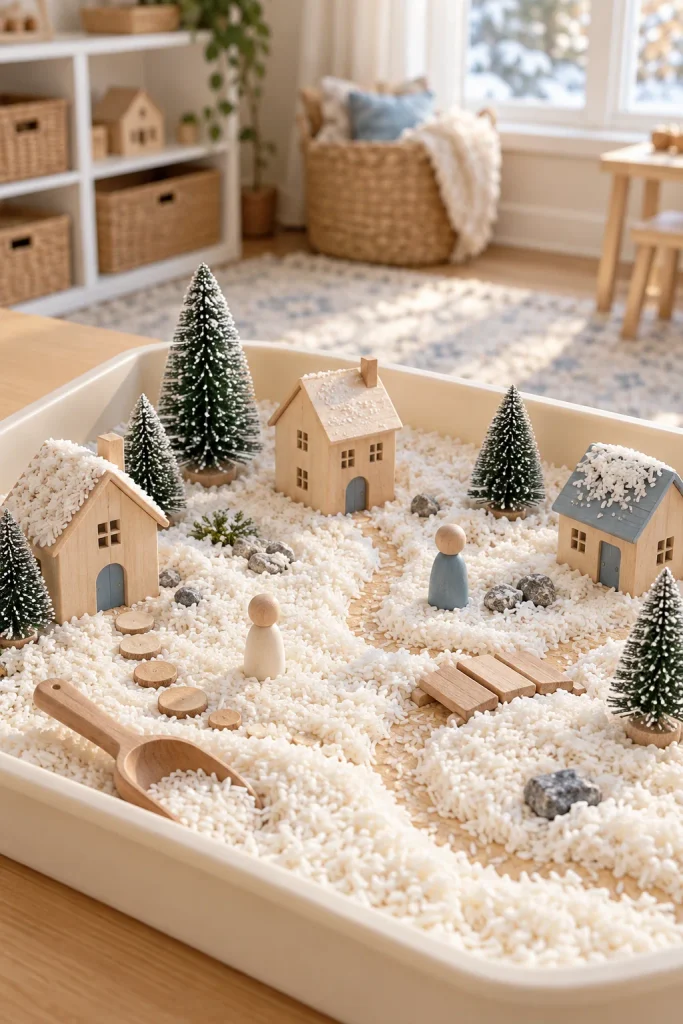
This bin captures the quiet charm of a winter town at dawn—soft, white bases paired with miniature details that invite storytelling. Fill your bin with white rice, instant snow, or cotton batting to create a snowy landscape, then layer in simple figures like wooden peg dolls, tiny houses, and mini bottle-brush trees to form a cozy village your toddler can explore and rearrange.
This kind of small-world play naturally encourages language development, imaginative thinking, and gentle fine-motor work as little hands move pieces through the snow. Offering a simple wooden scoop adds an extra layer of engagement, inviting children to shift “snow,” create paths between houses, or help characters travel through the village. Keeping accessories minimal allows the scene to feel airy and peaceful—much like a real winter morning just beginning.
Arctic Animals Discovery Bin
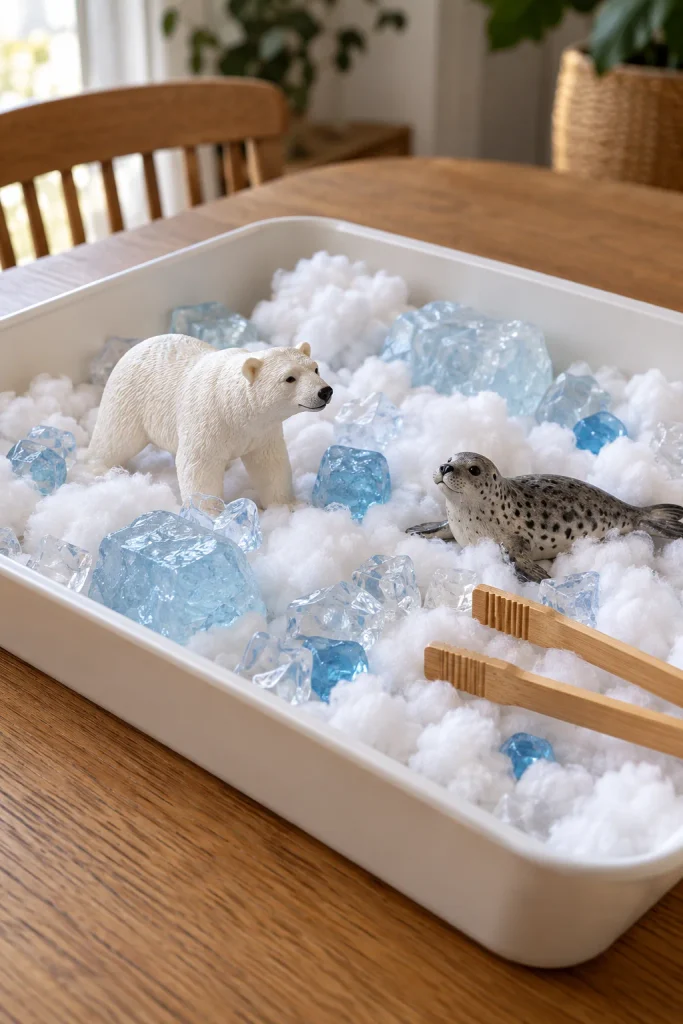
This bin feels like stepping into a tiny arctic expedition—cool tones, crisp textures, and gentle, icy sensory moments. Start with a base of cotton batting, reusable ice cubes, or real ice blocks placed in a shallow bowl inside the bin. Layer in arctic animal figurines like polar bears, seals, puffins, or penguins to create a miniature frozen habitat your child can explore.
The mix of cold elements and soft materials offers a rich sensory contrast that encourages descriptive language and curiosity about winter wildlife. As children make tracks in the “snow,” balance animals on icebergs, or pretend to rescue them from drifting floes, simple tools like sensory tongs add an extra fine-motor challenge. It’s a straightforward setup with a surprisingly big imaginative payoff.
Frozen Treasure Hunt
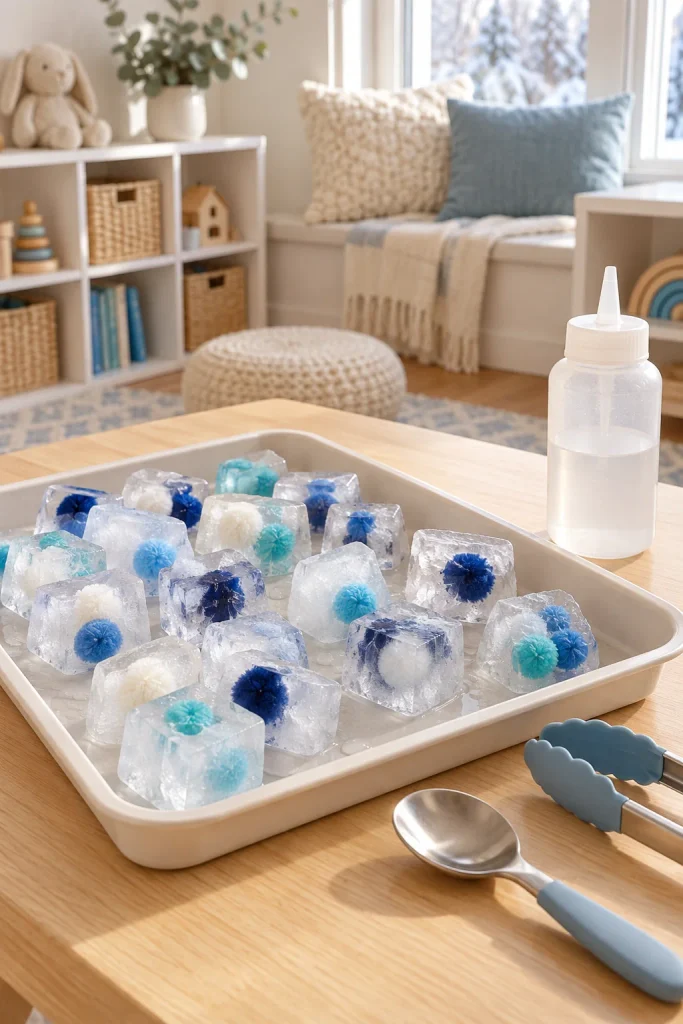
This bin brings a touch of winter magic to fine-motor play, turning everyday objects into sparkling frozen “treasures.” Freeze small pom-poms, buttons, or sensory gems inside ice cubes using silicone ice cube trays. Once frozen, scatter the cubes across a shallow bin and offer warm water in a kid-safe squeeze bottle, along with a spoon or fine-motor tongs, to help melt or uncover each hidden treasure.
The slow reveal encourages patience, problem-solving, and plenty of awe as colors begin to peek through the ice. Adding a layer of cold rice or instant snow beneath the cubes makes each discovery feel more dramatic—like unearthing something rare and glittering beneath a frozen winter surface.
Winter Wonderland Pom-Pom Scoop Bin
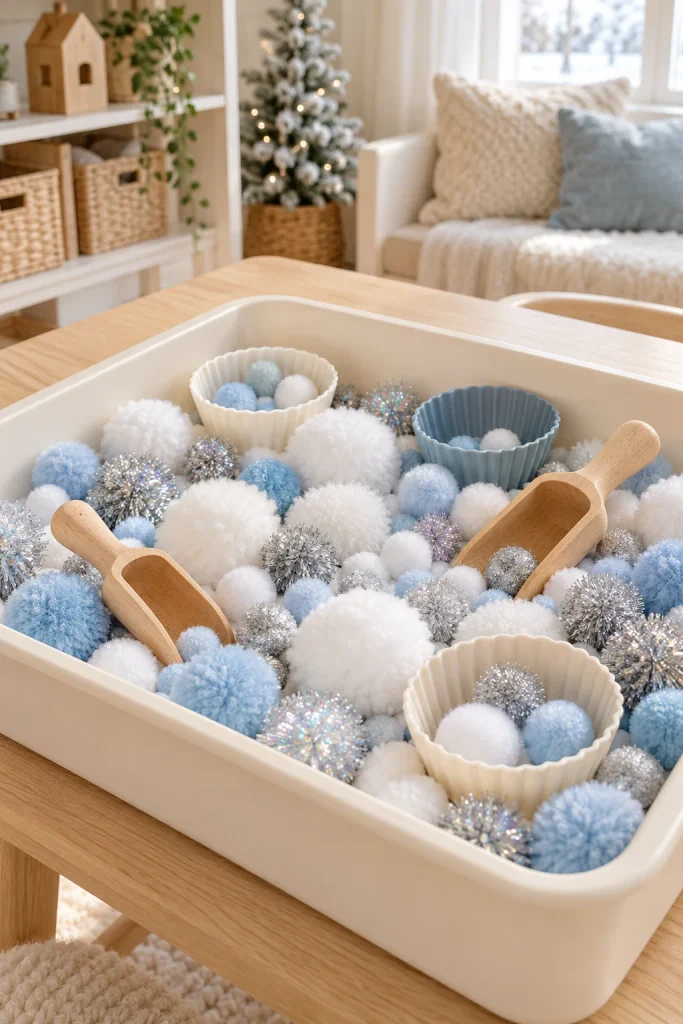
This bin is soft, bright, and wonderfully simple—perfect for days when you want something magical without a long setup. Fill your bin with white, silver, and icy-blue pom-pom assortments in a mix of sizes, then add a few fine-motor scoops, bowls, or silicone sorting cups. The result is an inviting winter play scene that feels like a snowy landscape designed for little hands.
The lightweight textures make scooping, sorting, and pouring especially satisfying. Toddlers naturally begin categorizing by size or color, building early math and fine-motor skills without even realizing it. The gentle color palette keeps the activity calm and soothing, giving it the same quiet charm as a winter afternoon spent indoors.
Ice Castle Construction Zone
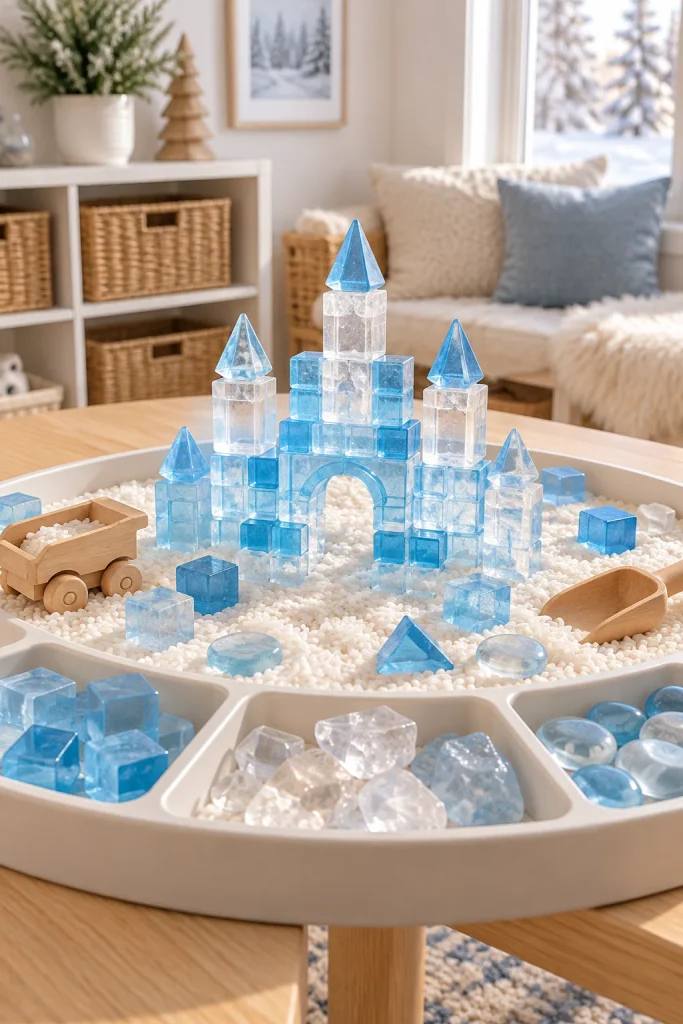
This bin turns winter play into a miniature architectural adventure. Start with a layer of instant snow, cotton batting, or white rice to create a frosty foundation. Add translucent building bricks, blue glass beads, or clear stacking cubes to inspire your child to build their own sparkling “ice castle.” The contrast between cold elements and smooth, translucent pieces gives the entire setup an enchanting, crystalline look.
As children stack and rearrange their icy structures, they naturally experiment with balance, height, and symmetry—exploring early engineering concepts in a way that feels playful rather than instructional. Offering a small bowl of warm water adds an extra sensory layer, while using a sectioned sensory tray helps keep building materials organized and easy for little hands to access.
“Hot Cocoa Shop” Dramatic Play Bin
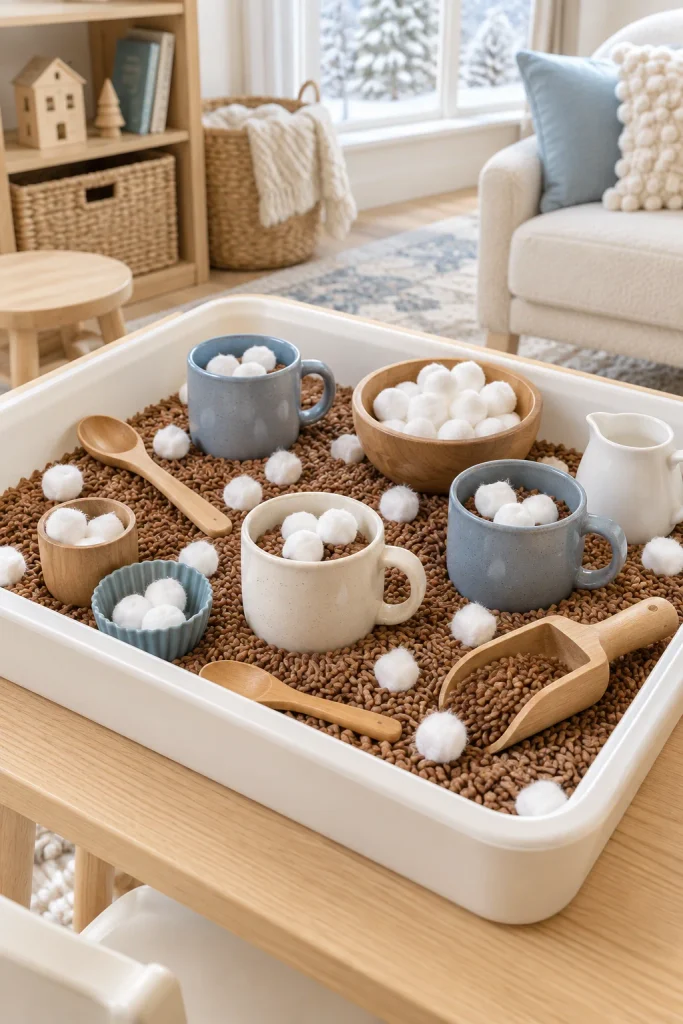
This cozy bin brings a warm, café-inspired twist to winter sensory play. Start with a base of brown rice or cocoa-colored oats to mimic hot chocolate powder, then add cotton-ball “marshmallows,” pretend play mugs, wooden spoons, scoops, and silicone cupcake liners. The result feels like a tiny hot cocoa stand—inviting, imaginative, and perfectly suited to children who love pretend play.
As kids scoop, stir, serve, and “taste,” they dive into rich dramatic play that builds language skills, sequencing, and storytelling. The warm tones offer a comforting visual break from icy winter palettes, making this an ideal snow-day activity. For an extra layer of charm, include cinnamon sticks or whole cloves in a sealed container so children can enjoy a festive winter scent safely.
If your child gravitates toward imaginative play, the next bin leans into storytelling through texture and movement.
Polar Bear Bath Bin
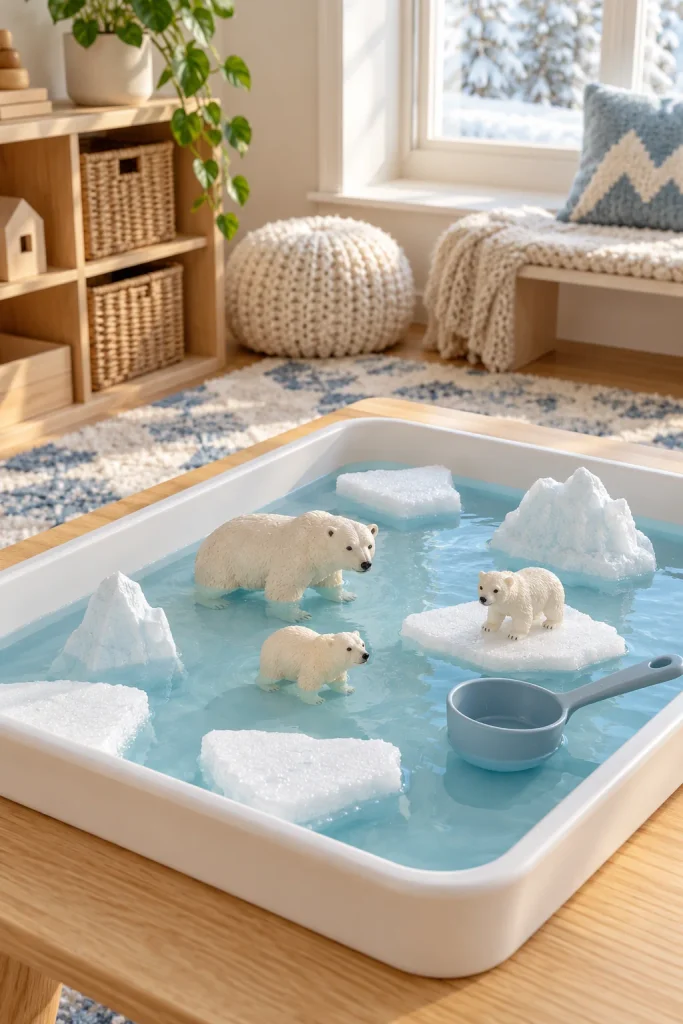
This refreshing, water-based setup captures the gentle chill of winter without overwhelming little hands. Fill the bin with cool (not cold) water tinted a soft blue using food coloring or bath tablets, then add foam “icebergs,” washable animal toys, and a small ladle or water play scoop. The floating pieces create a calm, gliding effect that instantly feels like a polar bay.
Children love giving the animals “baths,” guiding them across the water, and rescuing them from drifting ice. Using foam sheets to create soft icebergs adds another tactile layer while supporting language development and early cause-and-effect learning. Keep a warm towel nearby to wrap animals—or tiny hands—when play ends.
Sparkle Snow Sensory Bin
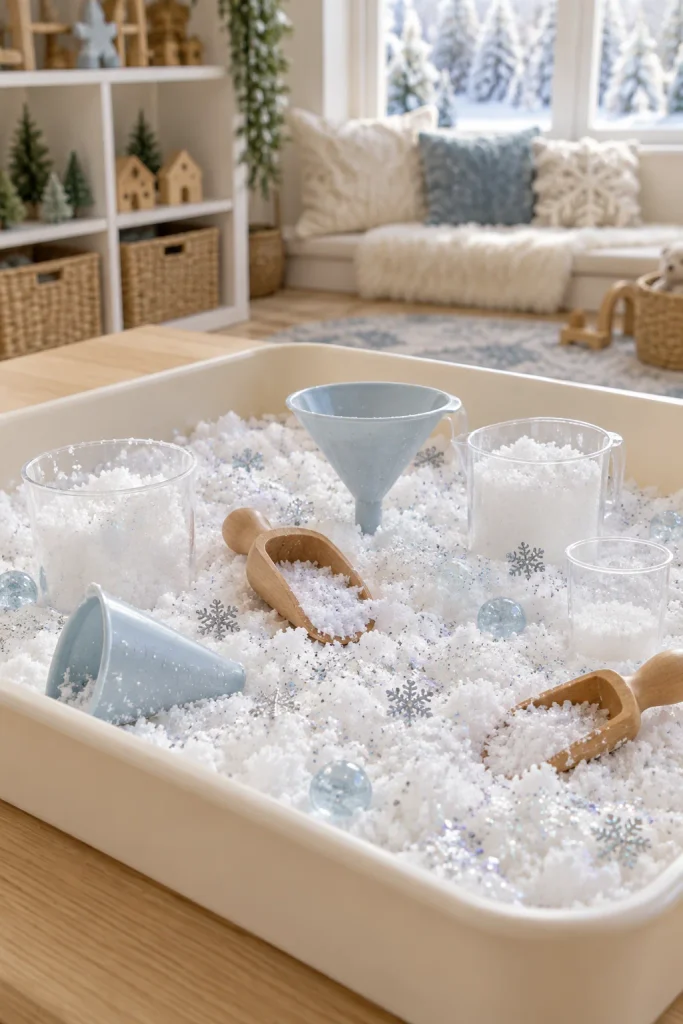
This bin channels the shimmer of fresh snowfall—the kind that glows when sunlight hits just right. Use instant snow as the base, then fold in a pinch of biodegradable glitter or silver confetti for a soft, luminous effect. Adding sensory funnels, scoops, and translucent cups invites gentle digging and pouring that feels calm and purposeful.
The cool, fluffy texture is irresistible, and the subtle sparkle makes the experience feel like a real winter morning on the ground. As children explore volume, sensory contrast, and imaginative story prompts—“Is it fairy snow? Moon snow?”—the play stays simple, beautiful, and endlessly engaging.
Winter Nature Bin
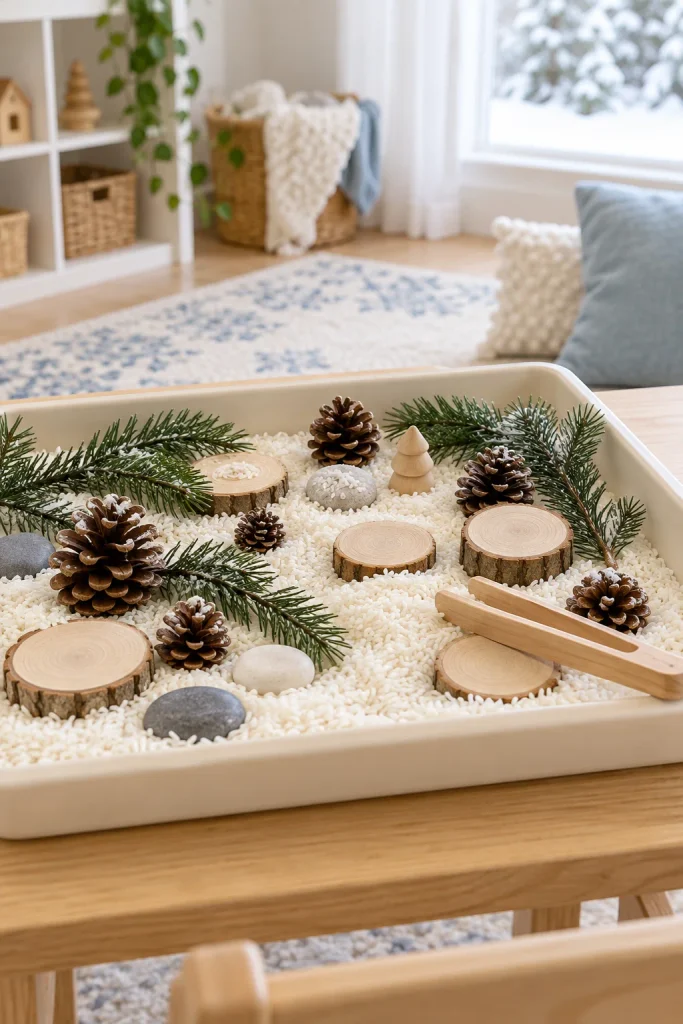
This earthy, woodland-inspired bin brings a quiet touch of the outdoors inside. Gather pinecones, evergreen clippings, acorns, snowflake confetti, and smooth wooden discs, then spread everything across a base of white rice or cotton batting to mimic a snowy forest floor.
Children naturally explore textures, compare shapes, and create simple nature scenes as they move pieces through the “snow.” This bin feels especially grounding—perfect for kids who thrive with calm, tactile play. The subtle scents from natural materials add an extra sensory layer that feels fresh, cozy, and distinctly wintery.
Gingerbread Cookie Sensory Bin
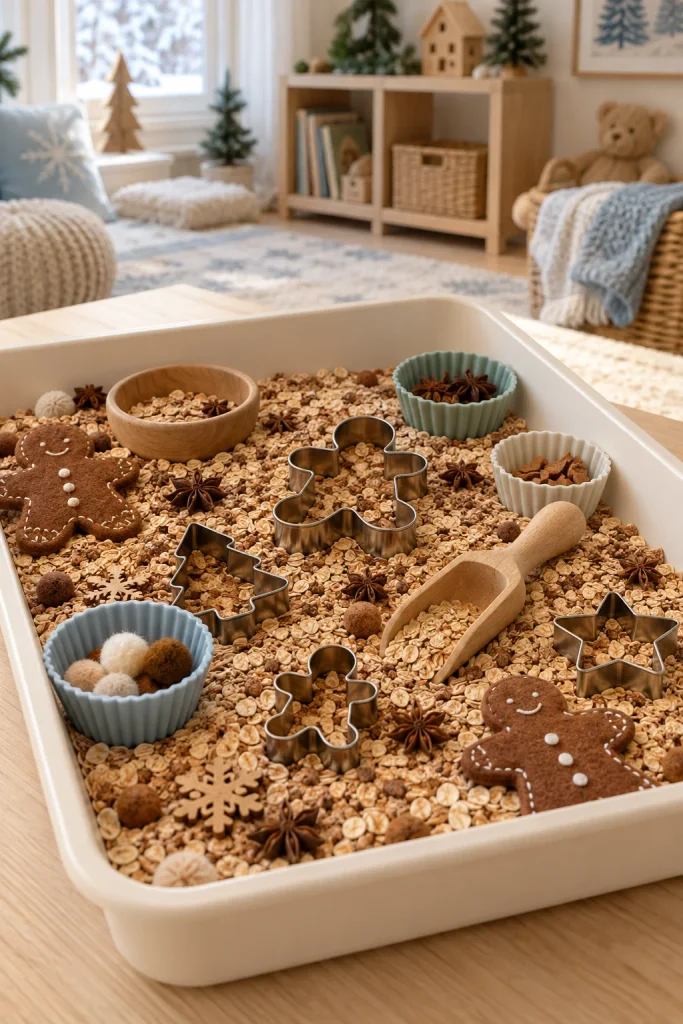
This warm, festive bin feels like stepping into a holiday bakery. Use cinnamon oats or oat flour as the base—soft, scented, and perfect for scooping—then add gingerbread cookie cutters, wooden scoops, silicone cups, and felt “cookies” for shaping and pretend-play baking.
The scent alone draws children in, but the real magic lies in the open-ended play possibilities. As they sift, pour, stamp, and create tiny cookie scenes, they build fine-motor strength while tapping into seasonal nostalgia. It’s an ideal activity for December afternoons—or anytime you want holiday magic without the mess of real baking.
Winter Hat Texture Bin
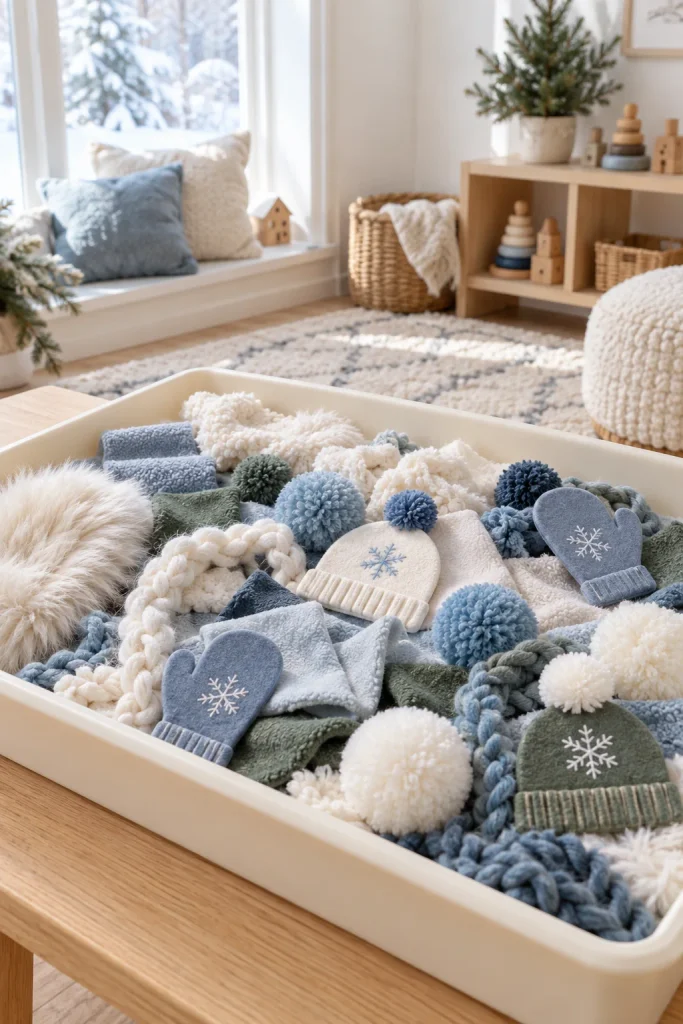
This cozy, tactile bin is inspired by the soft, layered textures of winter clothing. Gather fleece scraps, faux fur pieces, yarn strands, buttons, large pom-poms, and felt cutouts shaped like mittens or hats, then spread everything across a neutral base like cotton batting to create a gentle, touch-friendly landscape.
Children naturally explore the contrast between smooth, fuzzy, and plush materials while practicing sorting, matching, and simple pretend play—“Which hat belongs to which doll?” This bin pairs beautifully with your Winter Hat Sensory Bag activity and offers little ones a calming sensory break on cold winter days.
Snowball Transfer Station
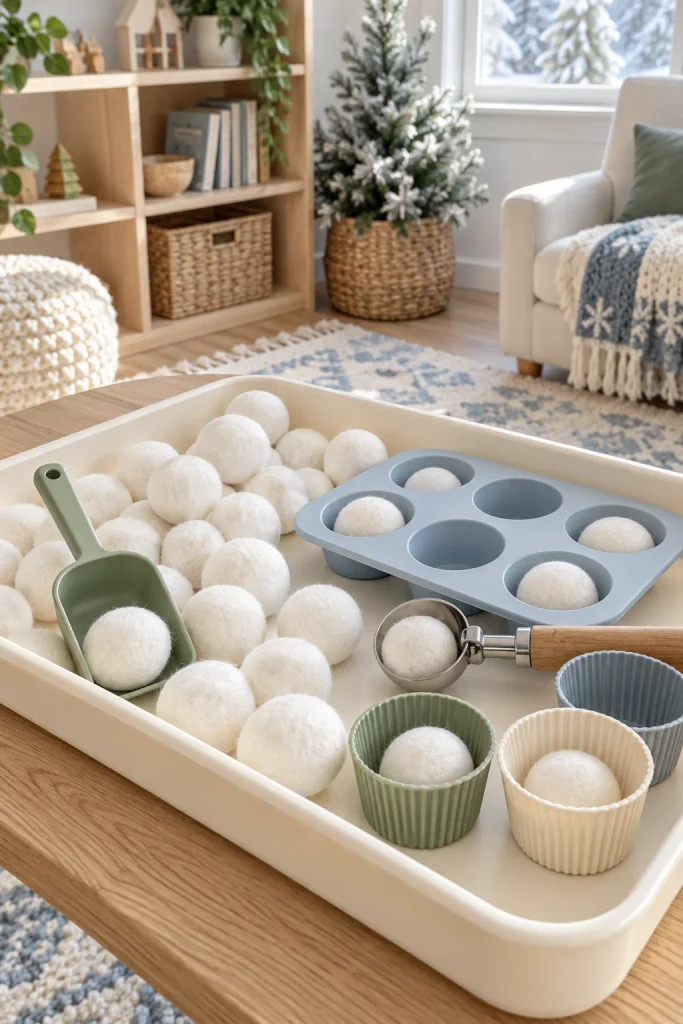
This simple, rhythmic activity feels like a winter-themed fine-motor workout. Fill the bin with cotton balls or felt balls to represent “snowballs,” then add scoops, ice-cream spoons, silicone cups, and a silicone muffin tray for sorting. Children love transferring the “snowballs” from one container to the next in gentle, repetitive motions that feel satisfying and focused.
The activity is wonderfully soothing while strengthening hand muscles and introducing early math concepts like counting, grouping, and comparing sizes. For children who enjoy structure, simple “snowball challenges”—such as filling one cup with only large snowballs or sorting by color—add just enough direction while keeping the play calm and engaging.
Frozen Ocean Layers Bin
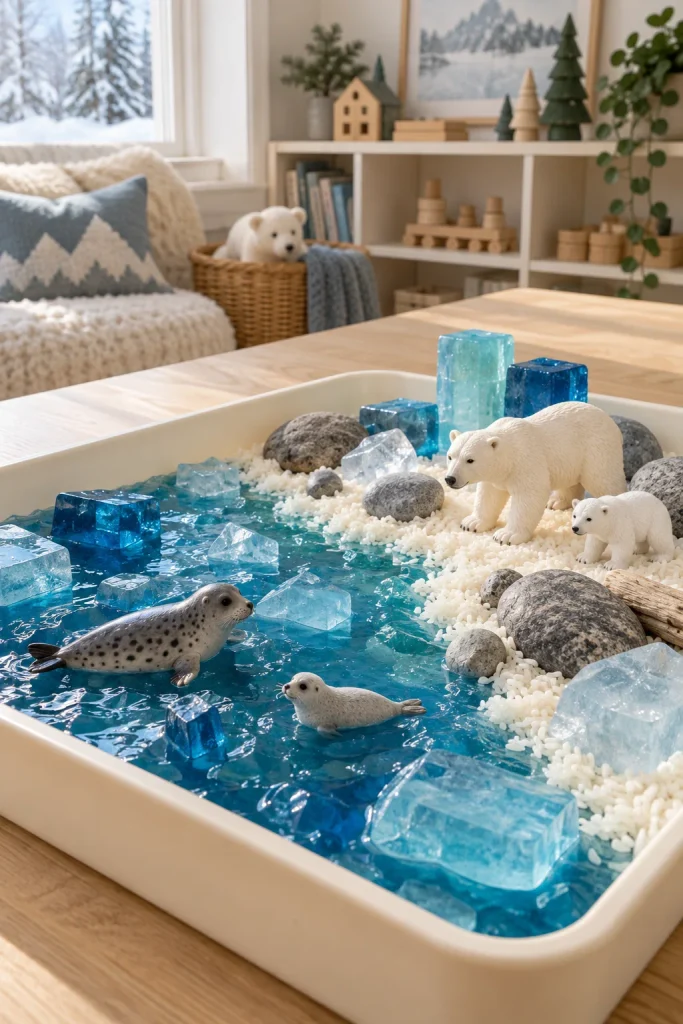
This dramatic, multi-layer sensory bin blends land, sea, and ice into one dreamy scene. Use blue gelatin or frozen water slabs as the “ocean,” then pair it with a rice or cotton “shoreline.” Layer in arctic figurines, smooth stones, and clear gems to create a frozen shoreline little ones can discover and explore.
The contrasting layers spark rich storytelling as children guide animals through icy water, dig through “snow,” and rearrange shoreline elements. Using a sectioned sensory tray helps keep materials organized while making each zone feel distinct. It’s visually striking, full of sensory contrast, and an instant standout among winter activities.
Evergreen Sensory Soup
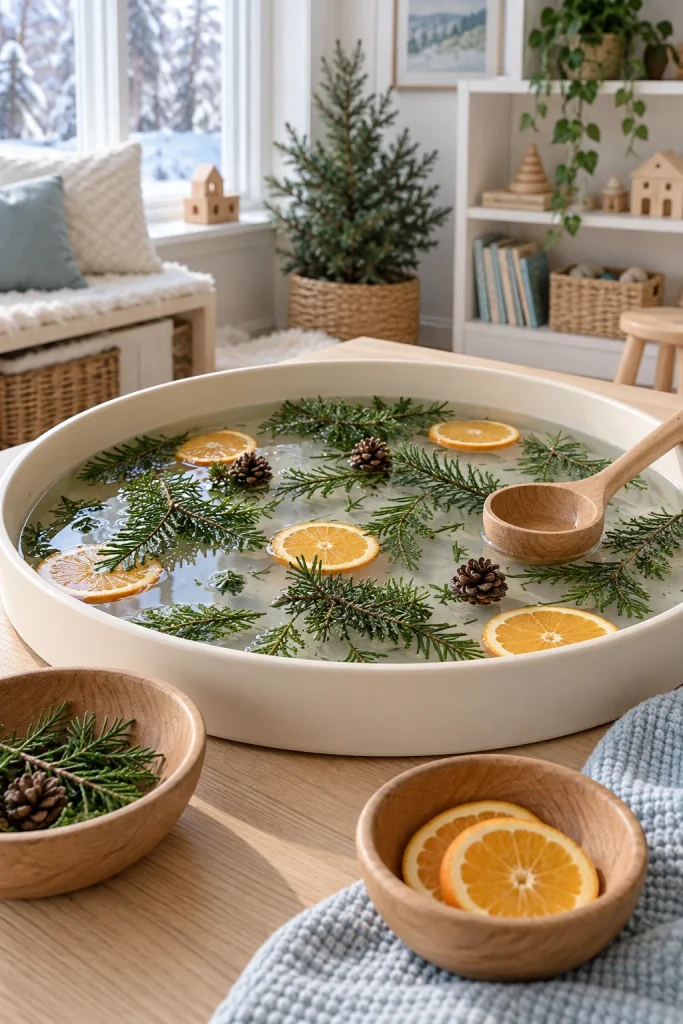
This bin captures the cozy scent and atmosphere of winter forests. Fill a container with warm water—just a little cooler than bath temperature—then add evergreen clippings, small pinecones, wooden ladles, and simple water play tools. Children love stirring, scooping, and swirling everything together into a fragrant “winter soup.”
The gentle aromas make this setup especially calming, while the movement of objects through the water helps toddlers explore buoyancy and flow in a relaxed, hands-on way. Keep a towel nearby for easy cleanup and always supervise water play closely to keep the experience safe and soothing.
Winter Light & Shadow Bin
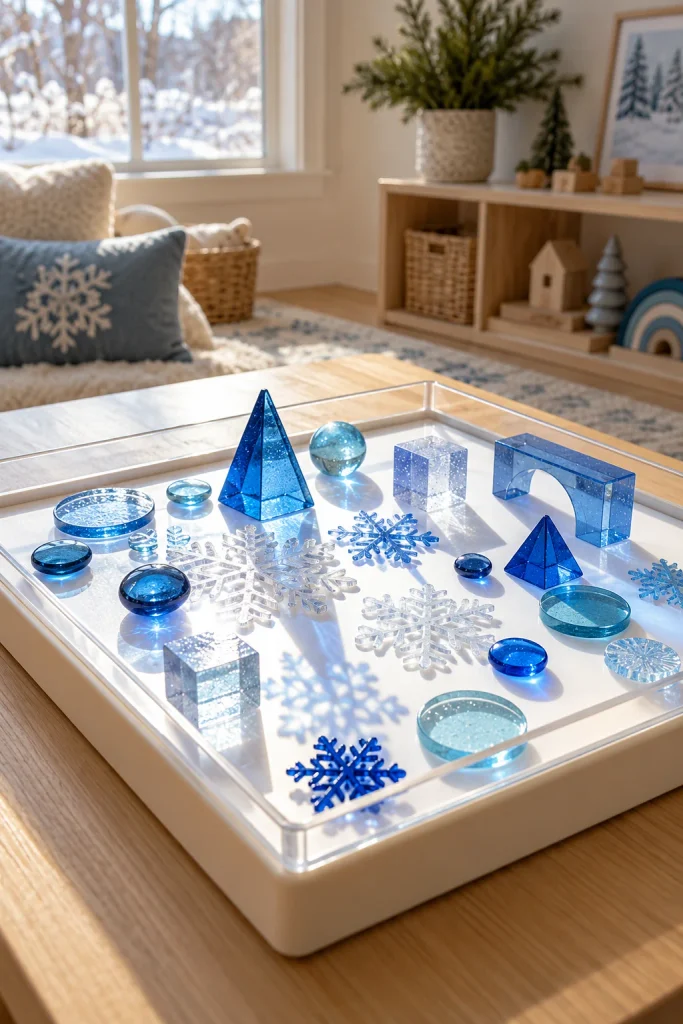
This luminous, modern sensory bin is all about soft glow and gentle discovery. Place battery-operated LED tea lights securely under a mesh or plastic grate, then layer translucent manipulatives, blue acrylic pieces, and light-play blocks on top. Dimming the room lights slightly allows the glowing elements to really shine, transforming the bin into a softly illuminated play space.
As children stack, mix colors, and reposition pieces, they begin to notice how the glow shifts and changes. The experience is mesmerizing and deeply calming—perfect for winding down at the end of the day or turning late-afternoon play into something quietly magical.
Sensory Play Safety & Cleanup Made Beautiful
Winter sensory play can be peaceful and magical, and a few thoughtful safety habits keep it that way. Always supervise your child closely, especially when water, ice, or small objects are involved. Choose materials that match your child’s developmental stage—bigger pieces for younger toddlers and more detailed tools for older ones. When working with scented or natural items like pine or spices, offer them in ways that avoid accidental tastes or irritation.
Cleanup becomes much easier when the setup is intentional. Place a silicone mat, towel, or tray under the bin to catch stray materials, and keep a damp cloth nearby for quick resets. Store winter sensory items in clear, labeled bins so you can pull everything out in seconds without searching through cupboards. Treat your sensory supplies like a curated seasonal collection—organized, ready, and beautiful enough to enjoy each time you bring them out.
Developmental Benefits of Winter Sensory Bins
Winter sensory bins aren’t just beautiful—they’re quietly powerful for a child’s development. The combination of textures, temperatures, and colors invites toddlers to explore with curiosity, building fine-motor strength as they scoop, pour, pinch, and sort. These small motions strengthen the muscles used for writing, dressing, and everyday independence. The seasonal twist adds novelty, helping children stay engaged longer and deepening the learning that naturally happens through play.
Sensory bins also support emotional regulation. Cool textures like ice or instant snow offer calming input, while warm, cozy themes like “hot cocoa shops” or gingerbread bins appeal to comfort and familiarity. As children narrate what they’re doing—placing a polar bear on an iceberg or stirring a pine-scented soup—they build language, storytelling skills, and early science understanding through real-time cause-and-effect.
Winter sensory play connects beautifully to broader developmental research: Zero to Three highlights sensory exploration as foundational to brain development, and the CDC emphasizes hands-on experimentation in early milestones. It’s a seasonally fresh, aesthetically rich way to support learning while keeping play fun, grounded, and engaging—especially during long winter days indoors.
For more hands-on ideas, explore seasonal inspiration like St. Patrick’s Day sensory bins, Easter sensory bins, and spring sensory setups to carry the magic through the year.
More Sensory Activities to Keep Kids Learning All Winter
If your kids love winter sensory bins, there are plenty of other simple ways to keep that hands-on learning going during colder months. You can build on tactile play with sensory activities for toddlers or try themed options like ice play activities that fit perfectly with winter learning. For skill-building, simple problem-solving activities help kids explore cause and effect, while imagination games encourage creativity and storytelling. You can also extend sensory play into everyday routines with bath activities for toddlers or keep a list of indoor activities for kids ready for long winter days.
Sensory Bin Questions
How many sensory bins should a toddler use per week?
There’s no perfect number—toddlers thrive on variety, not volume. Two to three sensory bins per week is plenty for most families, especially if the themes rotate. The goal is to keep play feeling fresh without overwhelming your child or your routine. Follow their interest, and repeat favorites as often as they ask.
What age is best for winter sensory bins?
Most winter sensory bins work beautifully for children 18 months and up, as long as the materials are safe for their stage. Younger toddlers benefit from simple, large pieces and soft textures, while older toddlers and preschoolers can enjoy more detailed setups like ice-play or small-world scenes. Always supervise closely when water, ice, or small parts are involved. Adjust and simplify as needed to fit your child’s comfort level.
How long should a sensory bin stay out?
Many families keep a sensory bin available for 2–3 days before rotating, especially when using dry materials like rice or pom-poms. If your child loses interest sooner, simply refresh the tools or add a small twist to reignite curiosity. Water or ice-based bins are best enjoyed in one session, but can be reset easily for a second round later in the day.
How do I store seasonal sensory materials?
Store everything in clear, labeled bins—think “Winter Textures,” “Loose Parts,” or “Water Play Tools.” Keeping seasonal materials grouped together makes setup effortless and visually appealing. This also protects items like instant snow, pom-poms, or nature pieces so they’re ready whenever inspiration strikes. A small shelf or closet basket works perfectly for rotating through the seasons.
What if my child tries to taste the materials?
If your child is still mouthing objects, switch to taste-safe bases like oats, cereal, pasta, gelatin, or ice. Offer larger pieces that eliminate choking hazards and keep dramatic-play elements simple. As children mature, gradually introduce more textures while reinforcing gentle reminders about “looking and touching, not tasting.” Sensory play should always feel safe, relaxing, and stress-free for both of you.
Conclusion
Winter sensory play has a way of transforming even the chilliest days into something warm, intentional, and quietly magical. These bins invite children to explore shimmering textures, icy scenes, soft winter fabrics, and cozy dramatic-play moments—all while building meaningful skills through hands-on discovery. Whether you’re leaning into snowy small worlds or savoring the comfort of gingerbread-scented oats, each idea offers a simple way to bring beauty and learning into your home this season.
Let these bins become part of your winter rhythm—pulled out on slow mornings, reset on cozy afternoons, or saved for those high-energy moments when your toddler needs a calming, tactile outlet. With a few thoughtful materials stored in a labeled bin, you’ll always have an easy, enriching activity ready to go. And as the seasons shift, you can carry the magic forward with new ideas that keep curiosity alive all year long.
Save these winter sensory bin ideas to your seasonal activity board so you can revisit them anytime the snow starts to fall—or whenever your toddler needs a little winter magic indoors.