There’s a special kind of chaos that happens the moment you hand a toddler a carving knife — or, more realistically, the moment you take the knife away and hand them a pumpkin to just look at. Painting solves that problem completely, and it turns out kids love it even more than carving anyway.
This list covers ideas for every age, from two-year-olds smearing paint with their whole hand to ten-year-olds attempting a genuinely detailed design, so there’s something here that fits your kid’s attention span and your tolerance for cleanup.
Heads up: This post may include affiliate links. As an Amazon Associate, I earn from qualifying purchases—at no extra cost to you. Full privacy policy and disclosure here.
Toddler-Friendly Ideas (Ages 2–3)
1. Handprint Spider Pumpkin
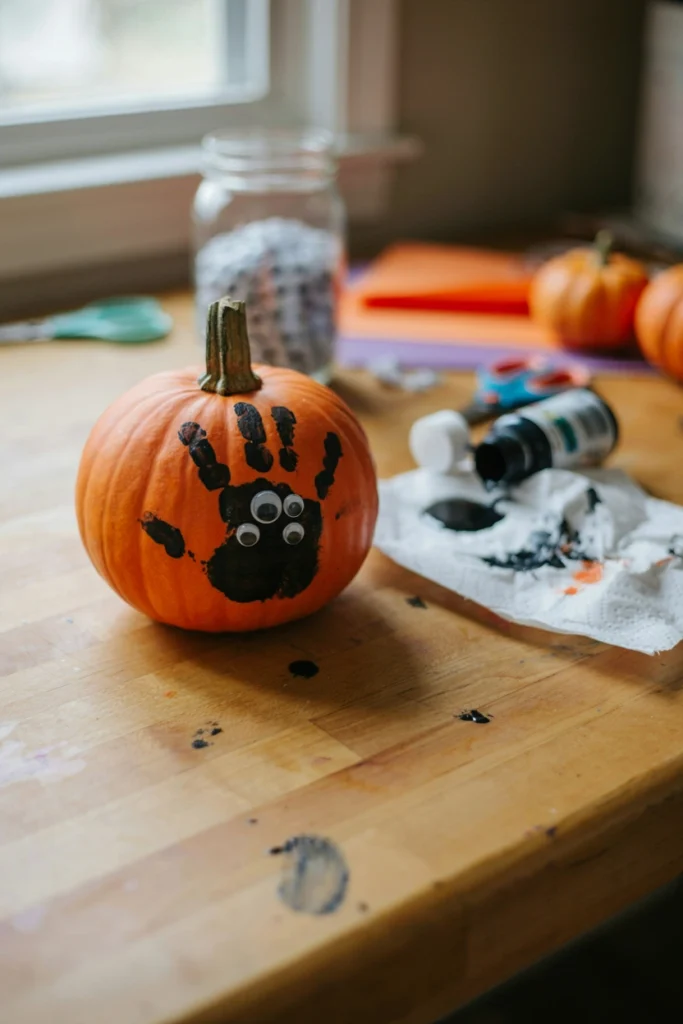
A single black handprint, pressed flat against an orange pumpkin, turns into a spider with almost zero effort — the fingers naturally become the legs, and two stuck-on googly eyes finish the whole thing in under a minute.
Why You’ll Love It
It requires no artistic skill from you or your toddler, and it doubles as a keepsake of their tiny hand size this fall. A handprint keepsake kit makes it even easier to preserve the print before the paint smears.
Mom Tip
Paint the hand for them with a foam brush rather than dipping it in a paint tray — it’s less messy and gives you a cleaner, more spider-shaped print.
2. Fingerprint Constellation Pumpkin
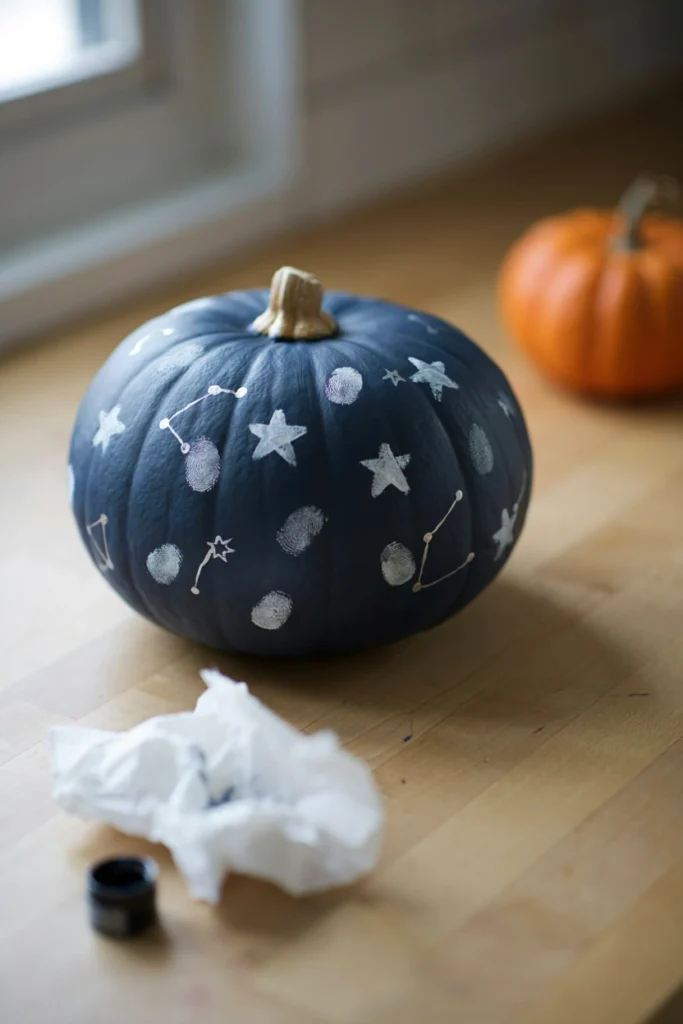
Paint the whole pumpkin midnight blue first, then let your toddler dab white and silver fingerprints all over it — every dot becomes a star, and no two constellations ever turn out the same.
Why You’ll Love It
The base coat hides any unevenness in the fingerprints, so it looks intentional no matter how it goes.
Good to Know
Let the navy base coat dry completely, ideally overnight, before fingerprinting or the colors will smear together.
3. Big Dot Pattern Pumpkin
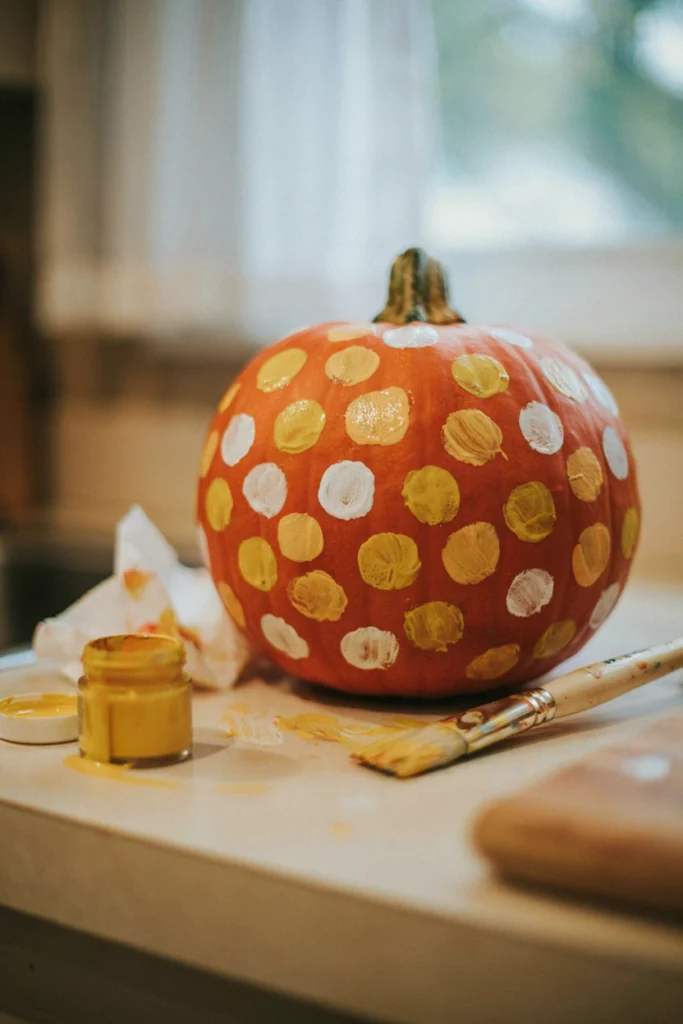
Give your toddler a paintbrush loaded with paint and let them press the round end straight down over and over — the resulting dots are wonderfully imperfect and genuinely toddler-proof.
Why You’ll Love It
There’s no wrong way to do it, which makes this the lowest-stress option on the entire list.
Mom Tip
Pencil erasers dipped in paint work just as well as brush handles and are easier for small fists to grip.
4. Whole-Hand Smear Pumpkin
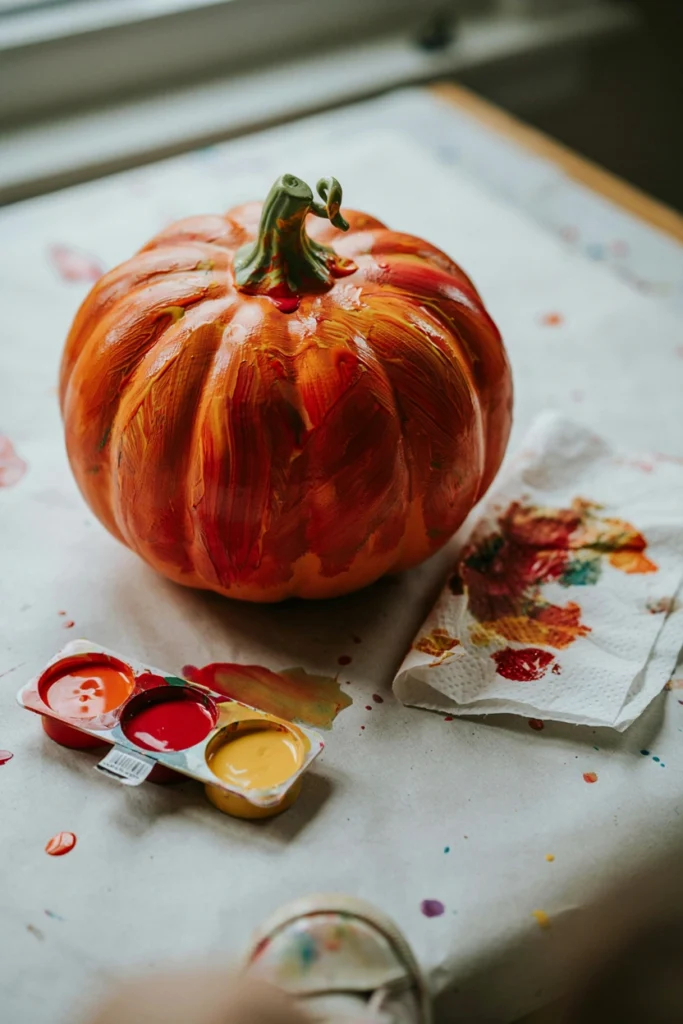
Skip the details entirely and let your toddler use their whole palm to smear warm-toned paints across a foam pumpkin — the streaky, blended result looks like a tiny abstract painting.
Why You’ll Love It
This is pure sensory play with a decorative payoff, and it’s genuinely one of the fastest ways to burn twenty minutes of toddler energy. For more ideas like this, check out these spooky Halloween messy play ideas.
Good to Know
Use washable finger paint here specifically — it wipes off skin far more easily than acrylic when the session inevitably ends with paint on a cheek.
5. Ghost Blob Pumpkin
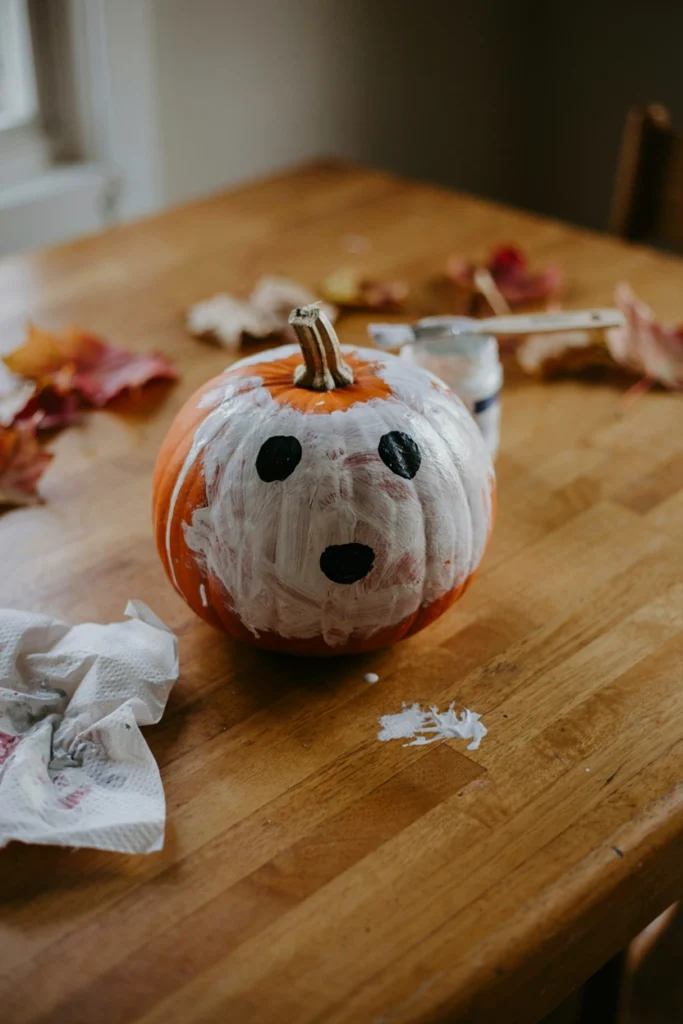
A solid coat of white paint and two dots for eyes is all it takes to turn a pumpkin into a ghost, and the uneven brushstrokes only add to the friendly, hand-made charm.
Best For
Kids who get overwhelmed by too many steps — this is a one-color, two-dot project from start to finish.
Mom Tip
White acrylic often needs two coats to fully cover orange pumpkin skin, so budget extra drying time between layers.
6. Rainbow Stripe Pumpkin
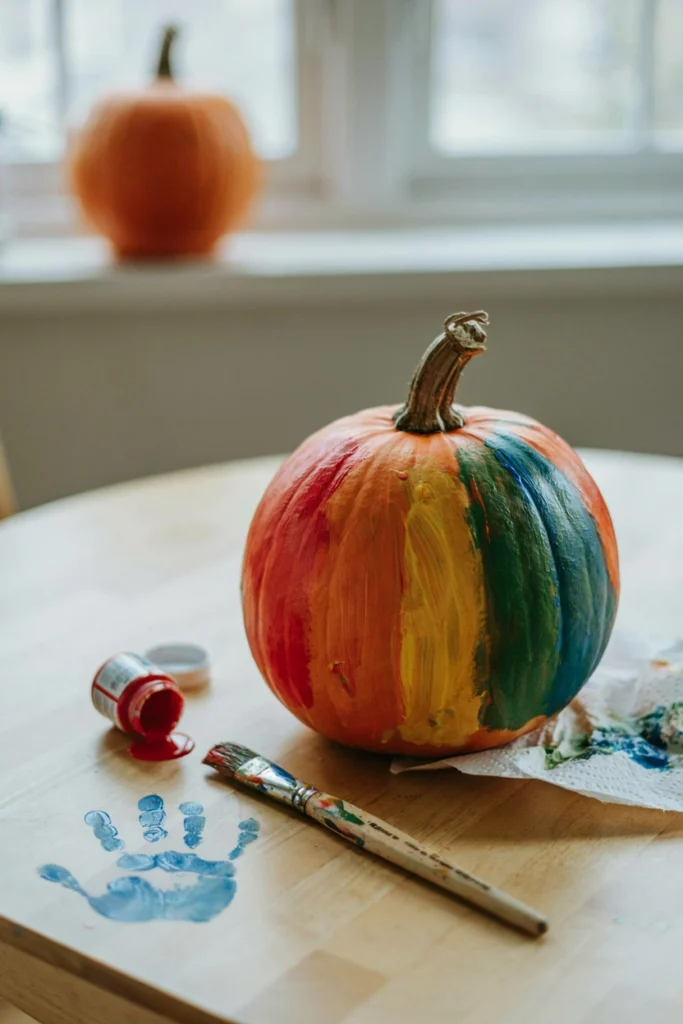
Painter’s tape divides the pumpkin into wide vertical sections so your toddler can fill each one with a different color, and even a wobbly hand stays inside the lines thanks to the tape edges.
Styling Tips
Peel the tape off while the paint is still slightly tacky rather than fully dry, and pull it at a low angle to keep stripe edges crisp.
Why You’ll Love It
It’s a genuine color-learning activity disguised as a craft, which feels like a small parenting win.
7. Sponge-Dabbed Texture Pumpkin
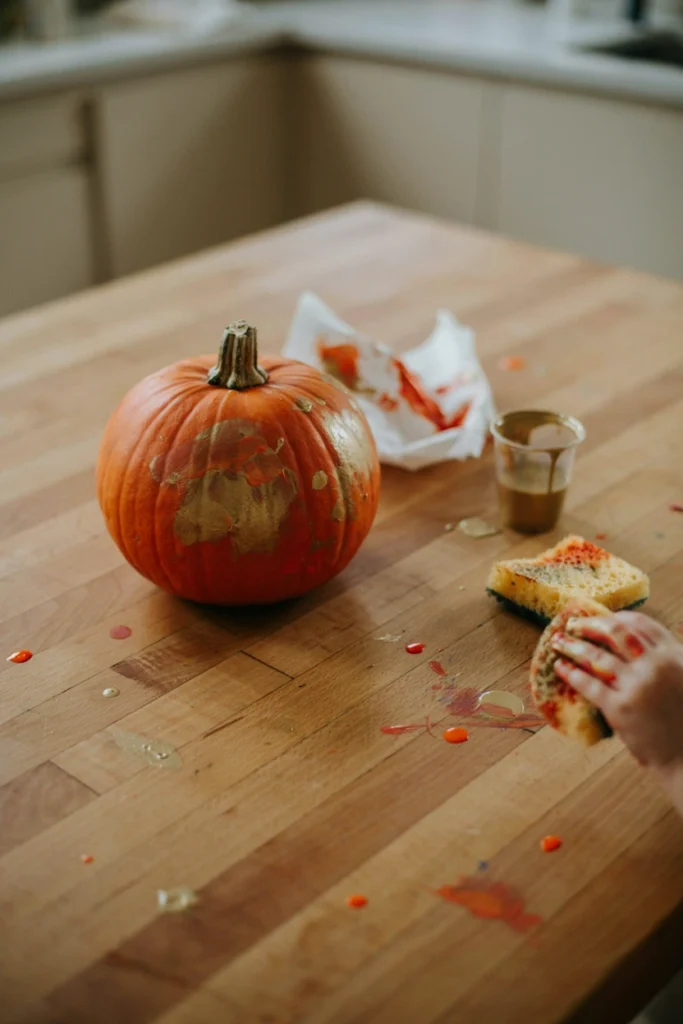
A cut-up kitchen sponge dabbed in two shades of orange and gold creates a soft, mottled texture across the whole surface — it reads as intentional watercolor-style shading even though it’s just sponge dabs.
Mom Tip
Blot excess paint off the sponge onto a paper towel first so the dabs stay light and textured instead of turning into solid blobs.
Best For
Toddlers who like the repetitive motion of stamping but aren’t ready for shapes yet. A set of non-toxic washable stamp pads works well here too if you want a mess-free stamping option.
8. Painted Handprint Pumpkin Patch
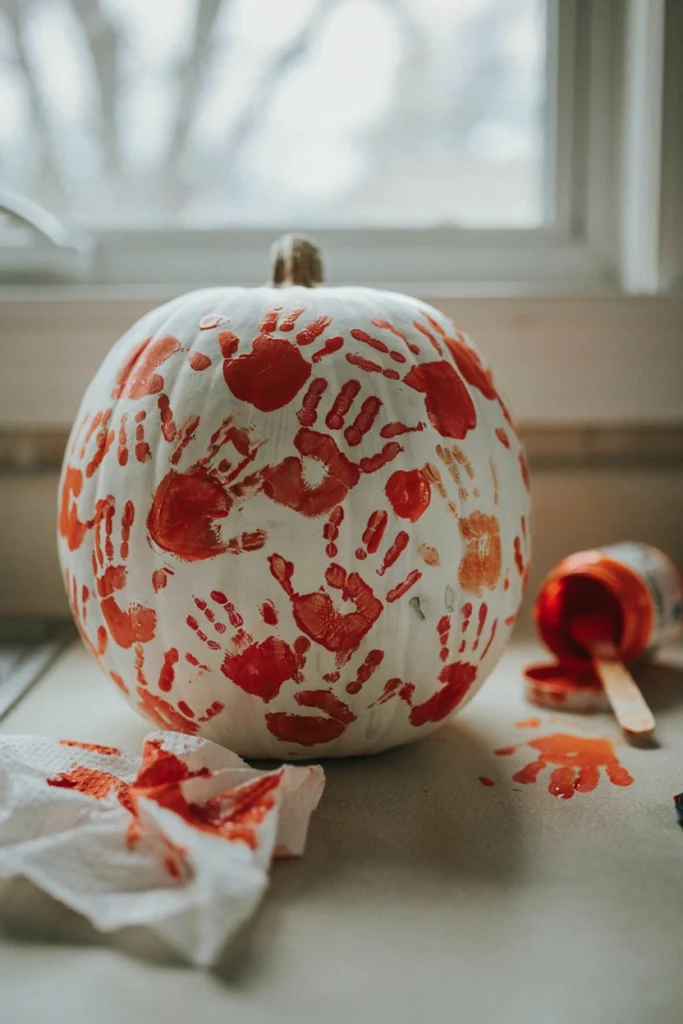
Paint your toddler’s palm orange and let them stamp it repeatedly across a flat white pumpkin to create a whole patch of tiny pumpkins — it’s a keepsake craft that grows more charming with siblings adding their own handprints.
Why You’ll Love It
Multiple kids can contribute to one pumpkin, which makes this a great sibling activity instead of a solo one.
9. Puffy Paint Pumpkin
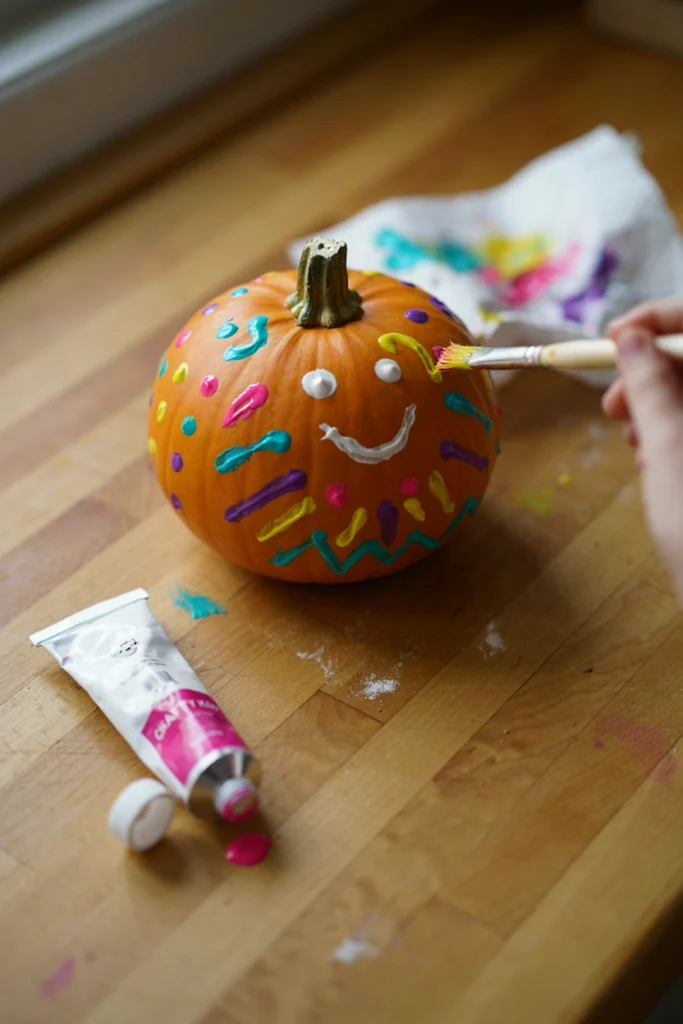
Puffy fabric paint lets toddlers squeeze out thick, raised lines and dots that dry with real texture, giving the pumpkin a tactile, 3D quality that flat paint can’t match.
Good to Know
Puffy paint takes longer to dry than acrylic, often several hours, so plan this as an early-day activity rather than a right-before-bed one.
10. Marbled Drip Pumpkin
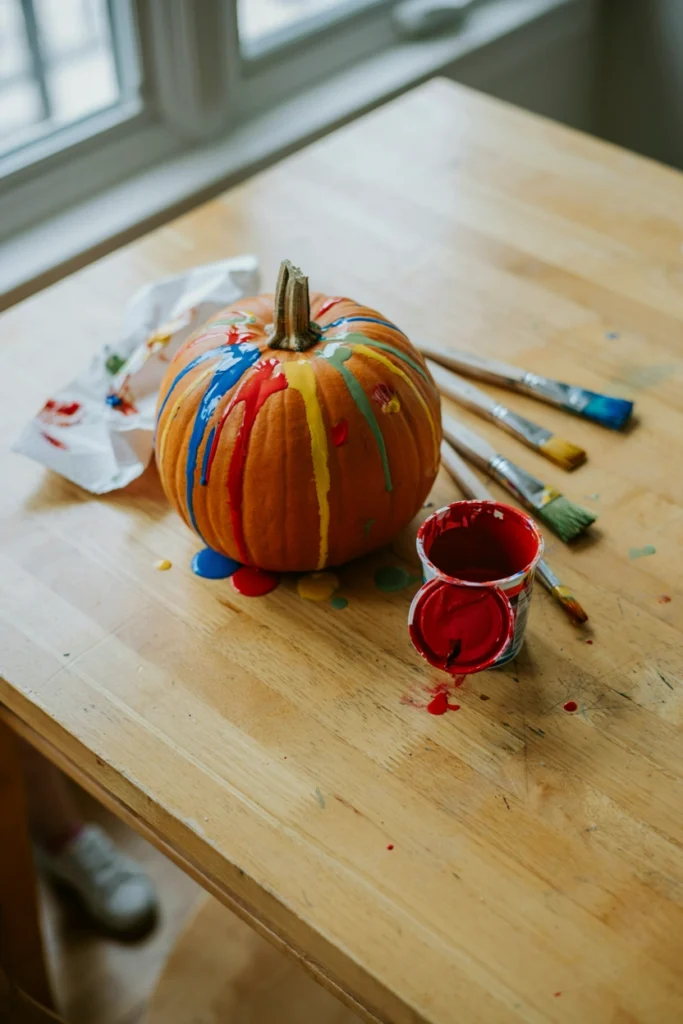
Squeeze thinned paint near the stem and tip the pumpkin so it drips naturally downward — the streaky, marbled result looks intentional and dramatic, and the “pouring” part is the fun for toddlers.
Mom Tip
Do this one on a rimmed baking sheet, not a flat drop cloth, so the drips don’t run straight off onto the floor.
Preschool Favorites (Ages 4–5)
11. Googly-Eye Monster Pumpkin
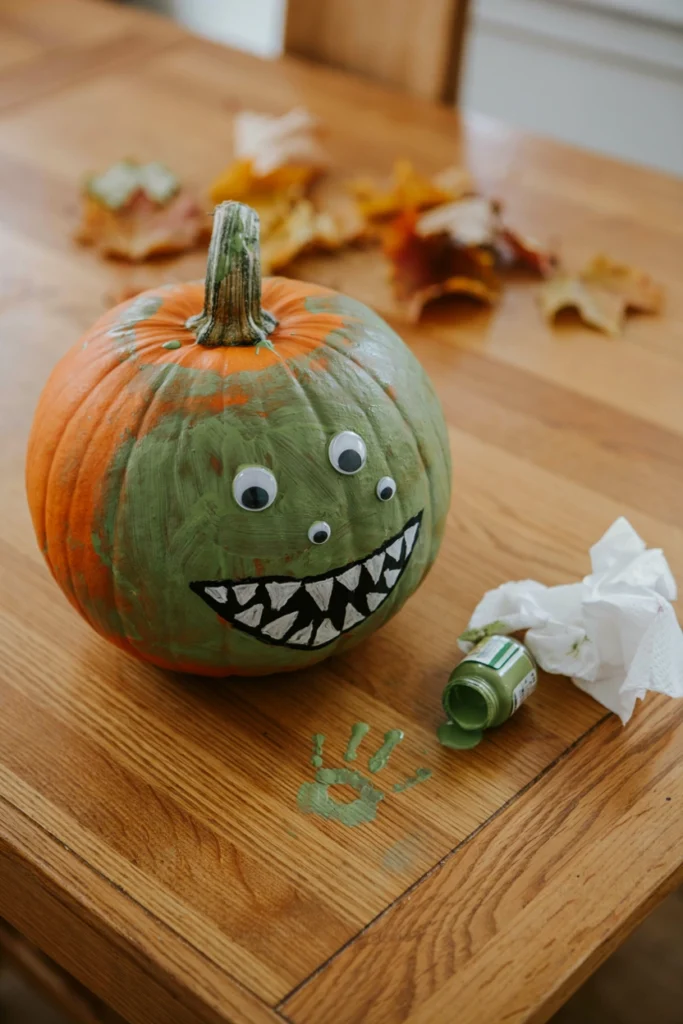
A coat of green or purple paint, a scattered handful of googly eyes glued on at every size, and a wide painted mouth with pointy teeth turns any pumpkin into an instant monster with real personality.
Why You’ll Love It
Preschoolers get to make design decisions — how many eyes, where the mouth goes — which makes this feel like their own creation rather than a template they’re copying.
Styling Tips
Buy a mixed bag of googly eyes in several sizes; the variation is what makes the monster look silly instead of just spooky.
12. Painted Owl Pumpkin
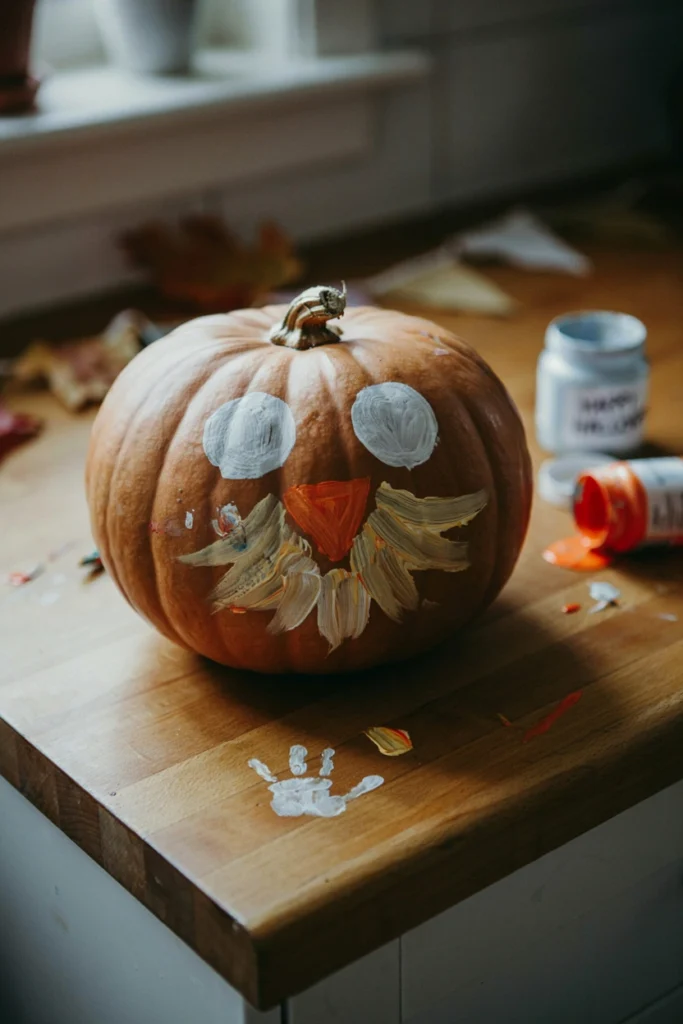
Two big white circles for eyes, a small orange triangle beak, and short feathered brushstrokes radiating outward transform a brown or tan pumpkin into a wide-eyed owl that looks far more advanced than it actually is to paint.
Best For
Preschoolers ready to follow a simple step order — circles first, then beak, then feathers.
Mom Tip
Use a paper plate as a stencil to trace perfect owl eyes before painting inside the lines.
13. Ladybug Pumpkin
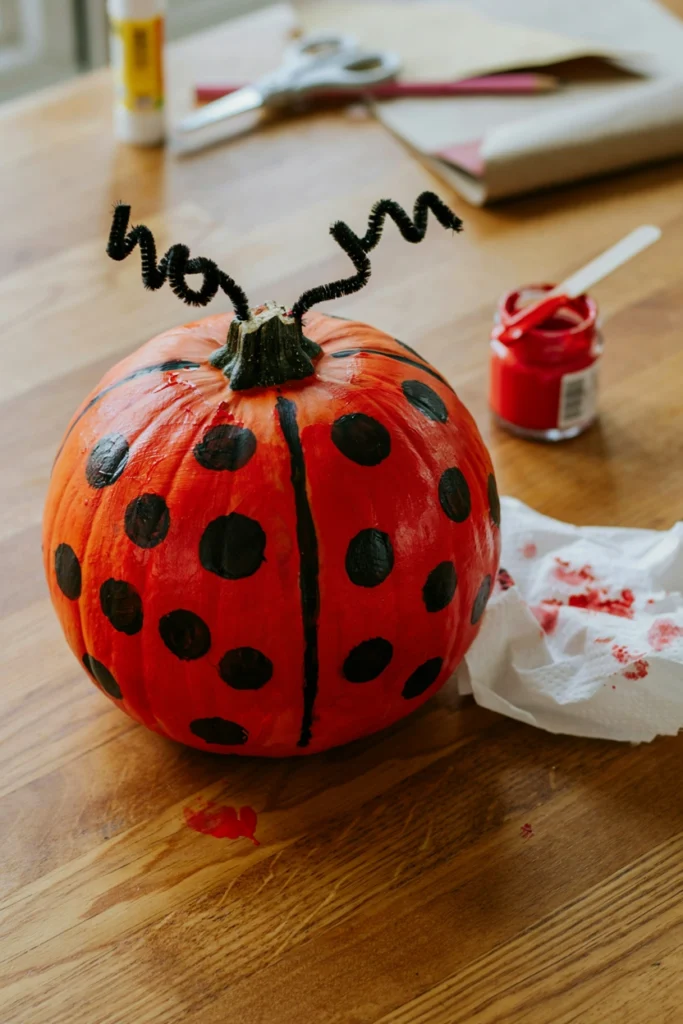
A red base coat, a single black line down the middle to split the “wings,” a scatter of black dots, and two bent pipe cleaner antennae poked in near the stem make this one of the most recognizable designs on the list.
Why You’ll Love It
The finished shape is unmistakable even to very young kids, which makes it a satisfying one for preschoolers to show off.
14. Painted Cat Pumpkin
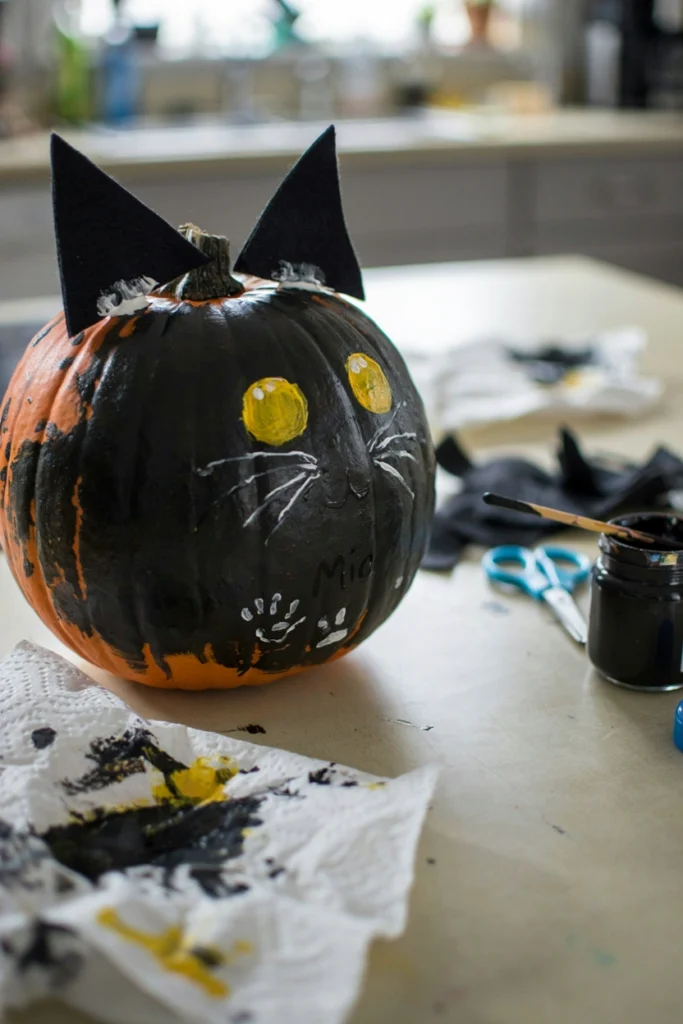
A solid black base coat, felt triangle ears glued near the stem, and simple yellow almond-shaped eyes with a few painted whisker lines create a sleek black cat that reads as classic Halloween without any carving involved.
Mom Tip
Paint the whiskers last using a fine paint pen instead of a brush — brushes tend to blob at the ends and lose the thin whisker look.
15. Candy Corn Stripe Pumpkin
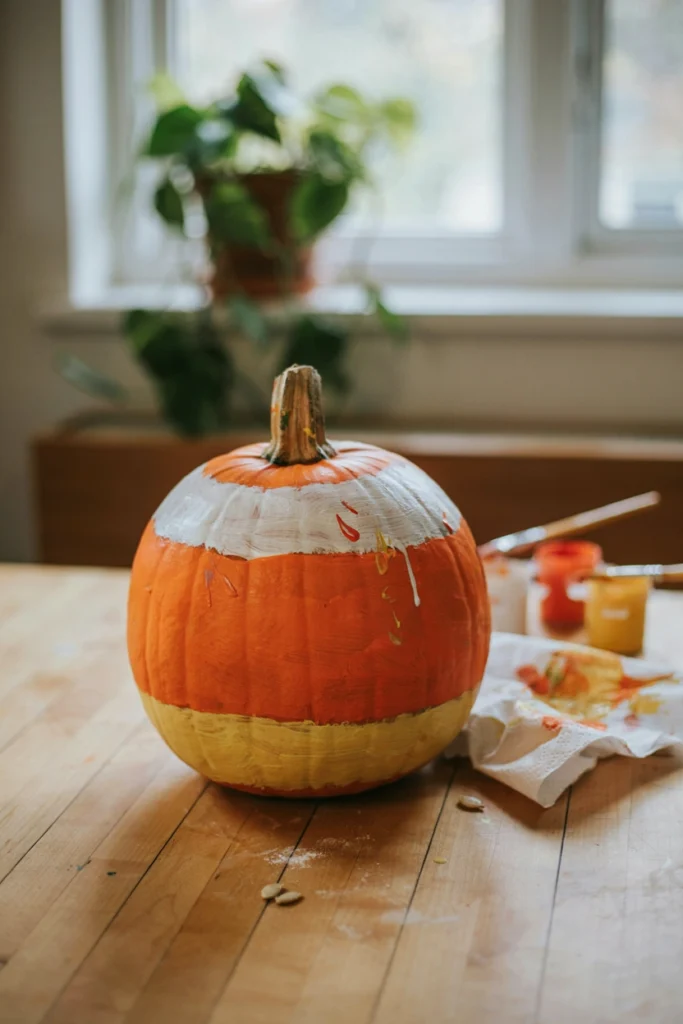
Painter’s tape marks off three horizontal bands, and filling them white, orange, and yellow from top to bottom turns the whole pumpkin into an oversized piece of candy corn — an idea that photographs beautifully lined up in a row of different sizes.
Best For
Fall parties, since a whole row of these makes a striking, coordinated porch display.
16. Painted Pumpkin Family Portraits
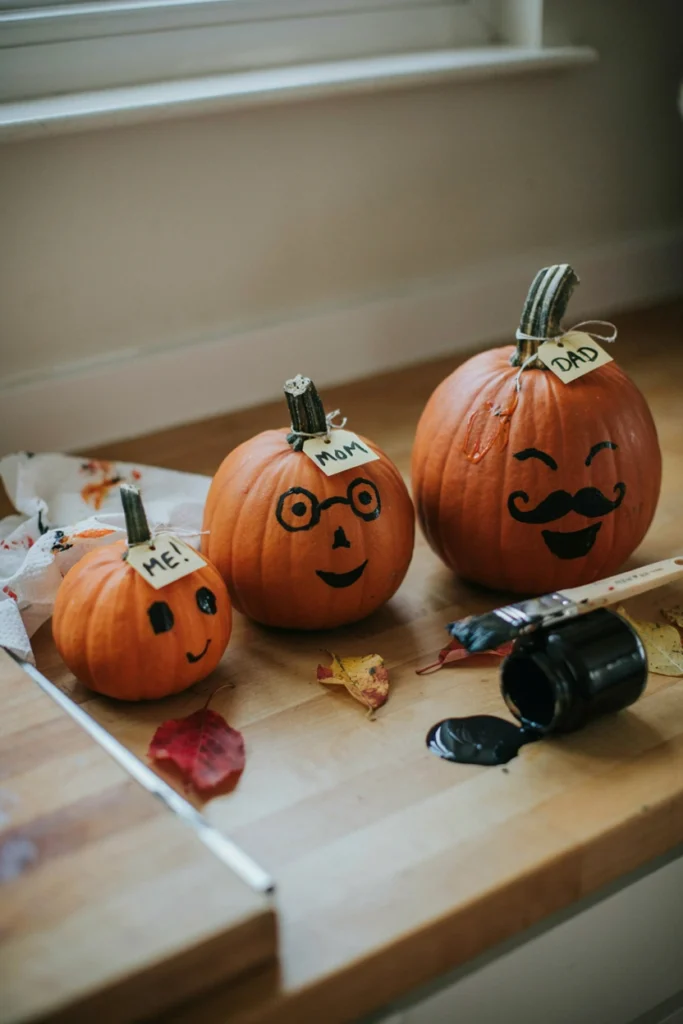
Each family member gets their own small pumpkin painted with a face that matches them — glasses, a certain hair color, a favorite hat — creating a quirky little portrait lineup that kids take genuine pride in getting “right.”
Why You’ll Love It
It turns a craft into a conversation about who’s who, and preschoolers love deciding which features belong to which sibling or parent.
17. Painted Vampire Fangs Pumpkin
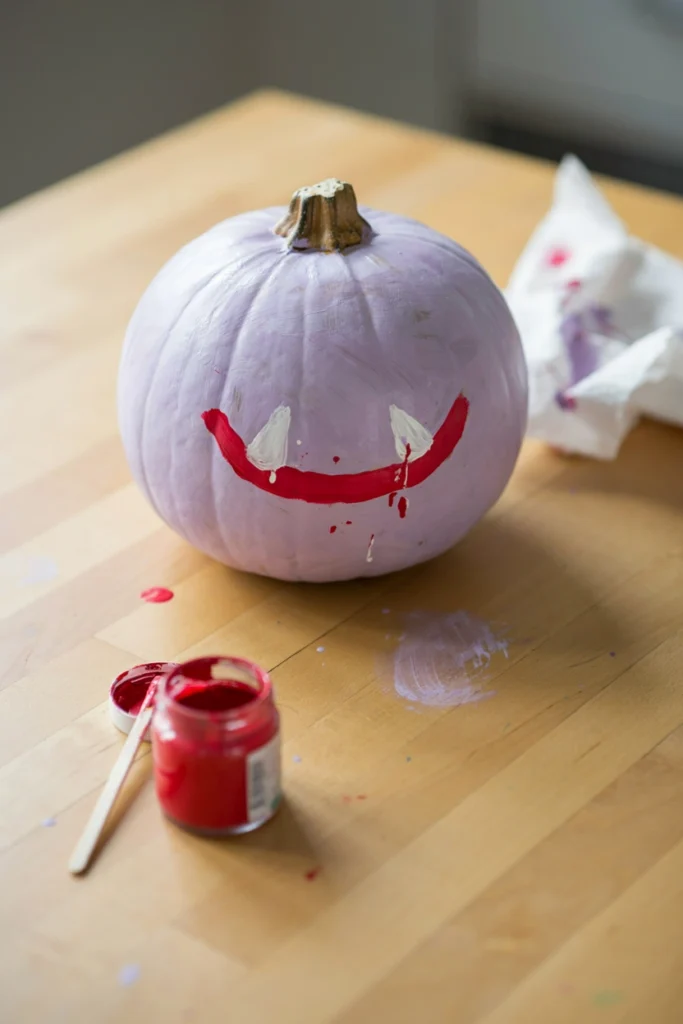
A lavender or pale gray base coat, a wide red painted smile, and two white triangle fangs painted at the corners of the mouth make a playful, not-too-scary vampire that leans silly rather than frightening.
Good to Know
Keep the red paint contained with a small stencil or freehand a light pencil outline first — red tends to bleed if applied too thin.
18. Painted Frankenstein Pumpkin
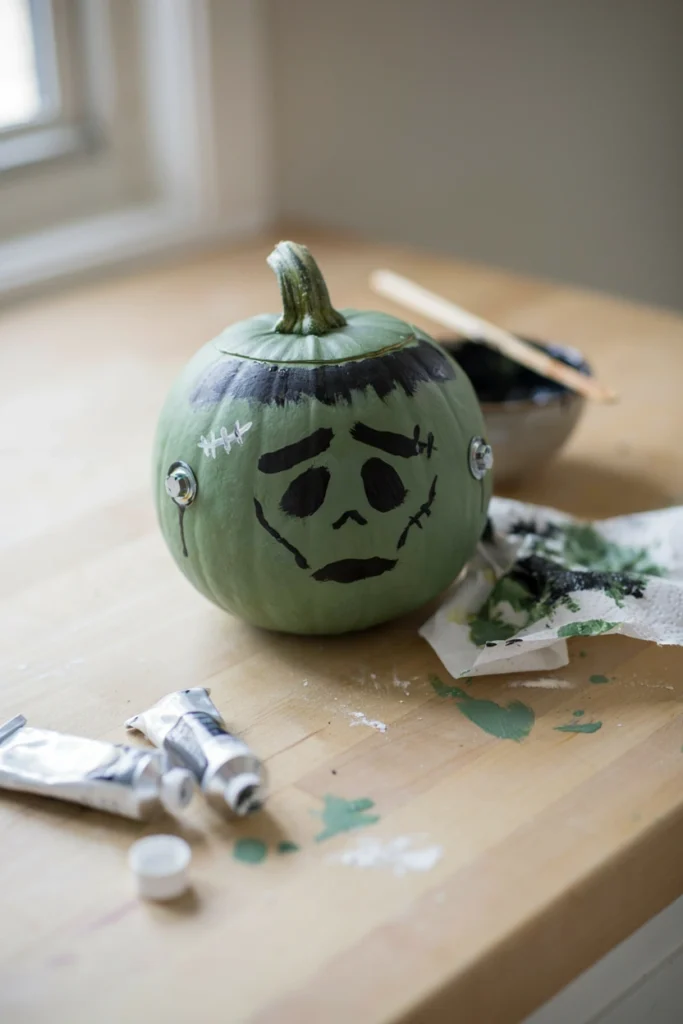
Green paint, heavy black eyebrows, a few small painted stitches, and two silver “bolts” dabbed near where the stem meets the pumpkin give this design its classic monster shape without a single sharp edge involved.
Mom Tip
A flatter, more oblong pumpkin reads more convincingly as a Frankenstein head than a round one.
19. Painted Pumpkin Pie Face
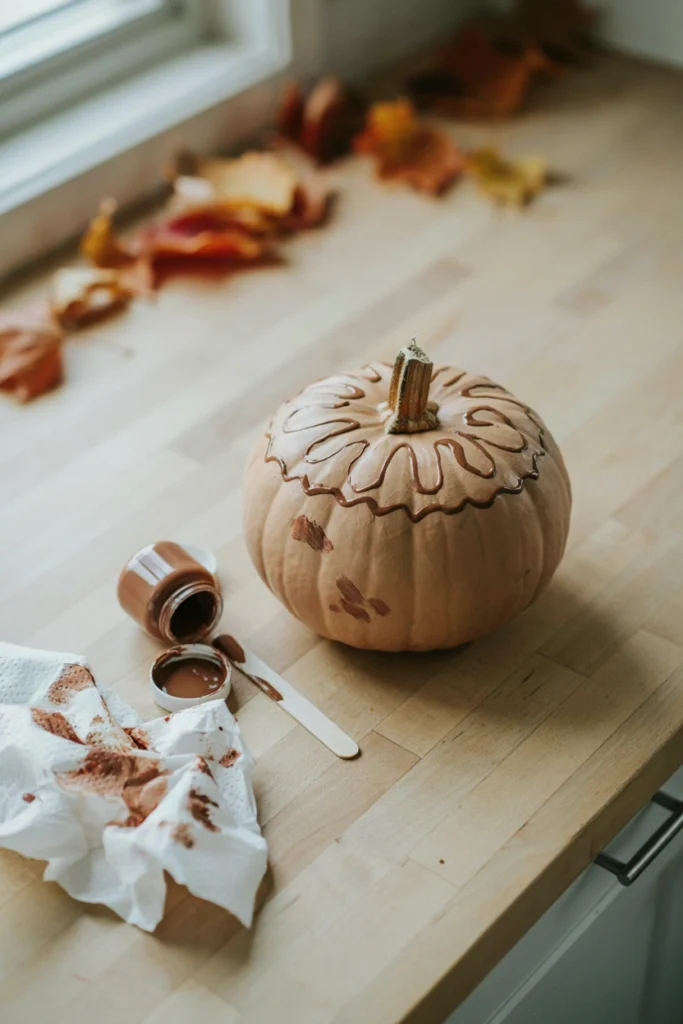
A tan base coat with a wavy crimped-edge line painted around the top and soft white swirls across the surface turns the pumpkin into a giant slice of pie — a genuinely unexpected idea that always gets a laugh.
Why You’ll Love It
It’s a fresh alternative to the usual monster faces and pairs perfectly with a Thanksgiving-adjacent display.
20. Chalkboard Paint Pumpkin
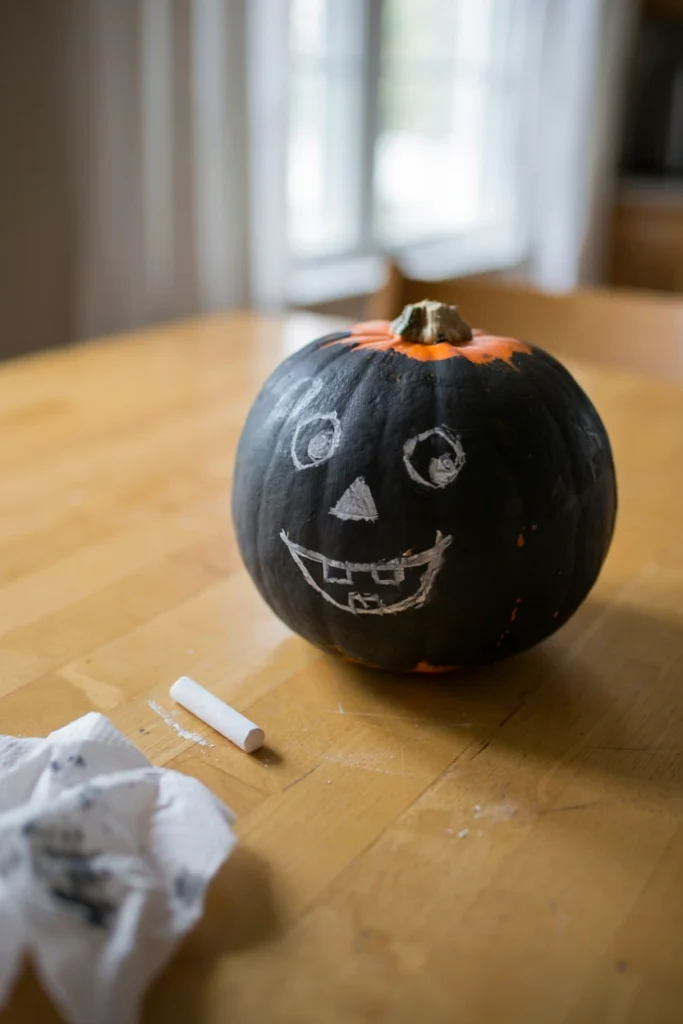
A full coat of chalkboard paint turns the pumpkin into a reusable canvas — kids draw a new face in chalk every few days without ever repainting, which stretches one craft session into weeks of fun.
Budget Tip
One can of chalkboard spray paint covers several pumpkins, making this one of the most cost-effective ideas on the list.
Big-Kid Detail Work (Ages 6+)
21. Galaxy Pumpkin
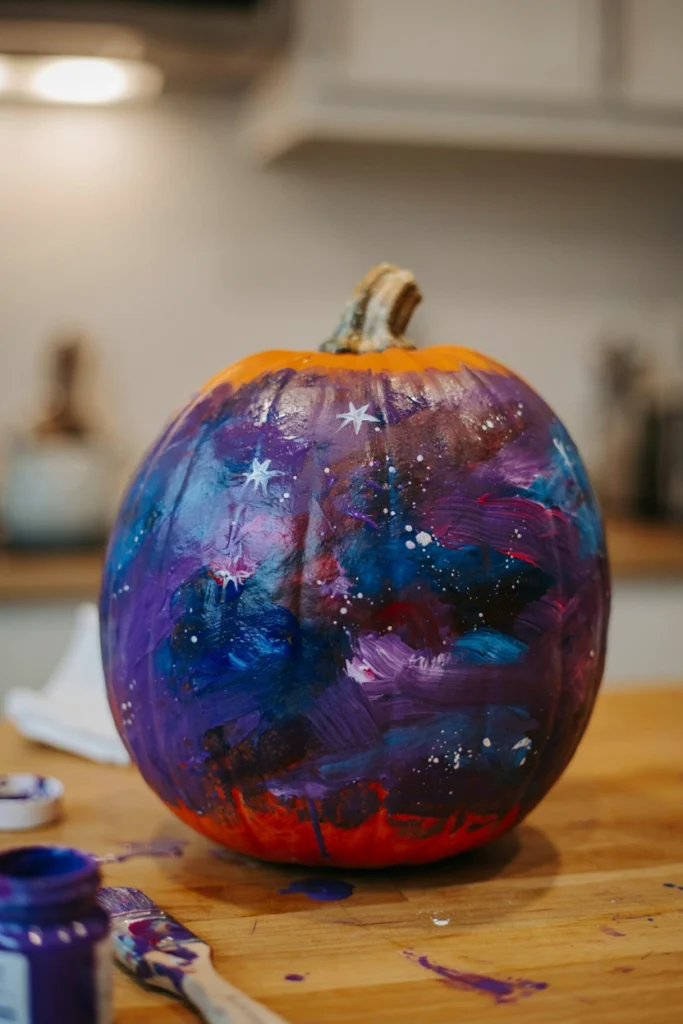
Blending purple, navy, and black in loose swirls and finishing with flicked white paint splatters creates a genuinely striking galaxy effect that older kids find satisfying to build up in layers.
Styling Tips
Flick the white “stars” with an old toothbrush dragged across a finger for fine, random splatter instead of large uneven drops.
Why It Stands Out
This is the design most likely to get stopped and photographed on the porch — it looks far more advanced than the actual technique requires.
22. Watercolor Wash Pumpkin
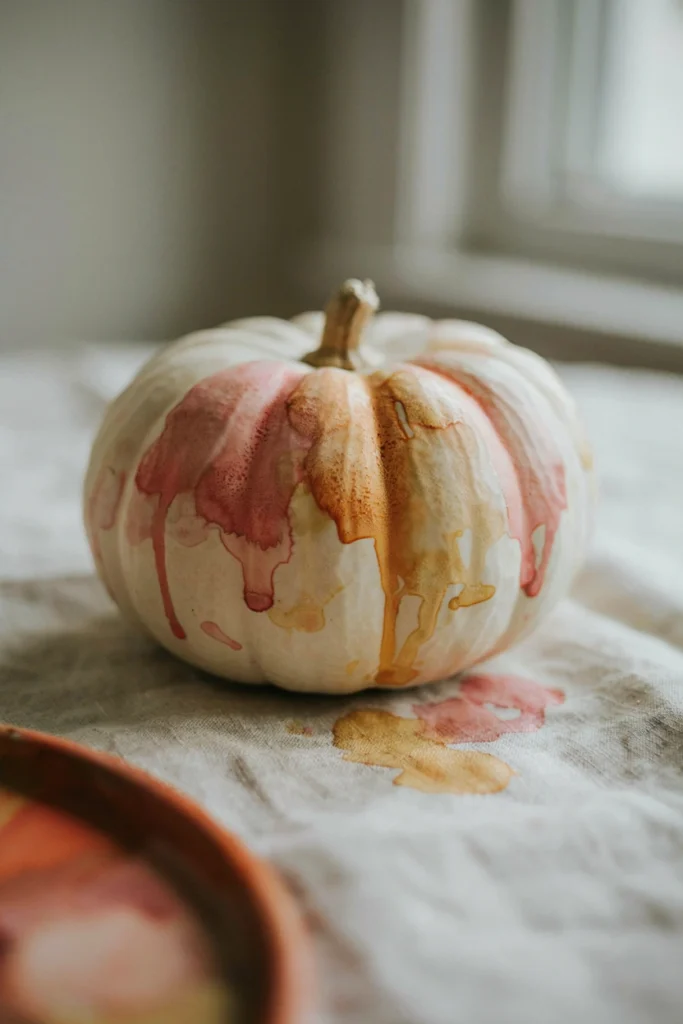
Watered-down acrylic or actual watercolor paint applied to a white-primed pumpkin creates soft, blended color washes that bleed into each other for a dreamy, painterly finish older kids can genuinely control.
Good to Know
The pumpkin needs a white base coat first — raw orange skin will muddy watercolor washes and dull the blended effect.
23. Zentangle Pattern Pumpkin
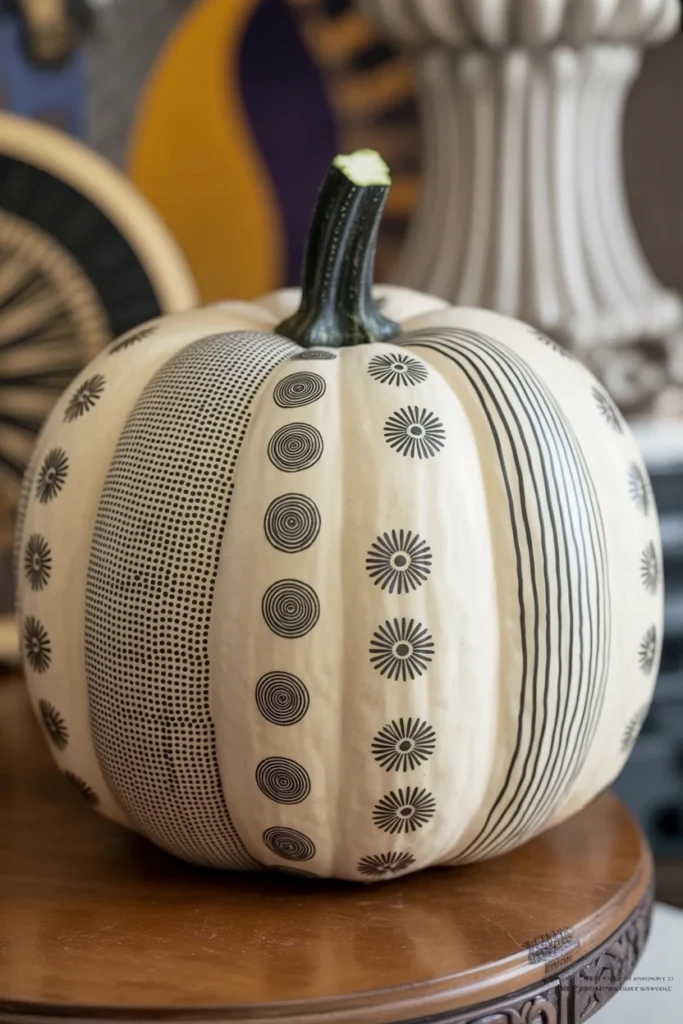
Dividing the pumpkin into sections with a black paint pen, then filling each one with a different tiny repeating pattern, gives detail-oriented kids a genuinely absorbing project that can take an entire afternoon in the best way.
Best For
Kids who love coloring books with lots of small spaces to fill — this scratches the same itch.
24. Painted Animal Print Pumpkin
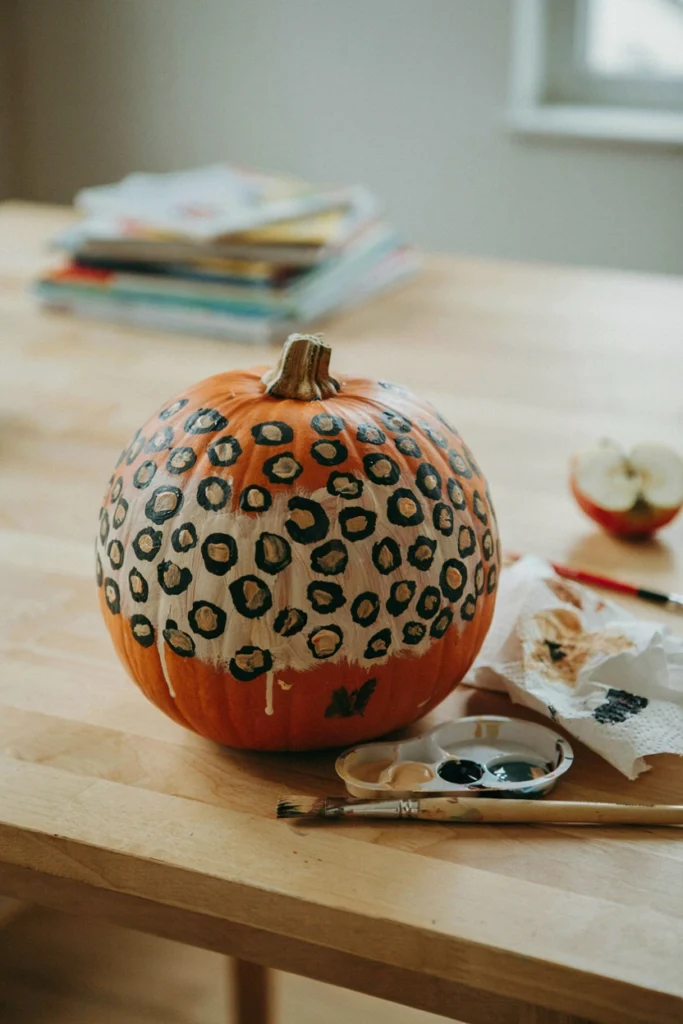
Leopard, tiger, or zebra print is more achievable than it looks — a base coat, irregular clustered spots or stripes in black, and a few brown accents around the edges of each spot give it real depth.
Pair It With
A matching animal-print bandana or ribbon tied around the stem for a finished, styled look.
25. Metallic Foil-Leaf Pumpkin
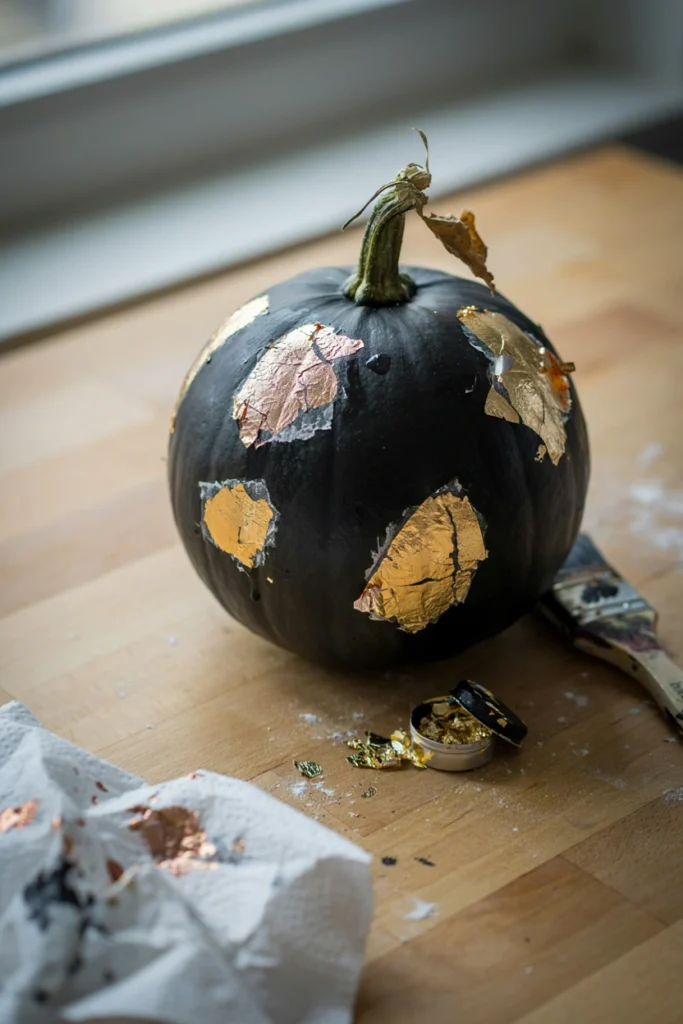
Adhesive brushed on in random patches, then covered with gold or copper foil leaf, creates a striking cracked-metal effect against a black base — a technique that feels elevated and genuinely impresses on a porch full of typical jack-o’-lanterns.
Worth the Splurge?
Foil leaf kits cost more than a bottle of paint, but one kit decorates several pumpkins, so the cost per pumpkin stays reasonable.
26. Realistic Painted Portrait Pumpkin
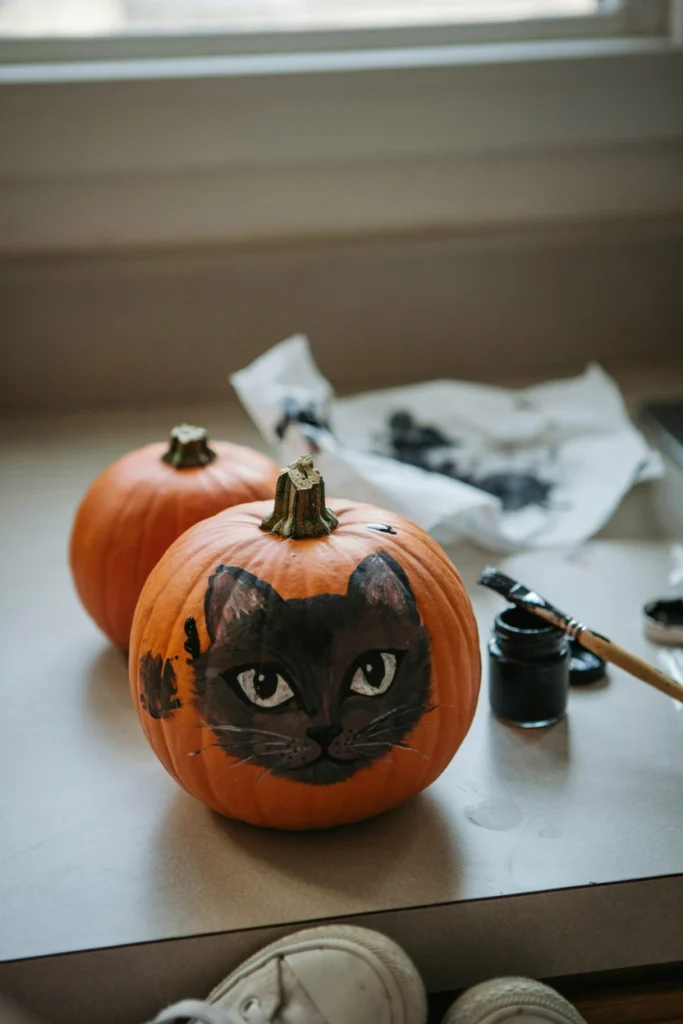
For kids who genuinely love drawing, sketching a design lightly in pencil first and then filling it in with shaded, layered paint produces a portrait-quality result — a cat, an owl, even a self-portrait — that goes well beyond the typical craft-table pumpkin.
Mom Tip
Let your child sketch the design on paper first and transfer it with light pencil marks before committing to paint.
27. Ombre Sunset Pumpkin
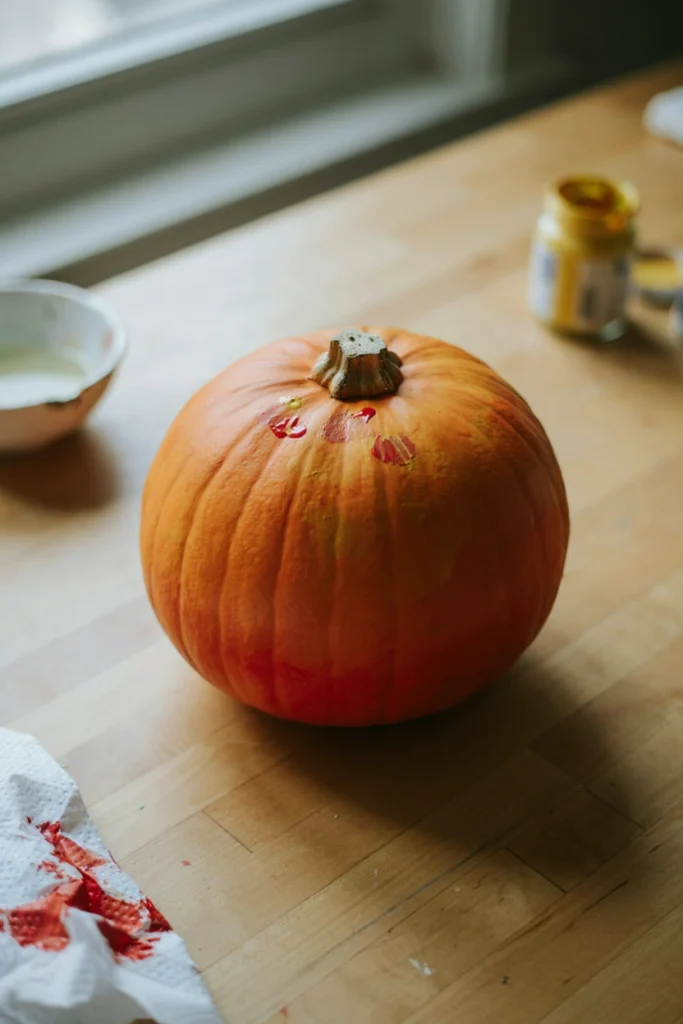
Blending red into orange into yellow in a smooth top-to-bottom gradient takes patience and a wet-blending technique, making this a satisfying stretch project for kids who’ve outgrown the simpler designs on this list.
Good to Know
Work in small sections and blend while the paint is still wet — an ombre effect falls apart if any section dries before the next color is added.
28. Painted Emoji Pumpkin
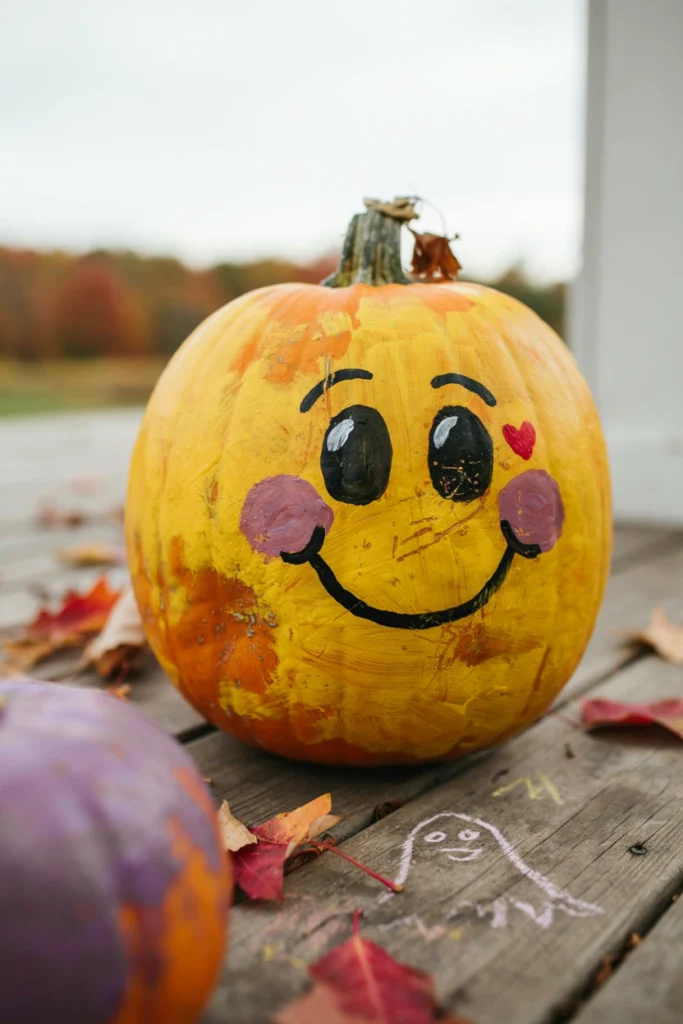
Paint a real pumpkin bright yellow, then add a simple oversized emoji face — smile, heart eyes, silly tongue-out face, or even a wink. It’s easy enough for kids to paint themselves but still gives them room to choose a design that feels personal.
Why You’ll Love It
Kids immediately understand the idea, and a group of different emoji pumpkins looks genuinely cute lined up together on the porch.
29. Glow-in-the-Dark Pumpkin
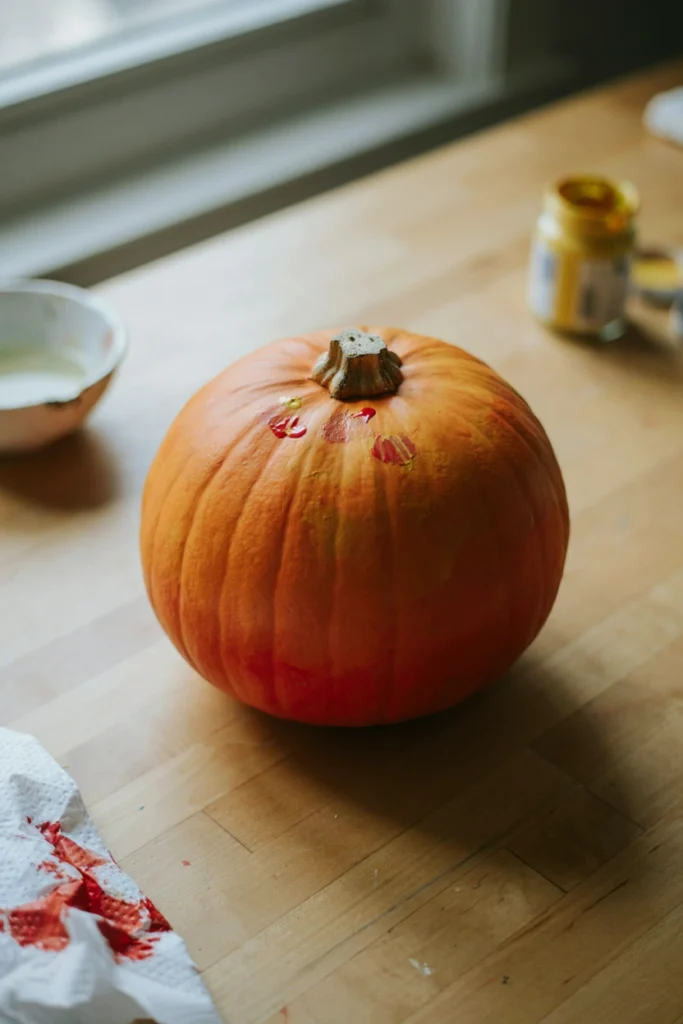
Glow-in-the-dark paint used for a bat, ghost, or spiderweb design over a black base looks completely ordinary by day and genuinely magical once the porch lights go off — a design that essentially doubles as two crafts in one.
Best For
Front-porch displays, since the glow effect needs real darkness to show up well.
30. Group Mural Pumpkin
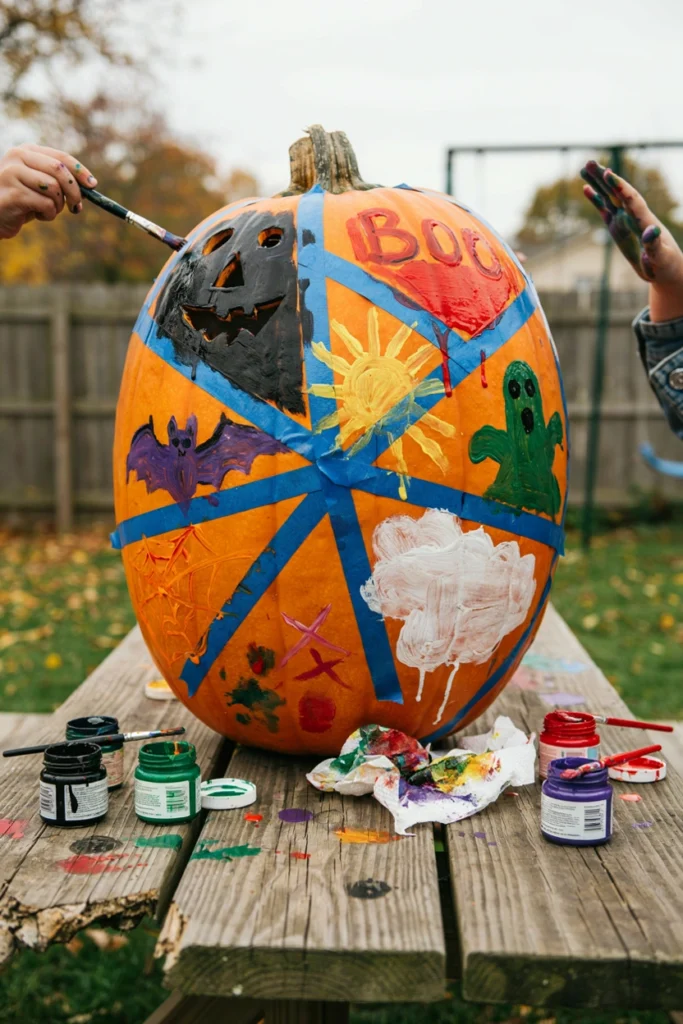
One oversized pumpkin gets sectioned off with painter’s tape into panels, and each kid at the table paints their own scene in their own panel — the different hand styles blending into one pumpkin makes it a genuine group keepsake rather than a solo craft.
Best For
Classroom pumpkin-painting days or sibling groups where everyone wants ownership of the final piece — pair it with these Halloween party ideas for kids for a full classroom event.
Comparing the Techniques: Which Painted Pumpkin Fits Your Kid?
If you’re staring at thirty ideas and not sure where to start, this quick comparison narrows it down by age and mess tolerance.
| Idea | Best For | Difficulty | Mess Level |
|---|---|---|---|
| Handprint Spider | Ages 2–3 | Easy | High |
| Googly-Eye Monster | Ages 4–5 | Easy | Low |
| Ladybug Pumpkin | Ages 4–5 | Medium | Medium |
| Galaxy Pumpkin | Ages 6+ | Medium | Medium |
| Realistic Portrait | Ages 8+ | Advanced | Low |
Paint Picks by Age
Choosing the right paint matters as much as the design — here’s what actually holds up on a pumpkin without worrying anyone underfoot. A washable tempera paint set is a solid pick for the 4–5 age range if you want one bottle set that covers most of these ideas.
| Age Range | Recommended Paint | Why It Works |
|---|---|---|
| 2–3 | Washable finger paint | Non-toxic, wipes off skin and most fabric easily |
| 4–5 | Washable tempera paint | Good coverage, still easy cleanup, budget-friendly |
| 6+ | Acrylic craft paint | Richer pigment, better for layering and detail work |
Common Mistakes to Avoid
- Skipping the drop cloth: Paint splatters farther than expected once kids get into a rhythm — cover the whole table, not just the pumpkin’s footprint.
- Using a fresh, damp pumpkin: Wipe pumpkins dry and let any natural moisture evaporate before painting, or paint will slide instead of adhering.
- Not sealing the finished design: Unsealed paint chips within days of handling. A light clear sealant spray protects hours of work.
- Overcomplicating a toddler’s design: Multi-step designs frustrate two- and three-year-olds. Save detailed ideas for kids six and up.
- Painting a soft or bruised pumpkin: Any real pumpkin already going soft will mold faster once damp paint is added — check firmness first.
Frequently Asked Questions
What’s the best paint for kids painting pumpkins?
Washable finger paint or tempera works best for toddlers and preschoolers, while acrylic craft paint gives older kids richer color and better coverage for detailed designs.
Can toddlers paint real pumpkins?
Yes — real pumpkins work fine for toddlers as long as the paint is washable and non-toxic; just expect the design to last a shorter time than on a reusable foam pumpkin.
Do you need to prime a pumpkin before painting?
Priming isn’t required, but a white base coat helps brighter colors show true and prevents the natural orange from showing through lighter shades like white or pastel designs.
How long will a painted pumpkin last?
A painted real pumpkin typically looks good for two to four weeks before it starts to soften, while a painted foam pumpkin can be wiped down and reused for years.
How do you seal a painted pumpkin so it doesn’t chip?
Once the paint is fully dry, a light coat of clear acrylic sealant spray or a thin layer of Mod Podge protects the design from chipping and light rain.
What’s a good pumpkin painting idea for a large group of kids?
A group mural pumpkin, where each child paints one taped-off section, works especially well for classrooms or parties since everyone gets creative ownership without waiting for a turn.