Christmas magic for kids comes from small, repeated rituals — not perfect decor or expensive gifts. Focus on sensory traditions like lights, music, and baking, a few signature moments kids will remember, and your own calm presence. Consistency and connection create more wonder than any elaborate setup ever could.
Heads up: This post may include affiliate links. As an Amazon Associate, I earn from qualifying purchases—at no extra cost to you. Full privacy policy and disclosure here.
What Actually Makes Christmas Feel “Magical” to Kids
Christmas magic isn’t about how much you spend or how your house looks in photos. It’s built from anticipation, repetition, and a sense of specialness that a child can count on year after year. Researchers who study family rituals have found that anticipating an event often brings more happiness than the event itself, which is part of why the “lead-up” to Christmas matters just as much as the day itself.
Think about your own favorite childhood Christmas memory. It probably wasn’t the biggest gift under the tree. It was more likely a smell, a song, a specific moment with a parent who was fully present, even if just for a few minutes.
That’s the real formula: sensory details plus consistency plus your undivided attention, even briefly. A five-minute ritual repeated every night in December can create more magic than a single elaborate event that takes all day to plan and leaves you too tired to enjoy it.
The 5-Minute Magic Framework: Wonder at Any Energy Level
Most Christmas idea lists assume you have unlimited time and energy. You don’t, and that’s completely normal. This framework sorts magic-making ideas by how much time they take, so you can match your effort to your actual capacity on any given day.
| Time Available | Idea | Why It Works |
|---|---|---|
| 5 minutes | Turn on Christmas lights and one favorite song during dinner | Instant atmosphere with zero prep |
| 5 minutes | Read one page of a Christmas book together before bed | Builds a nightly ritual kids anticipate |
| 15 minutes | Decorate one ornament together | Hands-on, low mess, easy cleanup |
| 15 minutes | Write a letter to Santa together | Gives kids a sense of participation and excitement |
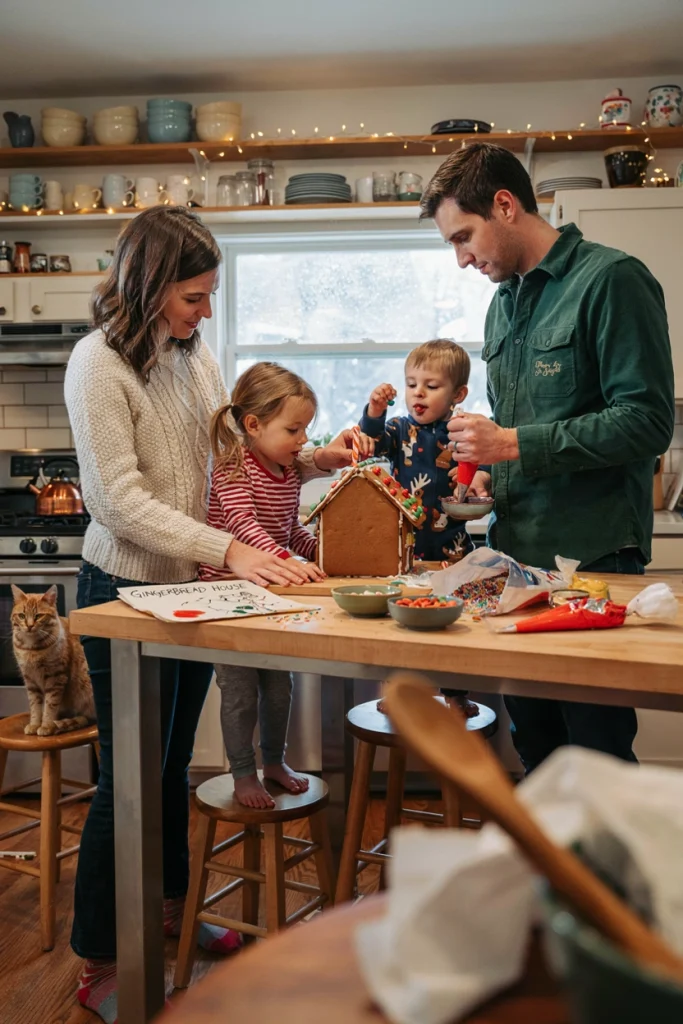
| 60 minutes | Build a gingerbread house | A signature, once-a-year event kids remember |
| 60 minutes | Bake cookies from scratch as a family | Sensory, collaborative, and naturally festive |
5-Minute Magic Ideas
These are your low-energy, high-impact days. String lights and holiday music turn an ordinary evening into something festive almost instantly, with no setup beyond flipping a switch.
- Light a cinnamon or pine candle during dinner
- Play one Christmas song while getting ready for bed
- Point out one holiday decoration on your street during the drive home
15-Minute Magic Ideas
On days with a little more bandwidth, these ideas add hands-on connection without requiring a full evening.
- Decorate one ornament together — a set of customizable family ornaments makes this feel extra special because each kid gets one that’s truly theirs
- Write a letter to Santa using a simple Santa letter writing kit
- Try one quick craft from our list of easy Christmas crafts for kids
60-Minute (Go-Big) Magic Ideas
Save these for weekends or days when you actually have the energy. They don’t need to happen often to be memorable — once or twice a season is plenty.
- Build a gingerbread house kit together
- Host a family game night with a few funny Christmas party games
- Bake cookies from scratch and let kids help decorate
Christmas Magic by Age: What Actually Lands
What feels magical to a two-year-old will fall flat with a ten-year-old, and vice versa. Matching your effort to your child’s actual developmental stage saves you time and makes the moment land the way you hoped it would.
| Age Group | What Resonates Most | Skip This |
|---|---|---|
| Toddlers (1–3) | Lights, textures, music, short bursts of excitement | Long, elaborate activities they can’t sit through |
| Preschoolers (4–5) | Simple traditions, pretend play, Santa’s arrival | Overly complex crafts requiring fine motor skill |
| Elementary (6–10) | Traditions with a bit of mystery, giving to others, decorating | Anything that feels babyish for their age |
| Tweens (11+) | Being included as a “helper,” inside jokes, choosing traditions | Forced enthusiasm for younger-kid activities |
Toddlers (1–3)
Keep it simple and sensory. Toddlers respond to lights, textures, and music far more than they do to a fully planned activity. A short walk to look at neighborhood lights often creates more wonder than an hour-long craft project.
Preschoolers (4–5)
This is prime imagination age, and the excitement around Santa and simple traditions tends to peak here. Keep activities short and hands-on, and expect a lot of repeated questions about “how many more days.”
Elementary Age (6–10)
Kids this age can hold onto more complex traditions and start to enjoy giving as much as receiving. This is a great age to introduce a family volunteer activity or a tradition of picking out a gift for someone else.
Tweens (11+)
Older kids often pull away from “little kid” traditions, but they still want to feel included. Letting them help plan or choose one tradition — even something as simple as picking the Christmas Eve movie — keeps them invested without forcing enthusiasm they don’t feel.
Simple Daily Traditions That Build Anticipation
The weeks leading up to Christmas matter as much as the day itself. Small, repeated rituals build a sense of countdown that kids look forward to every single day.
- Add one ornament to the tree each night instead of decorating all at once
- Use a reusable advent calendar with a small activity or note each day
- Bake or decorate one holiday snack together — our Christmas snack ideas for kids are easy weeknight options
- Take a family photo in matching pajamas each year — this guide to sibling Christmas photos makes it painless
- Watch one Christmas movie a week instead of a marathon
12 Days of Simple Magic Checklist
- Drive around to see lights
- Make hot cocoa together
- Read a Christmas book before bed
- Write a letter to Santa
- Decorate one ornament
- Bake a holiday treat
- Watch a favorite Christmas movie
- Do one act of kindness together
- Have a pajama and hot cocoa night
- Make a paper chain countdown
- Listen to Christmas music during dinner
- Look through old holiday photos together
Making Christmas Eve Feel Truly Special
Christmas Eve tends to be the single most memorable night of the season for kids, and it doesn’t need to be complicated to feel special. A predictable, calm routine actually helps young children feel secure, which makes the excitement of the night feel good instead of overwhelming (Source: American Academy of Pediatrics).
A Christmas Eve box kit is a simple way to build a yearly ritual — new pajamas, a special mug, and a favorite movie all in one place kids can open the same time every year. Pair it with a reading of The Night Before Christmas illustrated storybook for a quiet, predictable close to the night.
Christmas Eve Magic Checklist
- Set out new Christmas Eve pajamas
- Make a simple, low-mess dinner
- Dim the lights and turn on the tree
- Read a holiday story together
- Leave out cookies and milk (or the family’s version of this)
- Keep bedtime calm and predictable, not rushed
Whatever routine you settle on for Christmas Eve, try to keep it consistent from year to year. Consistency is what turns a nice night into a tradition, and it sets up a smooth transition into your Christmas morning traditions the next day.
Budget-Friendly Ways to Create Big Magic
Financial stress is one of the biggest hidden threats to holiday joy for parents, and it’s completely reasonable to want magic without the price tag that often comes with it. The good news: some of the most memorable traditions cost little to nothing.
| Free | Low-Cost | Worth the Splurge |
|---|---|---|
| Driving to see neighborhood lights | Hot cocoa and marshmallows | Gingerbread house kit |
| Reading a library Christmas book | Dollar-store paper chain countdown | Christmas Eve box kit |
| Family game night | Baking cookies from a box mix | Reusable advent calendar |
| Watching a Christmas movie at home | A single new ornament each year | Family matching pajamas |
Notice something? Most of the “free” and “low-cost” columns are the traditions kids remember most vividly as adults. The splurge items aren’t required — they just make an existing tradition a little easier to repeat consistently.
Christmas Magic Without Santa (or Without Overdoing Santa)
Not every family centers Christmas around Santa, and that’s completely fine. Magic doesn’t require him. Traditions built around giving, togetherness, and sensory experiences work just as well, whether Santa is part of your holiday or not.
- Focus on a family giving tradition, like picking out a gift for someone in need
- Build rituals around lights, music, and food instead of gifts
- Let giving and receiving both be part of the excitement, not just what’s under the tree
Common Mistakes That Kill Christmas Magic (Even With Good Intentions)
- Equating magic with spending. This creates financial stress and unrealistic expectations that don’t actually build better memories.
- Trying to do too many traditions at once. A packed schedule leads to burnout and half-finished rituals instead of a few meaningful ones.
- Ignoring your child’s actual age and interests. A Pinterest-perfect craft that’s too advanced (or too babyish) for your kid falls flat no matter how nice it looks.
- Over-scheduling Christmas Eve. Kids often need less stimulation on the big night, not more.
- Making every tradition Santa-dependent. Once belief fades, families sometimes feel like the magic disappeared with it — unless other traditions were already in place.
- Letting your own stress show. Kids pick up on a frazzled parent faster than they notice a missing decoration.
How to Protect Your Own Energy So the Magic Feels Real
Here’s the part most Christmas articles skip: your kids don’t need a perfectly executed holiday. They need a parent who isn’t running on empty. Kids are remarkably good at sensing stress, even when you think you’re hiding it well.
Pick two or three traditions that genuinely matter to your family and let the rest go. It’s okay to skip the elaborate crafts, the matching outfits, or the third holiday event of the week if it means you actually get to enjoy the season instead of just surviving it.
Frequently Asked Questions
What age is Christmas magic most important for?
Ages 3–8 tend to experience the most wonder, since imagination is high and skepticism is still low. That said, meaningful traditions matter at every age — the form just changes as kids grow.
How do I make Christmas magical without spending money?
Focus on sensory rituals like lights, music, baking, and driving to see decorations, along with one-on-one time. Kids remember the feeling of a tradition far more than what it cost.
What if I don’t have time for elaborate holiday activities?
Pick two or three five-minute rituals and repeat them consistently. Repetition, not scale, is what actually makes a tradition feel magical to a child.
How do I make Christmas magical for a toddler?
Keep it simple and sensory. Lights, textures, music, and short bursts of excitement work better for toddlers than elaborate setups they can’t fully process yet.
How do working or single parents create Christmas magic?
Choose a small number of non-negotiable rituals rather than trying to do everything. Consistency matters far more than volume.
How can I make Christmas magical without focusing on Santa?
Center the season on family rituals, giving, and sensory traditions instead of gift-centric moments. Many of the most memorable traditions have nothing to do with Santa at all.
How do I build excitement in the weeks before Christmas?
Use small daily rituals, like an advent calendar or a nightly lights walk, to create a countdown feeling that builds anticipation naturally.
How do I make Christmas morning feel special?
Keep a predictable, calm routine your kids can anticipate. The same order of events every year, more than anything elaborate, is what builds its own kind of magic.
How do grandparents fit into creating holiday magic?
Loop them into one specific tradition, like a phone call or a shared recipe, so kids associate them with a consistent ritual rather than just a visit.
What if my child has sensory sensitivities during the holidays?
Offer quieter versions of traditions, like soft lights, calm music, or smaller gatherings, so your child can still participate comfortably without becoming overwhelmed.
You’ve Got This, Even on the Tired Days
Christmas magic was never about doing everything. It’s about doing a few things consistently, with a parent who’s actually present for them, even if just for five minutes at a time.
Pick one or two ideas from this list and start there. Your kids won’t remember the traditions you skipped — they’ll remember the ones you kept.
Save this guide for the next time the holiday overwhelm creeps in, and try one tip tonight.
You might also love: