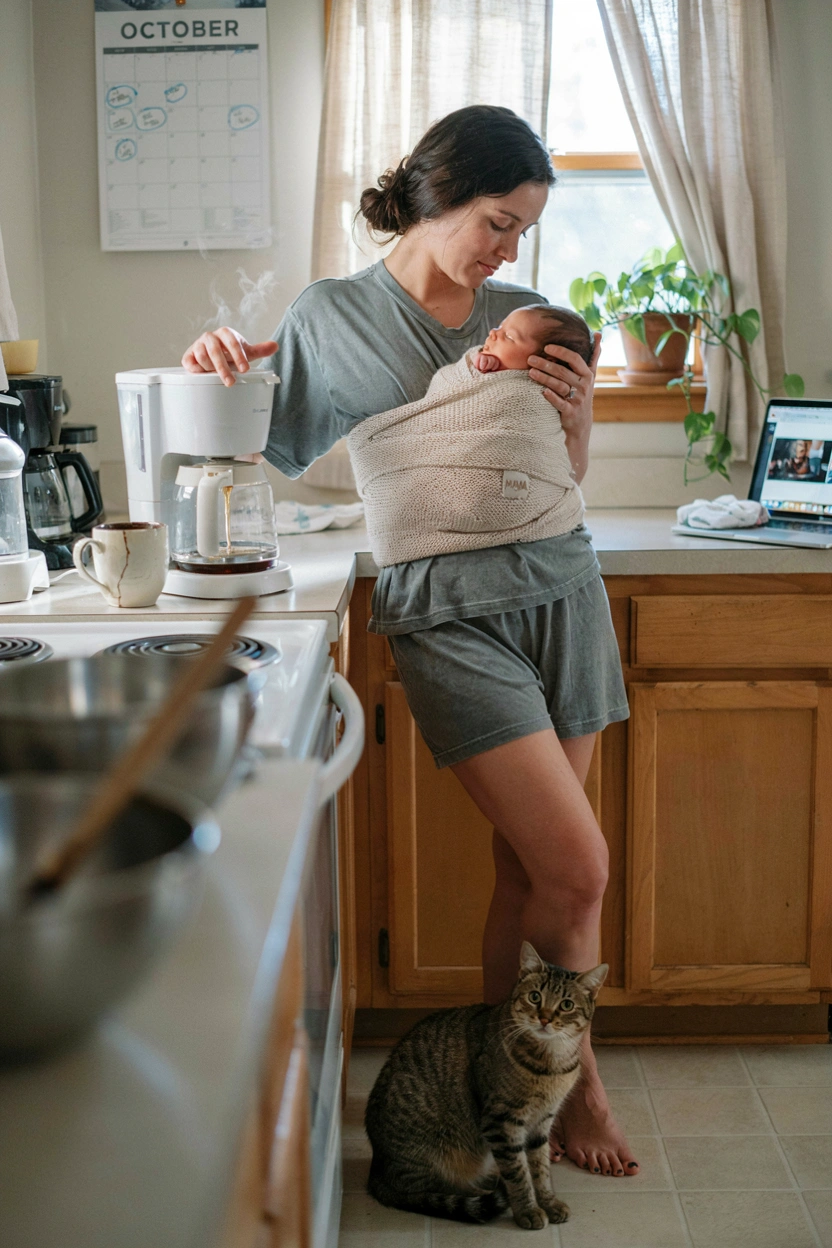
Boba Wrap vs. Moby Wrap: Which One Is Actually Right for Your Newborn?
Quick Answer: The Moby Wrap is 100% cotton, easiest for beginners to learn, and stays cool for newborns up to about 15 pounds. The Boba Wrap has more spandex for extra stretch-back support and holds up a bit longer as baby grows. Neither is ideal for hip-carrying much past 3–4 months.
You just want your hands free for five minutes. Maybe to eat a sandwich standing up, or finally answer that text your sister sent three days ago.
The Boba Wrap and the Moby Wrap are the two most popular stretchy baby wraps, and they look almost identical online. But the fabric, the fit, and how long each one actually lasts before your baby outgrows it are pretty different.
Picking the wrong one doesn’t ruin anything, but it can mean sweating through a summer wearing a heavier fabric, or feeling like your back gives out sooner than it should.
By the end of this, you’ll know exactly which wrap fits your climate, your body, and how long baby will realistically fit in it — not just what the box says.
Quick Verdict: Boba Wrap vs. Moby Wrap
If you only read one section, read this one. Here’s how the two stack up side by side.
| Feature | Moby Wrap | Boba Wrap |
|---|---|---|
| Fabric | 100% cotton | Cotton-spandex blend |
| Learning curve | Slightly easier for first-timers | Slightly more practice needed |
| Best weather | Mild to cool climates | Runs a bit cooler in summer |
| Support as baby grows | Good early on | Holds shape a little longer |
| Price | $ | $$ |
Neither wrap is objectively “better.” They’re built for slightly different priorities, and the right one depends on your baby’s age, your climate, and how much stretch recovery matters to you.
What’s the Real Difference Between Them?
On the surface, both wraps are long pieces of stretchy fabric you tie around your body before tucking baby inside. The difference is in the details.
Fabric & Stretch
The Moby Wrap is made from 100% cotton jersey. It’s soft and breathable, but it has less bounce-back, which means it can start to sag a little by the end of a long babywearing session.
The Boba Wrap blends cotton with spandex, giving it more stretch recovery. That means it holds baby snug for longer stretches without needing constant re-tightening.
Length & Tying Style
Both wraps use a pre-tied, cross-wrap method you put on before placing baby inside. The Moby’s fabric is slightly longer, which some moms find gives them more fabric to work with for full support.
Price Comparison
The Moby Wrap is usually the more budget-friendly option. The Boba Wrap tends to run a bit higher, largely because of the added spandex and its extra fabric options for warm-weather babywearing.
Which Is Easier to Learn as a New Mom?
Honestly, both wraps take a few tries before they feel natural. The first time you attempt it, you will probably end up with baby’s head somewhere it shouldn’t be and a very confused look on your face. That’s normal.
Here’s how learning each one compares, step by step:
- Practice the pre-tie first: Both wraps ask you to cross and tie the fabric around your torso before baby ever goes in. Do this with a doll or a rolled-up towel a few times before baby is involved.
- Learn the pocket placement: The Moby’s slightly longer, more uniform stretch makes the “pockets” you tuck baby into a little more forgiving for first-timers.
- Adjust for snugness: The Boba’s extra stretch recovery means it takes a bit more attention to get the tightness right, since it naturally wants to spring back into shape.
- Do a mirror check: Once baby is in, check a mirror or ask your partner to confirm baby’s face is visible and airway is clear.
If you’re the kind of mom who wants one less variable to think about in the newborn haze, the Moby’s simpler fabric behavior usually wins out for the first few weeks.
Comfort in Hot vs. Cold Weather
This is where a lot of moms end up regretting their pick. Two layers of stretchy fabric plus a warm baby against your chest gets hot fast, no matter which wrap you choose.
- Summer babies: The Boba Wrap’s lighter blend options and dedicated summer fabric lines tend to breathe a little better than the Moby’s classic cotton.
- Winter babies: The Moby’s cotton fabric layers more easily under a jacket, since it doesn’t add the extra clingy warmth spandex can trap.
- Year-round: If you live somewhere with real seasons, consider which season your baby will be wearing the wrap most during those first 3–4 months.
Whichever you pick, keep an eye on baby for overheating, especially in the summer months. Sweaty hair at the neckline or a flushed face are signs to loosen the wrap or find shade, following heat safety guidance from the American Academy of Pediatrics.
The Outgrow Timeline: How Long Each Wrap Actually Lasts
Here’s the part almost nobody tells you before you buy: both wraps say they work up to 35 pounds, but that’s not the real story. Here’s what most moms actually experience.
| Baby’s Age / Weight | Moby Wrap Comfort | Boba Wrap Comfort |
|---|---|---|
| Newborn (up to 10 lbs) | Excellent | Excellent |
| 6–12 weeks (10–14 lbs) | Very good | Very good |
| 3–4 months (14–17 lbs) | Starts to sag; shoulders may ache | Holds shape a bit better; still supportive |
| 5+ months (17+ lbs) | Not recommended for hip-carrying | Uncomfortable for most; time to switch |
Most families find they’ve naturally moved on to a structured carrier or sling by the 3–4 month mark, regardless of which stretchy wrap they started with. That’s not a failure of the product — it’s just how stretchy fabric works once a growing baby adds real weight.
Safety First: Hip Positioning in Both Wraps
This part matters more than fabric or price. Both wraps are safe when used correctly, but “correctly” has a specific meaning.
Baby’s knees should sit higher than their bottom in an M-shape position, with hips spread and supported. This position protects healthy hip development in the early months, as recommended by the International Hip Dysplasia Institute.
The wrap should also follow the T.I.C.K.S. safety guidelines used throughout the babywearing community: Tight, In view at all times, Close enough to kiss, Keep chin off chest, Supported back.
Here’s a quick self-check before every wear:
- Tight: Baby should sit snugly against you, not slumped or loose.
- In view: You should be able to glance down and see baby’s face without adjusting the fabric.
- Close enough to kiss: Baby’s head should be close enough to your chin that you could kiss the top of it.
- Keep chin off chest: Baby’s chin shouldn’t be pressed down onto their chest, which can restrict breathing.
- Supported back: Baby’s back should be gently curved, not stiff or arched.
If your baby was born with hip instability or has any diagnosed hip concerns, talk to your pediatrician or a certified babywearing educator before regularly wearing a stretchy wrap, as recommended by the American Academy of Pediatrics.
It’s worth mentioning that babywearing safety and sleep safety are two different worlds. If your little one drifts off in the wrap, watch them closely and don’t let the wrap double as an unsupervised sleep space. For more guidance on safe infant sleep practices, read What Every Parent Should Know About SIDS.
Breastfeeding, Skin-to-Skin, and Postpartum Comfort
Both wraps can be loosened and adjusted for nursing, though it takes a little practice to manage one-handed the first few times. Most moms find it easier to nurse in the wrap once baby has some head control, usually a few weeks in.
Skin-to-skin time in either wrap can help with bonding, milk supply, and even regulating your baby’s temperature and heart rate in the early days, as supported by the American Academy of Pediatrics.
If you’re recovering from a C-section, keep the wrap’s fabric away from your incision site and consider wearing baby a little higher on your chest rather than lower on your abdomen until you’ve healed. Check with your OB before resuming babywearing if you’re not sure it’s time yet.
A lot of babies drift off to sleep the moment they’re snug against you in a wrap, lulled by your heartbeat and movement. If you like adding a little extra soothing, a few soft lullabies for babies and toddlers can help extend that nap a little longer. And if baby does fall asleep mid-wrap, resist the urge to wake them just to move to the crib—here’s why letting a sleeping baby sleep is usually the better call.
Which One Fits Your Body Type?
Both wraps are marketed as one-size-fits-all, and technically they are, since the tying method adjusts to your body. But real moms report some differences worth knowing.
| Body Type | What to Know |
|---|---|
| Petite | Both wraps come with a long tail of extra fabric to tuck or tie off; petite moms may want to practice tucking the excess neatly. |
| Average | Either wrap works well; personal preference on stretch and fabric weight matters most here. |
| Plus-size | The Moby’s slightly longer overall length tends to be easier to work with for a full wrap-around style. |
Since both wraps are one-size and adjust through the tying technique, partners and other caregivers with different body types can share the same wrap without needing their own.
Care & Washing Instructions
Keeping your wrap in good shape helps it last through the whole newborn stage.
- Machine wash in cold water on a gentle cycle to protect the stretch fibers.
- Skip the fabric softener, which can break down elasticity over time.
- Air dry instead of using the dryer whenever possible; heat is the fastest way to wear out the stretch.
- Wash before first use to soften the fabric and remove any manufacturing residue.
Our Verdict: Which Should You Buy?
If you’re a first-time mom who wants the simplest possible learning curve and lives somewhere mild, the Moby Wrap is the easier starting point.
If you’re expecting a summer baby, want a little more stretch recovery, or think you’ll wear baby daily for a few months straight, the Boba Wrap is worth the extra cost.
If you’re planning family outings or a road trip with a newborn, either wrap can make rest stops and hands-free moments a lot easier, so pick whichever one you feel most confident tying quickly.
Neither choice is wrong. Both wraps do the same core job well: keeping baby close and your hands free during those first exhausting months.
Frequently Asked Questions
Is a Boba Wrap or Moby Wrap better for newborns?
Both work well from birth. The Moby’s 100% cotton fabric is slightly cooler and easier for first-timers to learn, while the Boba’s added spandex offers a touch more bounce-back support as baby gets heavier.
What weight limit do these wraps have?
Manufacturers list up to 30–35 pounds, but most moms find both wraps become too hot and saggy for comfortable hip-carrying well before that, typically around 15–20 pounds.
Can you breastfeed in a Boba or Moby wrap?
Yes. Both allow a loosened, lowered position for nursing, though it takes practice to adjust the layers one-handed.
Are stretchy wraps safe for newborn hips?
Yes, when tied to keep baby’s knees higher than their bottom in an M-shape position that supports healthy hip development and following the T.I.C.K.S. safety guidelines for proper positioning and visibility.
Which wrap fits better for plus-size moms?
The Moby’s fabric is slightly longer overall, which some plus-size moms find easier to work with for full wrap-around styles.
How do you wash a Boba or Moby wrap?
Both are machine washable in cold water and should be air-dried to preserve stretch and elasticity.
Is the Boba Wrap worth the higher price?
For most moms, the small differences in stretch recovery and cooler summer fabric options justify the modest price gap, especially with heavier newborns.
When should I switch from a stretchy wrap to a different carrier?
Most families transition around 3–4 months or 15 pounds, once baby’s increased weight makes stretchy fabric feel unsupportive on the shoulders and hips.
Do partners with different body sizes need their own wrap?
No. Both wraps are one-size and adjustable through tying technique, so they can be shared between caregivers.
Can you wear a wrap in the summer without overheating?
The Boba Wrap’s lighter blend and dedicated summer fabric options tend to run cooler than the Moby’s classic cotton, but always watch baby closely for signs of overheating regardless of which wrap you choose.
Key Takeaways
- The Moby Wrap is easier to learn and stays cooler in mild climates; the Boba Wrap holds its shape longer and suits warmer weather.
- Both wraps realistically stay comfortable for hip-carrying until around 3–4 months, no matter what the weight limit label says.
- Hip-healthy M-position and the TICKS safety guidelines matter more than which brand you choose.
- Either wrap can be shared between caregivers of different body sizes since both use an adjustable tying method.
You’ve Got This, Even If the First Try Looks Messy
Every mom fumbles through her first few attempts at wrapping a squirmy newborn. It doesn’t mean you’re doing it wrong — it just means you’re learning something new while running on very little sleep.
Whichever wrap you choose, you’ll get the hang of it faster than you think, and those hands-free moments will start to feel like a small daily win.
If this helped you decide, save it for later or send it to a friend who’s staring at the same two wraps in her cart right now.
You might also love: