A room full of kids, a stack of Valentine cards, and twenty minutes before snack time—this is exactly when a few easy party games come in handy.
These Valentine’s Day games for kids give you plenty of ways to fill a classroom party, plan a playdate, or make February 14 feel special at home. There are silly movement games, quick table challenges, and quieter options for kids who would rather draw or solve a puzzle.
You don’t need to organize all 32. Choose three or four that suit your space, gather the supplies in one basket, and keep one extra game ready in case a round ends early.
Heads up: This post may include affiliate links. As an Amazon Associate, I earn from qualifying purchases—at no extra cost to you. Full privacy policy and disclosure here.
1. Valentine Picture Bingo
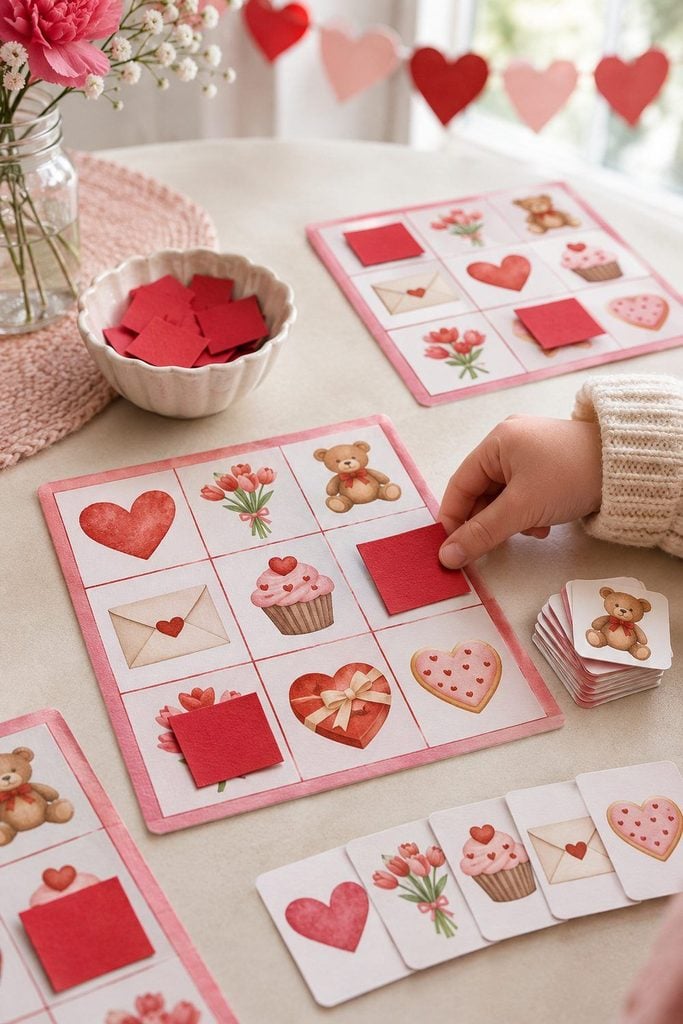
Picture bingo is an easy game to start while everyone arrives. Use cards with hearts, flowers, envelopes, teddy bears, and cupcakes so younger kids can play without reading.
You’ll need: Valentine picture bingo cards, calling cards, and paper squares for markers.
How to play: Give each child a card. Draw one calling card at a time and show the picture as you name it. The first player to cover five squares in a row calls “Valentine!” Check the card together, then clear the boards for another round.
For a shorter preschool version, use a three-by-three grid and play until someone finishes one row.
2. Hidden Heart Hunt
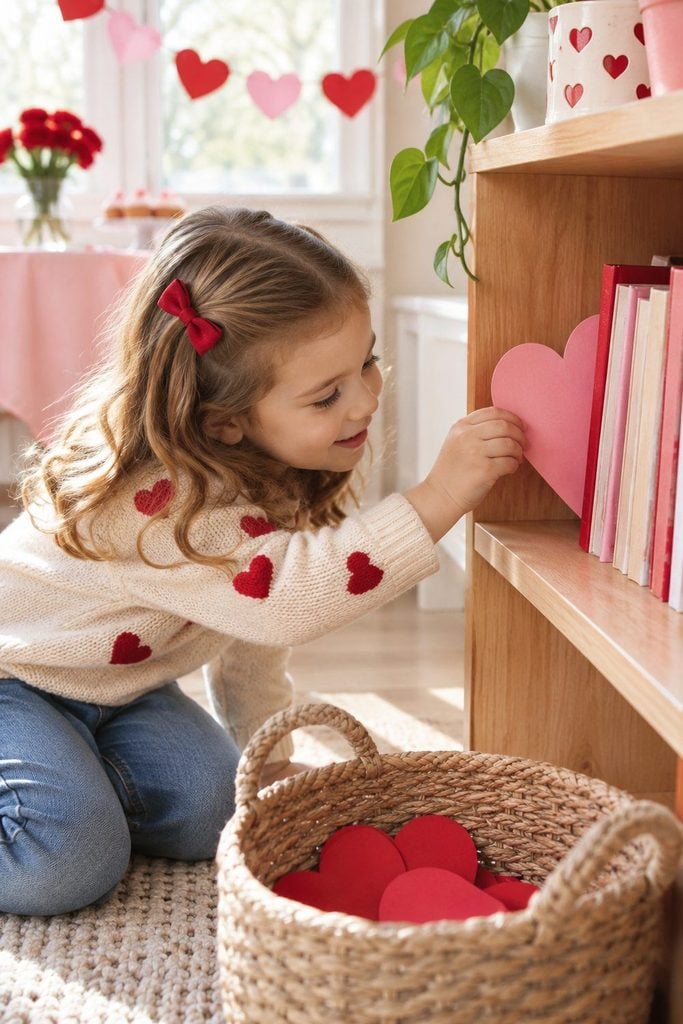
Turn your party space into a search zone with colorful paper hearts tucked around the room.
You’ll need: Large paper heart cutouts in several colors and a basket for each player or team.
How to play: Hide the hearts in reachable places before the kids arrive. Assign each child a color and challenge them to find five hearts in that color. Once they finish, they can help another player.
For older kids, write letters on the hearts that spell a mystery word. They must find their set and unscramble it to finish the hunt.
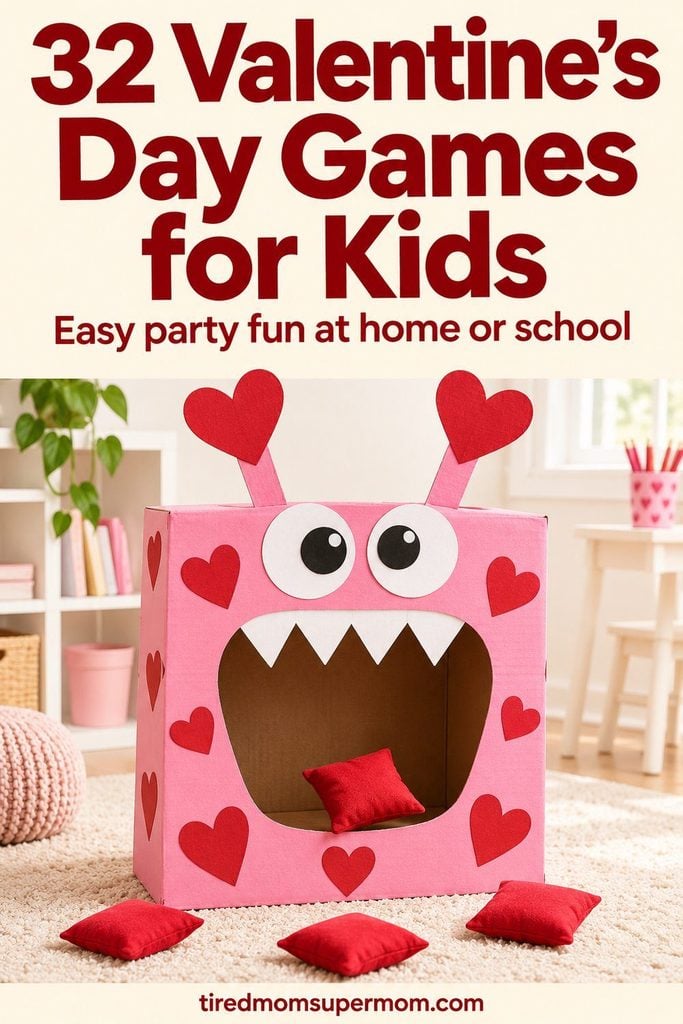
3. Feed the Valentine Monster
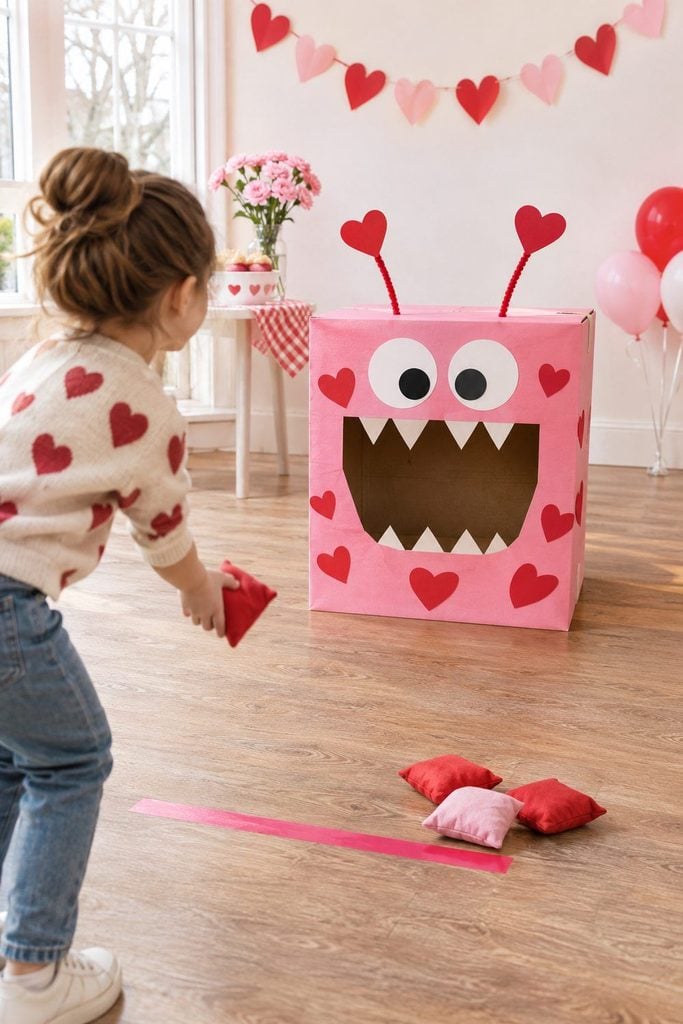
An empty cardboard box becomes a very hungry party guest with a little decorating.
You’ll need: A box, paper, tape, and soft beanbags.
How to play: An adult cuts a large mouth in the box. Add paper eyes and heart-shaped spots, then set the monster a few feet from a throwing line. Each child gets three beanbags to toss into its mouth.
Move the line closer for younger players. You can also make this cooperative: everyone works together to feed the monster 20 snacks before the round ends.
4. Musical Hearts

This version of musical chairs keeps everyone playing from start to finish.
You’ll need: Colored cardstock, painter’s tape, and music.
How to play: Cut out one large heart per child and tape them securely to the floor. Kids move around the room while the music plays. When it stops, everyone finds a heart. Call out an action, such as “make a silly face” or “wave like royalty,” before restarting the music.
Keep all the hearts in place so no one has to sit out.
5. Valentine Delivery Relay
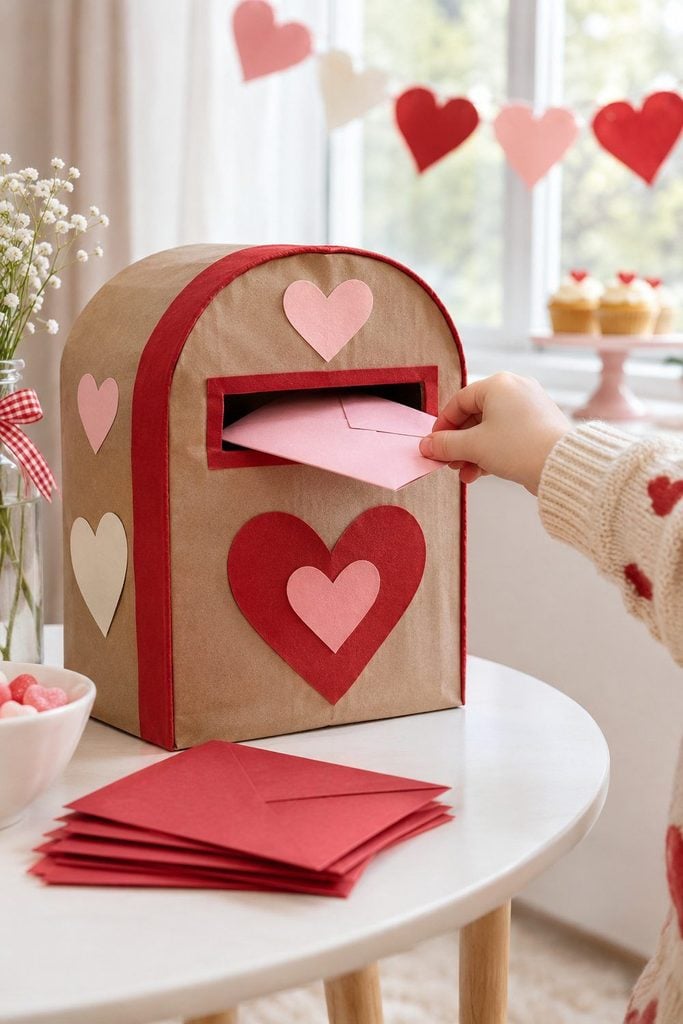
Give kids a pretend postal route with a mailbox waiting at the finish line.
You’ll need: Colorful envelopes, paper Valentines, and a box for each team.
How to play: Divide the kids into small teams. Place a stack of envelopes at each starting line and a mailbox across the room. Players carry one envelope at a time, deliver it, then return to tag the next teammate.
Use walking feet indoors. For a smaller space, run the game as a timed sorting challenge at a table instead.
6. Heart Puzzle Dash
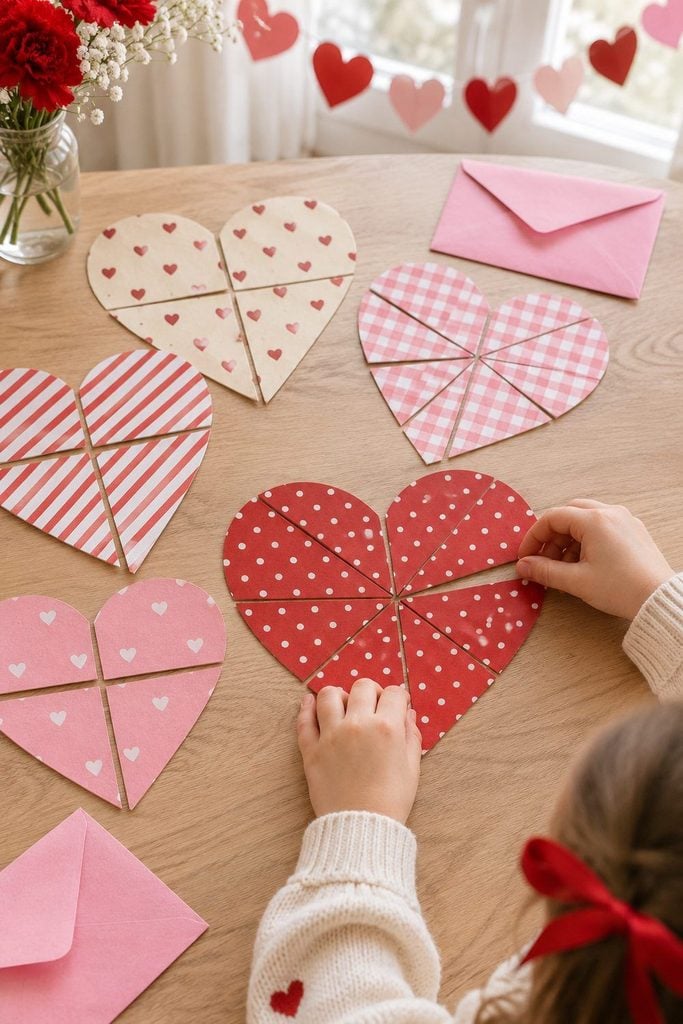
Every team gets a broken heart to put back together—and this time, that’s a good thing.
You’ll need: Heavy cardstock, markers, and scissors.
How to play: Draw a different design on each large paper heart, then cut each heart into puzzle pieces. Put each puzzle in its own envelope. Give teams matching levels of difficulty and see who can rebuild their heart first.
Use three or four pieces for younger kids and eight to twelve for older children. For a cooperative round, let everyone complete their puzzle without racing.
7. Valentine Freeze Dance

This is a good choice when kids need to move between seated activities.
You’ll need: Music and, if helpful, a portable speaker.
How to play: Play an upbeat, kid-friendly song and invite everyone to dance. Pause the music at random moments. Kids freeze until it starts again.
Add a different pose each round: freeze like a teddy bear, make a heart with your hands, or stand like a fancy statue. If someone wiggles, they simply reset and keep playing.
8. Heart Stack Challenge
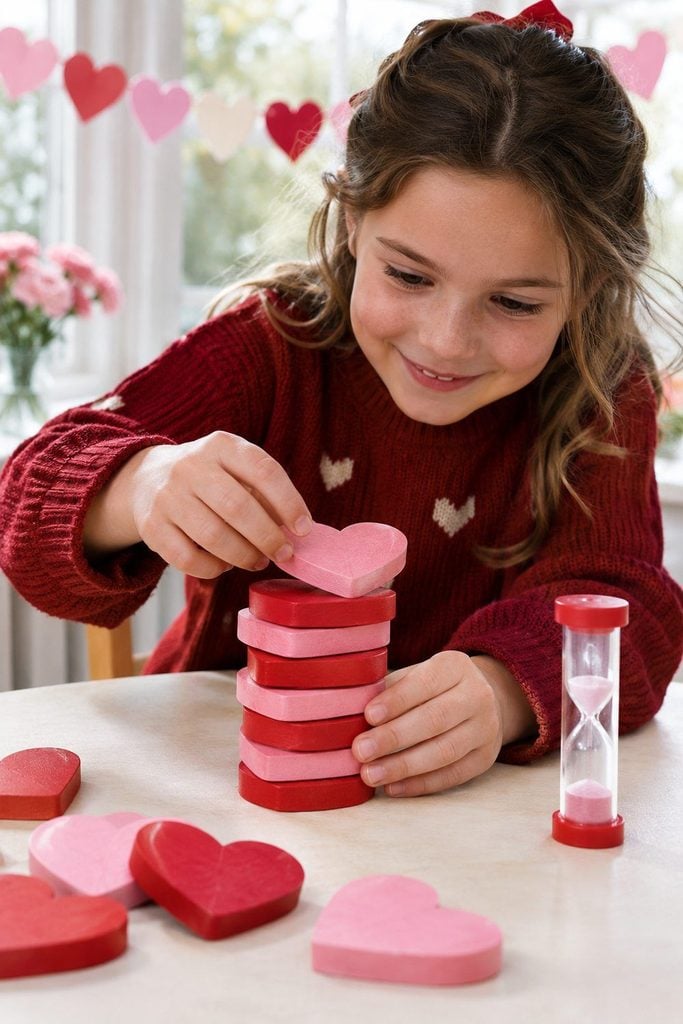
This tabletop game gets surprisingly tense when the tower starts to lean.
You’ll need: Large wooden craft hearts and a timer.
How to play: Give each player the same number of flat wooden hearts. Set a one-minute timer and challenge them to build the tallest freestanding stack. When time ends, take hands away and count the hearts in each standing tower.
For kids who find balancing frustrating, change the goal to making the longest heart pattern with alternating colors.
9. Cupid Says

You can play this Valentine version of Simon Says with no setup at all.
You’ll need: No supplies, though a heart headband makes a fun accessory for the leader.
How to play: One person gives directions such as “Cupid says touch your toes” or “Cupid says draw a heart in the air.” Players follow directions only when they begin with “Cupid says.”
If someone follows a trick instruction, have them do a silly pose and rejoin immediately. Let children take turns leading once they understand the rules.
10. Valentine Memory Match
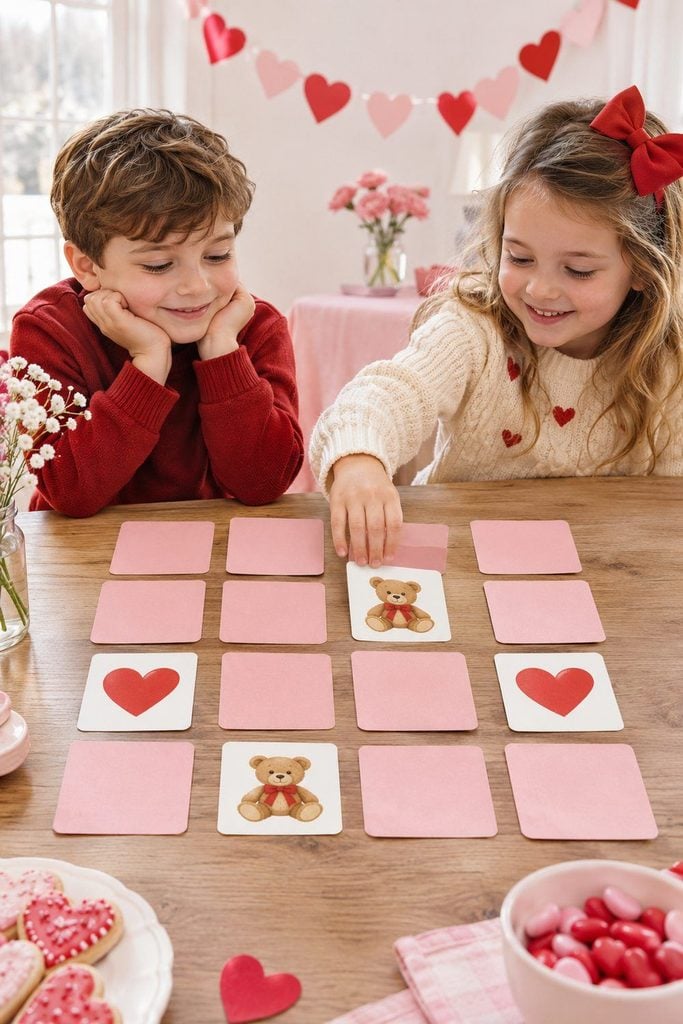
A matching game gives you a quiet station that kids can play in pairs.
You’ll need: Blank index cards and stickers or markers.
How to play: Make matching pairs of pictures, then shuffle the cards and place them face down. Players turn over two cards on each turn. If the pictures match, they keep the pair and take another turn. If not, they turn both cards back over.
Start with six pairs for younger children. Use more pairs or similar-looking designs for a harder game.
11. Heart Island Hop
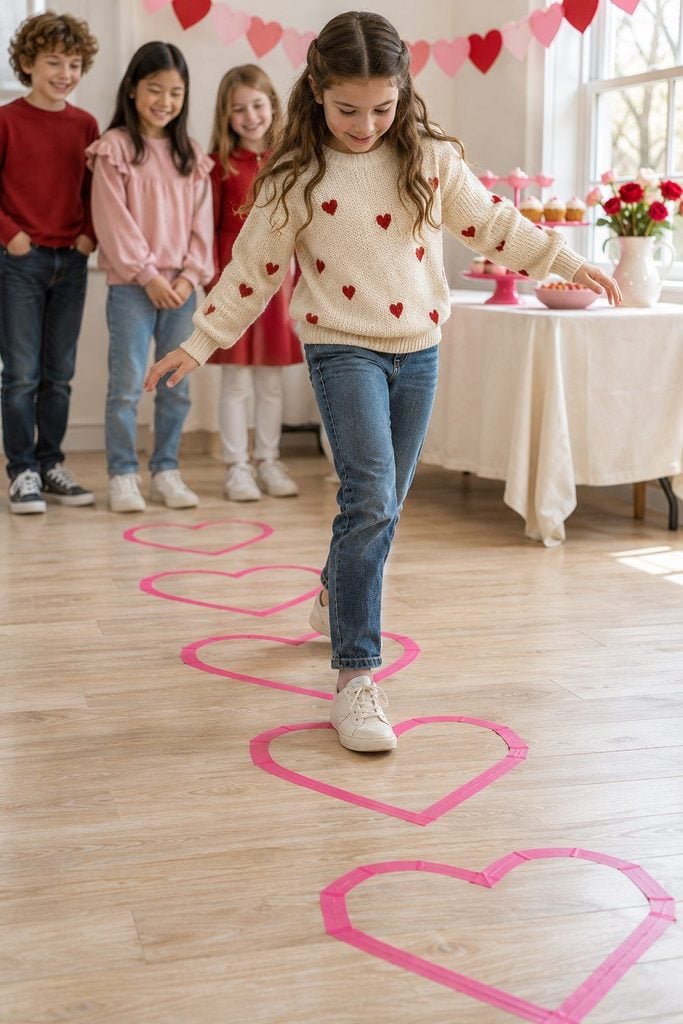
The floor becomes a pretend river, and the hearts are stepping stones.
You’ll need: Painter’s tape for making large heart outlines on the floor.
How to play: Create a short path of hearts with comfortable stepping distances between them. Kids cross the river by moving from one heart to the next without stepping outside the shapes.
Call out a new movement for each crossing: giant steps, tiny steps, or a careful sideways shuffle. Offer a seated version with paper hearts that children move a toy across.
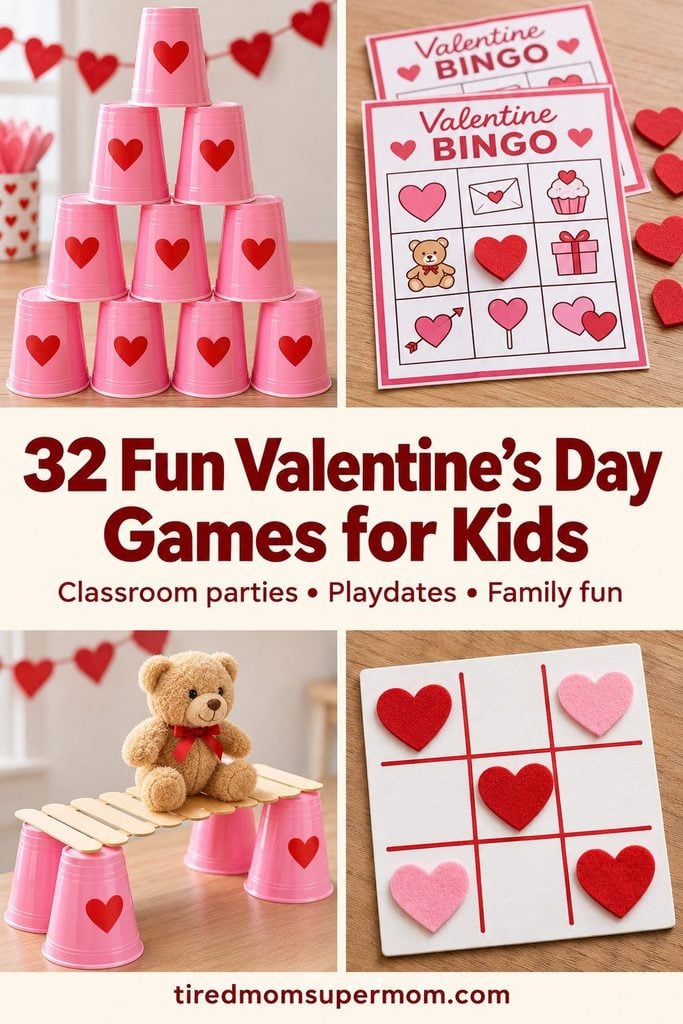
12. Valentine Cup Knockdown
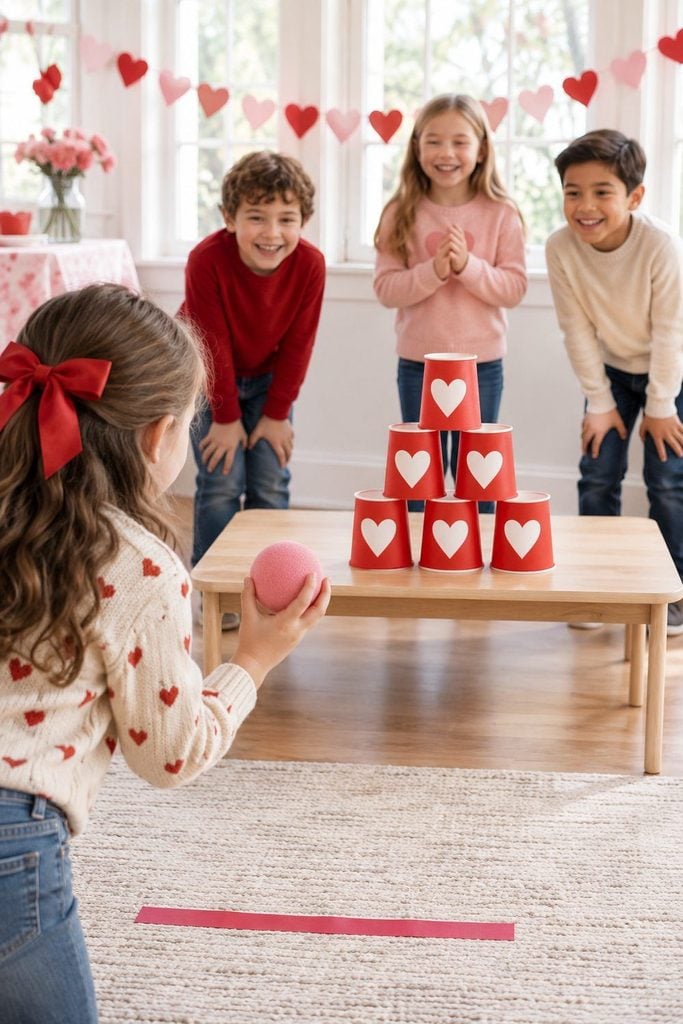
A pyramid of cups makes an easy target game without much cleanup.
You’ll need: Red paper cups and a soft foam ball.
How to play: Stack six cups in a pyramid on a low table. Each player gets three throws from a marked line. Award one point per cup knocked down, then rebuild the stack for the next player.
Decorate the cups with hearts before the party, or let kids do it as an arrival activity. Keep the throwing area clear of other players.
13. Pass the Plush Heart

Think hot potato, with a soft Valentine prop and a playful task at every stop.
You’ll need: A plush heart pillow and music.
How to play: Sit in a circle and pass the heart while music plays. When the music stops, the child holding it chooses a quick challenge: make a funny sound, name something pink, or show a favorite dance move.
Allow a “pass” option for children who don’t want a turn in the spotlight. Nobody is eliminated.
14. Valentine Picture Charades
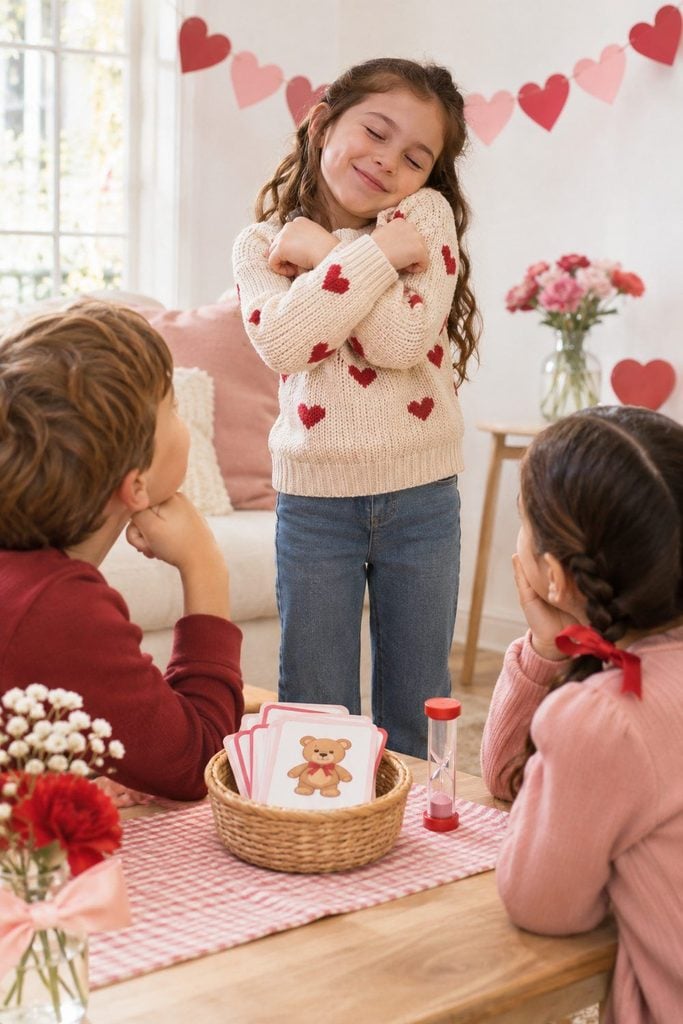
Keep the prompts simple and silly so kids can act them out without needing a romantic theme.
You’ll need: Paper prompt cards and a sand timer.
How to play: A player chooses a card and acts out the picture or phrase without speaking. Everyone else guesses before the timer runs out.
Try prompts such as delivering a Valentine, hugging a teddy bear, decorating a cupcake, smelling a flower, or opening a surprise gift. Younger kids can act with a partner or whisper their idea to an adult first.
15. Roll and Cover Hearts
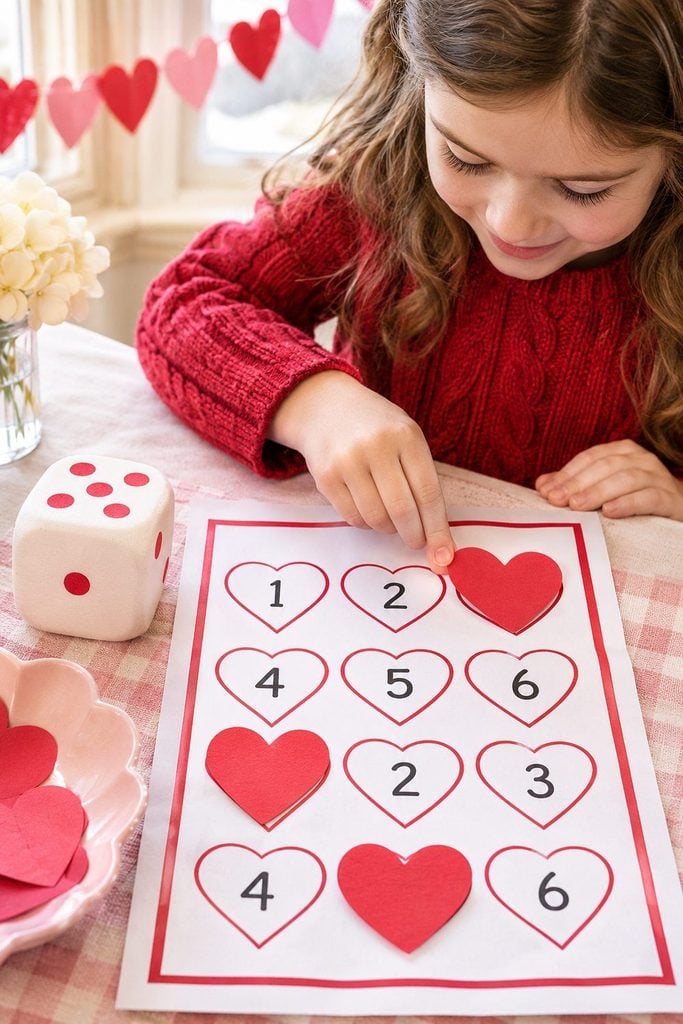
This simple dice game works well at a preschool or kindergarten party table.
You’ll need: Large foam dice, paper, and paper heart markers.
How to play: Draw twelve hearts on each player’s sheet, labeling two hearts with each number from one to six. Players take turns rolling a die and covering one matching number. If both matching hearts are covered already, their turn ends.
The first player to cover all twelve hearts wins. For a shared goal, keep rolling until everyone finishes.
16. Valentine Drawing Guessing Game
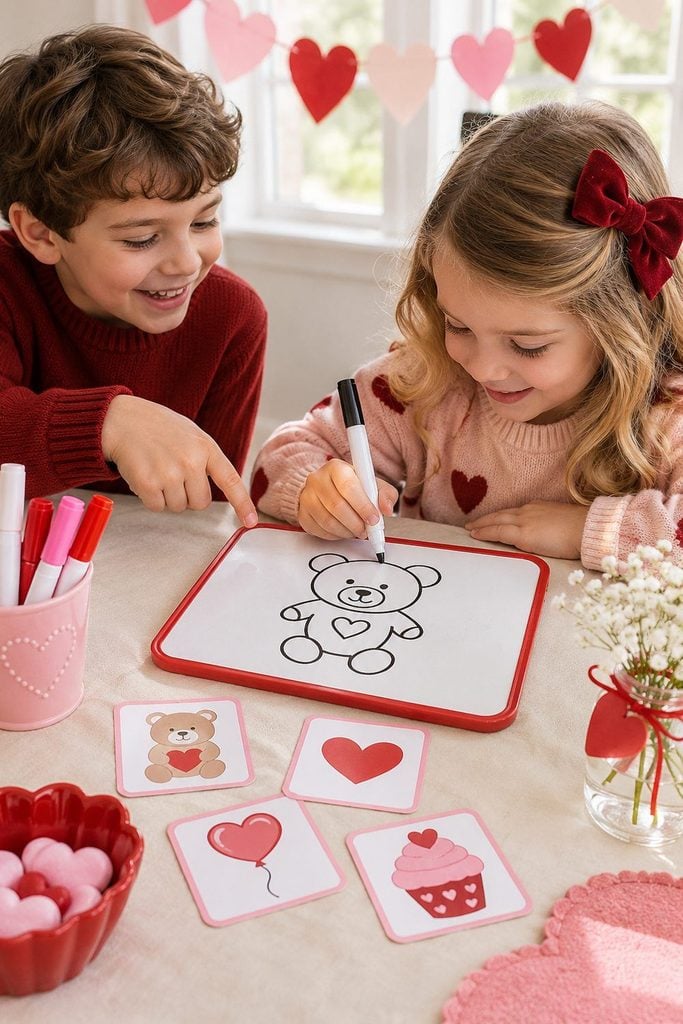
You don’t need artistic kids for this one. The wobbly drawings are part of the fun.
You’ll need: Mini dry-erase boards, markers, and prompt cards.
How to play: One child draws a prompt while their team guesses. Give each team one minute to solve as many pictures as possible, switching artists after each correct answer.
Good prompts include a heart, mailbox, bow, teddy bear, cupcake, flower, and friendship bracelet. For younger groups, play together without keeping score.
17. Find Your Matching Heart

This quick mixer helps children pair up before the next game.
You’ll need: Patterned scrapbook paper and scissors.
How to play: Cut out hearts and divide each into two pieces using a different zigzag or curved cut. Hand one half to each child. Players walk around comparing their pieces until they find the matching half.
Make sure every piece has a partner. For an odd number of children, create one heart with three pieces. Once everyone finds their group, ask them to choose a team name.
18. Heart Spoon Walk
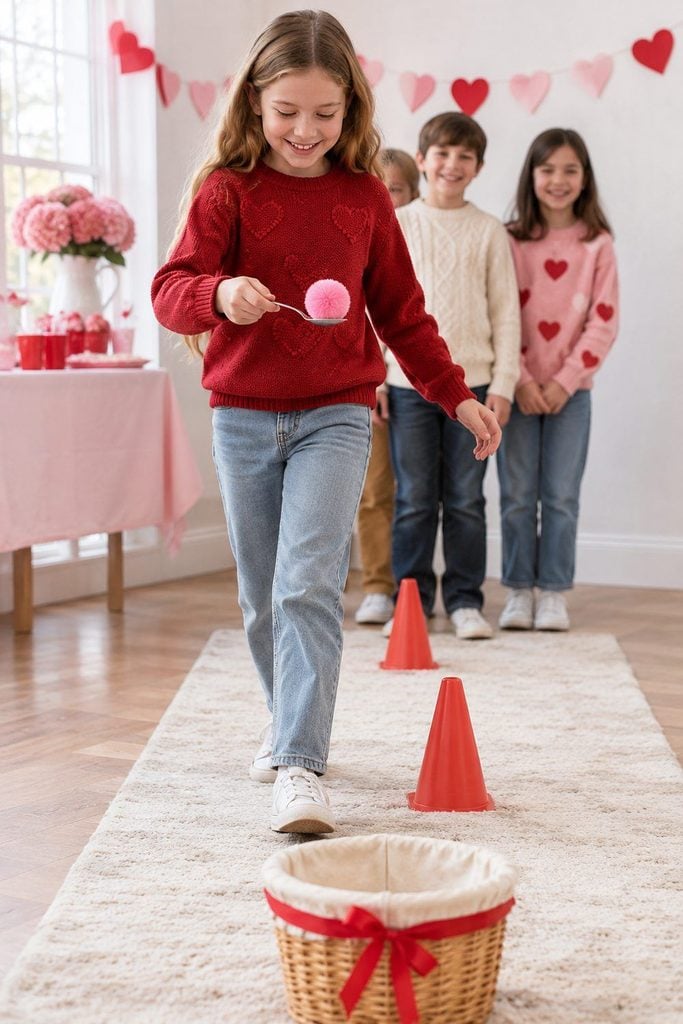
A soft heart balances on a spoon as players navigate a short course.
You’ll need: Large craft pom-poms, spoons, and two baskets.
How to play: Put a pom-pom on each player’s spoon. Children walk from one basket to the other and drop it inside without using their free hand. If it falls, they stop, pick it up, and continue from that spot.
Use large scoops and fabric beanbags for children who need an easier balance challenge. Keep it as a walking game rather than a running race.
19. Valentine Cup Tower Builders
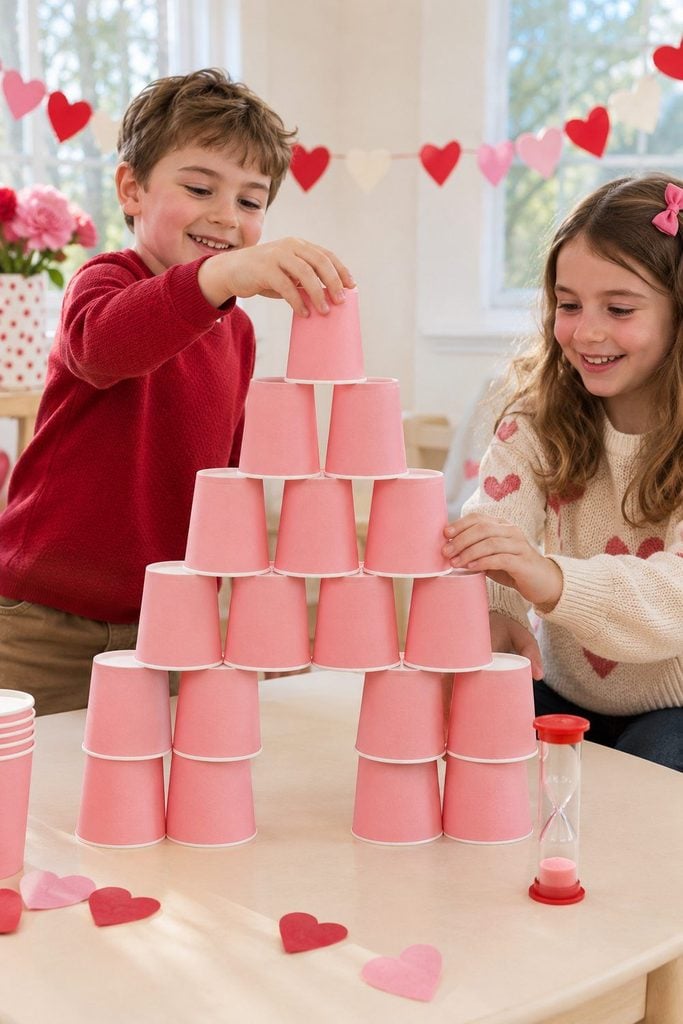
This building challenge is especially handy for kids who love making things.
You’ll need: Pink paper cups and a timer.
How to play: Give each team 15 cups and three minutes to build the tallest tower they can. The tower must stand by itself for five seconds after time ends.
Play a second round with a new goal, such as the widest structure or a tower with a doorway. Let teams explain their design before taking everything down.
20. Valentine Mystery Bag
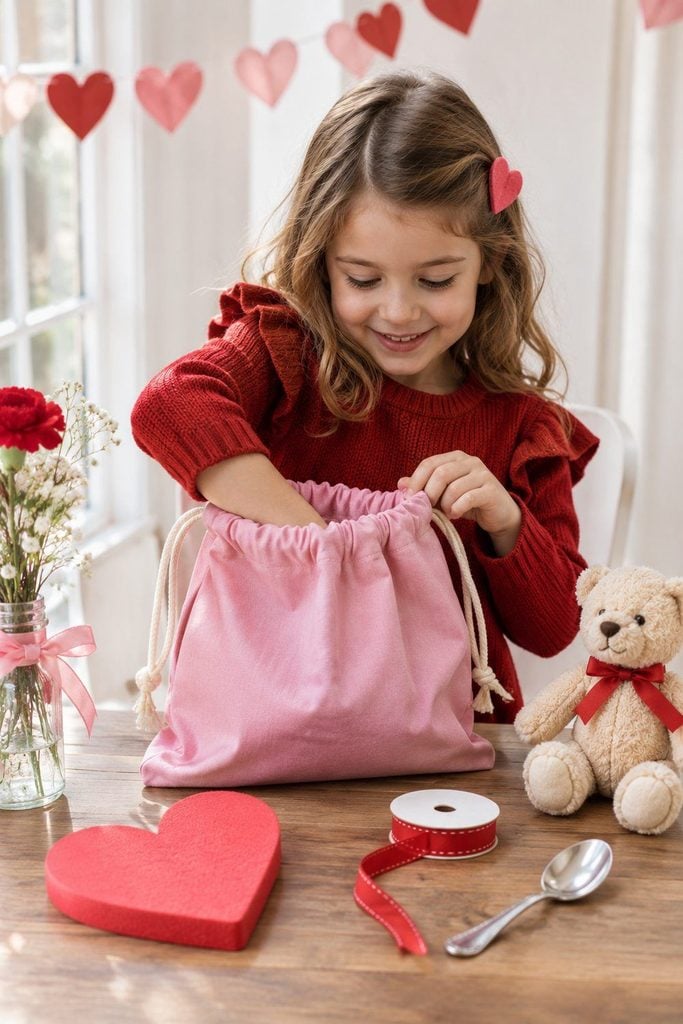
Kids become detectives as they identify familiar objects using touch.
You’ll need: An opaque drawstring bag, a large foam heart, a ribbon spool, a spoon, and a small plush toy.
How to play: Place one object in the bag. A child feels it without looking and describes its shape or texture before making a guess. Reveal the object and swap in another item.
For a group round, let each player feel the same item and write or draw their guess before you reveal it.
21. Heart Target Toss
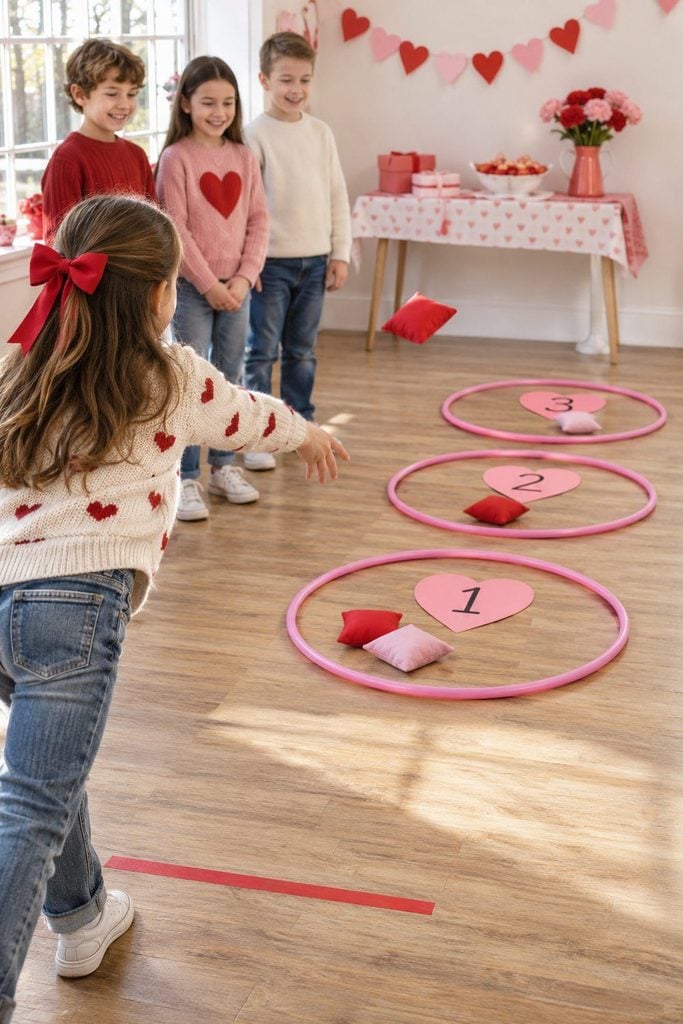
Different-sized targets let you adjust the challenge for mixed ages.
You’ll need: Hula hoops, paper hearts, and beanbags.
How to play: Place three hoops on the floor at different distances and put a paper heart inside each. Label them one, two, and three points. Players toss three beanbags and add up the points for bags that land inside a hoop.
Let younger children use a closer throwing line. For a cooperative game, give the group a combined target score to reach.
22. Valentine Color Dash
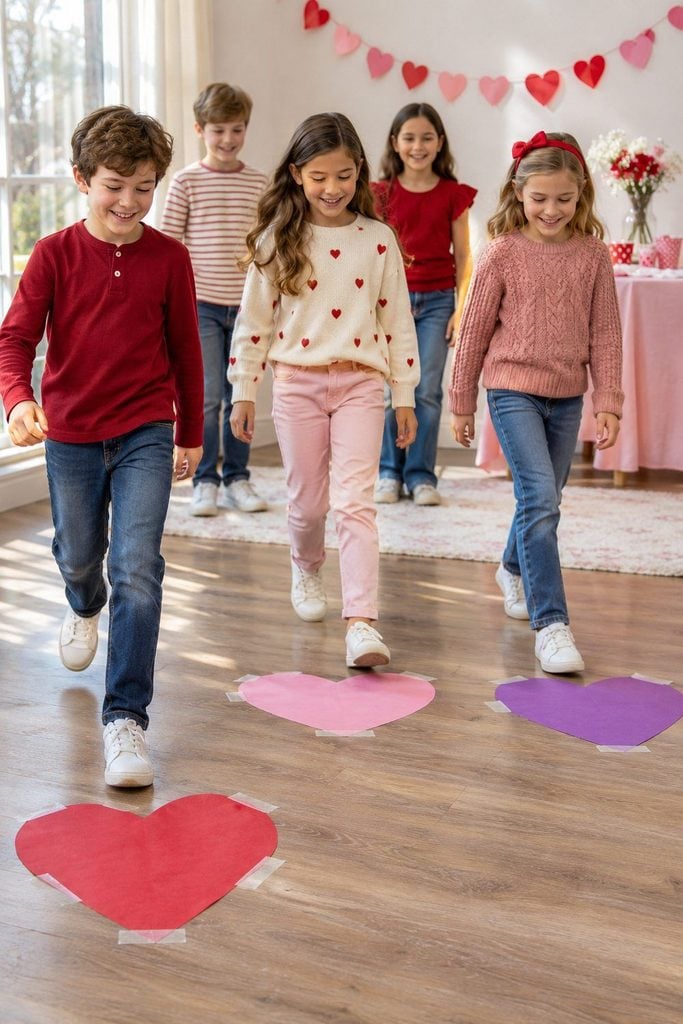
This listening game adds movement without needing a large obstacle course.
You’ll need: Colored floor spots or securely taped paper hearts.
How to play: Set out several red, pink, purple, and white spots. Call a color, and have kids walk to a matching spot. Several children can gather near the same color; nobody needs to squeeze onto one marker.
Add directions such as “find purple with tiptoe steps” or “wave as you walk to red.” Use symbols alongside colors so children can identify the targets in more than one way.
23. Valentine Word Scramble
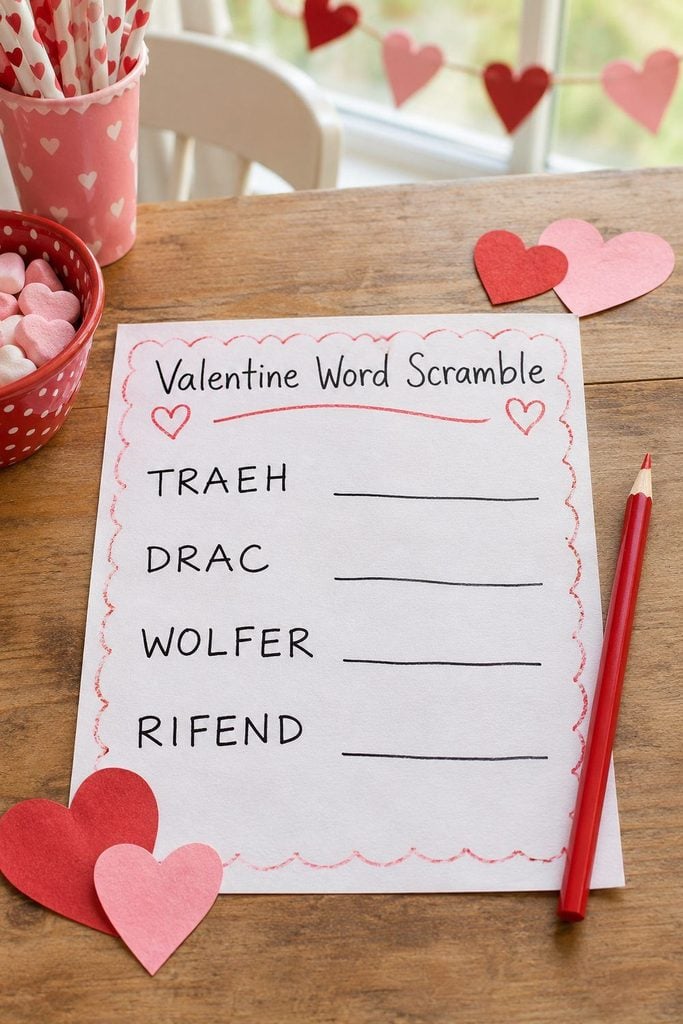
Give older kids a puzzle challenge while the next activity gets ready.
You’ll need: Paper, pencils, and optional Valentine pencils.
How to play: Write scrambled versions of Valentine words and let kids solve them individually or in pairs. Try TRAEH, DRAC, WOLFER, and RIFEND. The answers are HEART, CARD, FLOWER, and FRIEND.
Include a word bank for younger readers. Rather than rewarding only the fastest player, challenge everyone to solve the whole sheet together before a timer ends.
24. Guess the Number of Hearts
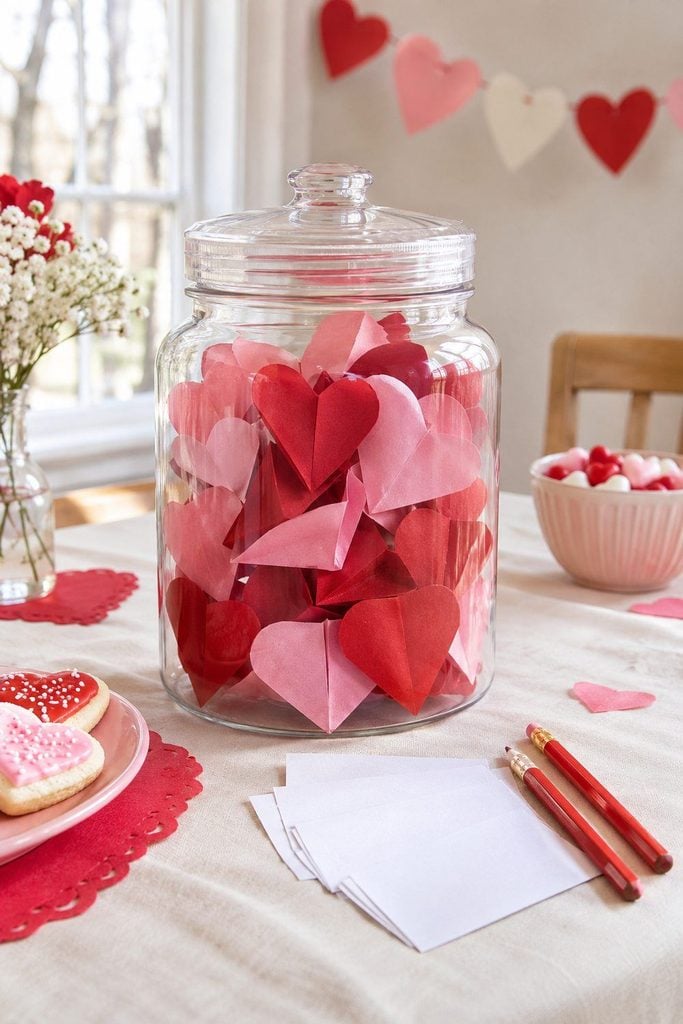
Set this guessing game near the entrance so children can enter as they arrive.
You’ll need: A clear plastic jar, large paper hearts, and guess slips.
How to play: Count the hearts as you fill the jar and keep the answer hidden. Each child writes their name and estimate on a slip. At the end of the party, reveal the total and find the closest guess.
Use a smaller quantity for younger kids. Keep the lid closed during guessing so the contents stay together.
25. Valentine Tic-Tac-Toe Tournament
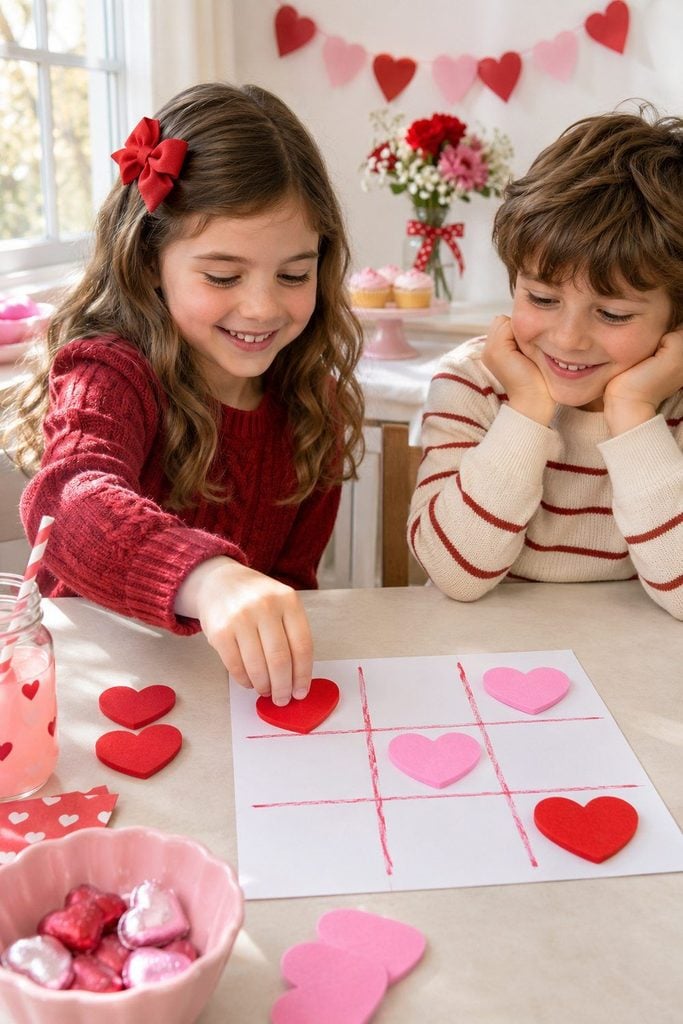
A familiar game becomes festive with a quick change of playing pieces.
You’ll need: Foam heart shapes in two colors and paper game boards.
How to play: Give each pair a board and five hearts in each color. Players take turns placing one heart in an empty square, trying to make a row of three horizontally, vertically, or diagonally.
After each game, switch partners instead of eliminating players. For a floor version, use a painter’s tape grid and large cardstock hearts.
26. Cupid’s Secret Mission
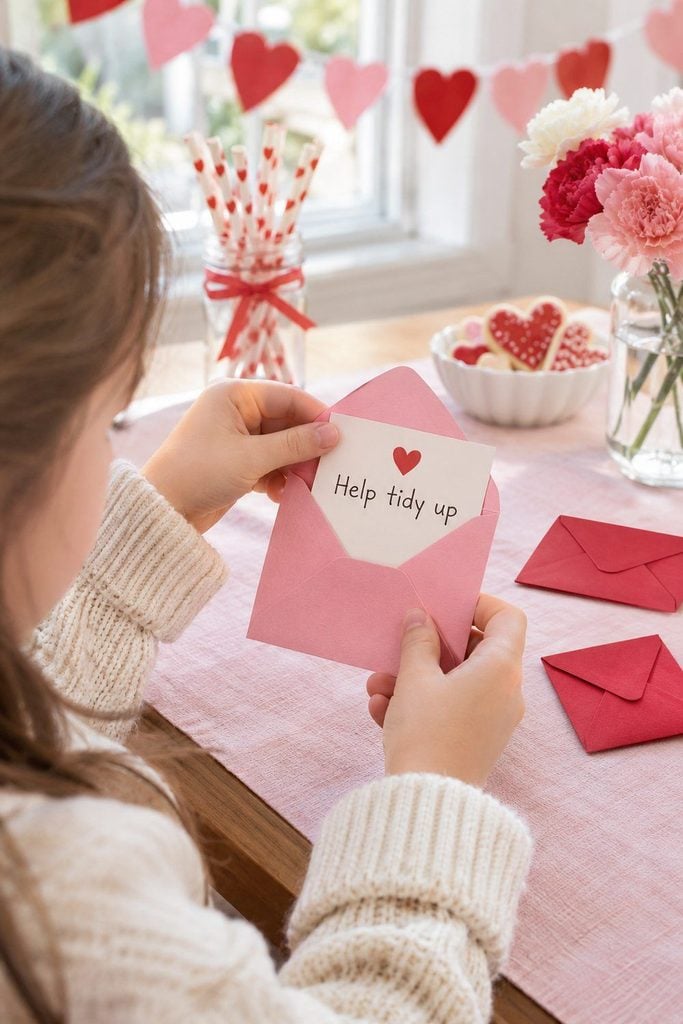
This game makes kindness part of the party without putting anyone on the spot.
You’ll need: Mini envelopes and paper mission cards.
How to play: Give each child a simple mission, such as “invite someone to join your game,” “help put away supplies,” or “thank the person serving snacks.” Children quietly complete their missions during the party.
At the end, let anyone who wants to share describe what they did. Keep the missions practical and optional, with no required hugs or personal compliments.
27. Valentine Pattern Detective
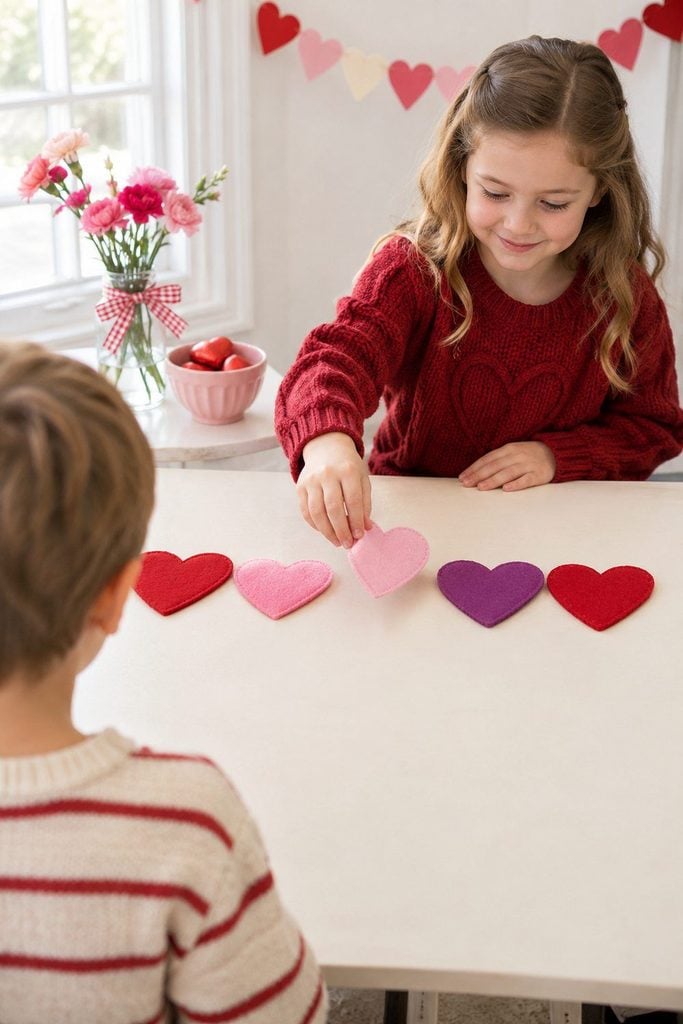
Kids study a pattern, look away, and work out what changed.
You’ll need: Large felt hearts in different colors and sizes.
How to play: Arrange five or six hearts in a row. Give players a few seconds to study them, then ask them to turn around. Change one detail: remove a heart, switch two places, or replace a color. Players turn back and identify the change.
Start with one obvious change. Increase the length of the pattern as the group gets the hang of it.
28. Heart-to-Heart Team Drawing
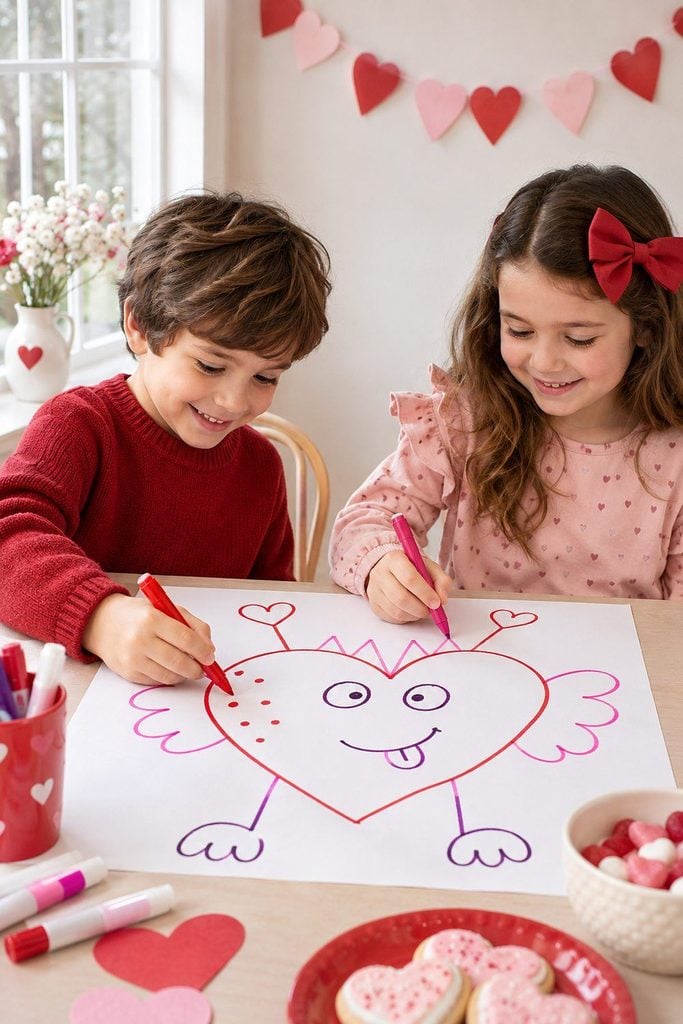
Two artists share one picture, but there’s a catch: they can only add one line at a time.
You’ll need: Washable markers and paper.
How to play: Pair up the kids and give each pair a sheet with a heart drawn in the middle. Partners alternate adding one line or shape to turn it into something new. After two minutes, everyone reveals their creation.
Suggest a silly creature, a house, or a vehicle if teams need ideas. Let the group guess what each drawing became.
29. Valentine Sound Detective
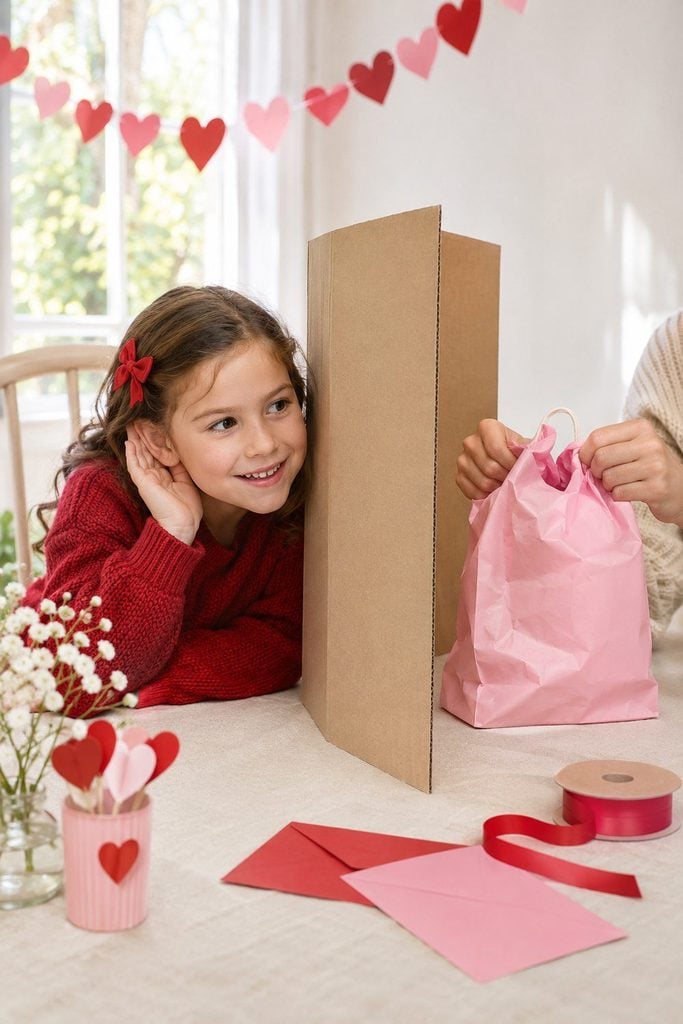
This listening game works well when you need a calmer activity near the end of the party.
You’ll need: An envelope, paper, a ribbon spool, and a small gift bag.
How to play: Show the objects first, then hide them behind a screen or inside a large box. Make one sound at a time, such as crinkling the bag, tearing scrap paper, or opening an envelope. Children guess which object made the sound.
Let kids take turns being the sound maker. Keep the objects gentle and familiar rather than startlingly loud.
30. Build a Bridge for Teddy
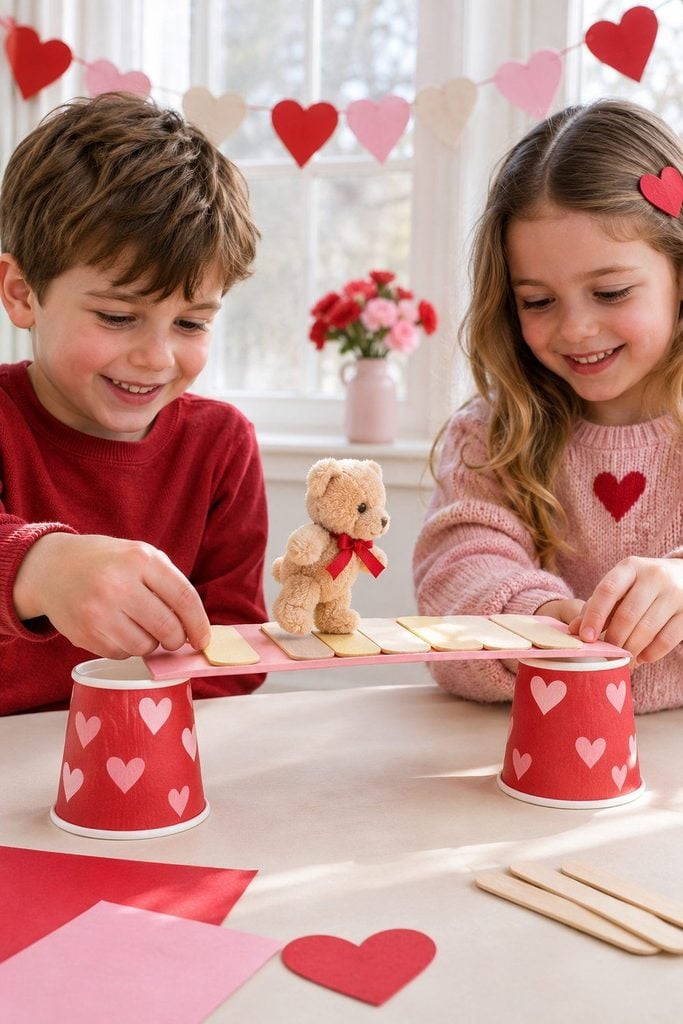
A small teddy bear needs a bridge, and each team has the same building kit.
You’ll need: Jumbo craft sticks, paper cups, masking tape, and a small plush teddy.
How to play: Give each team four cups, ten craft sticks, and a short strip of tape. Challenge them to build a bridge between two cup supports that holds the teddy for five seconds.
Allow five minutes for building and testing. Celebrate different solutions, then let teams borrow ideas and improve their bridges for a second attempt.
31. Valentine Picture Scavenger Hunt
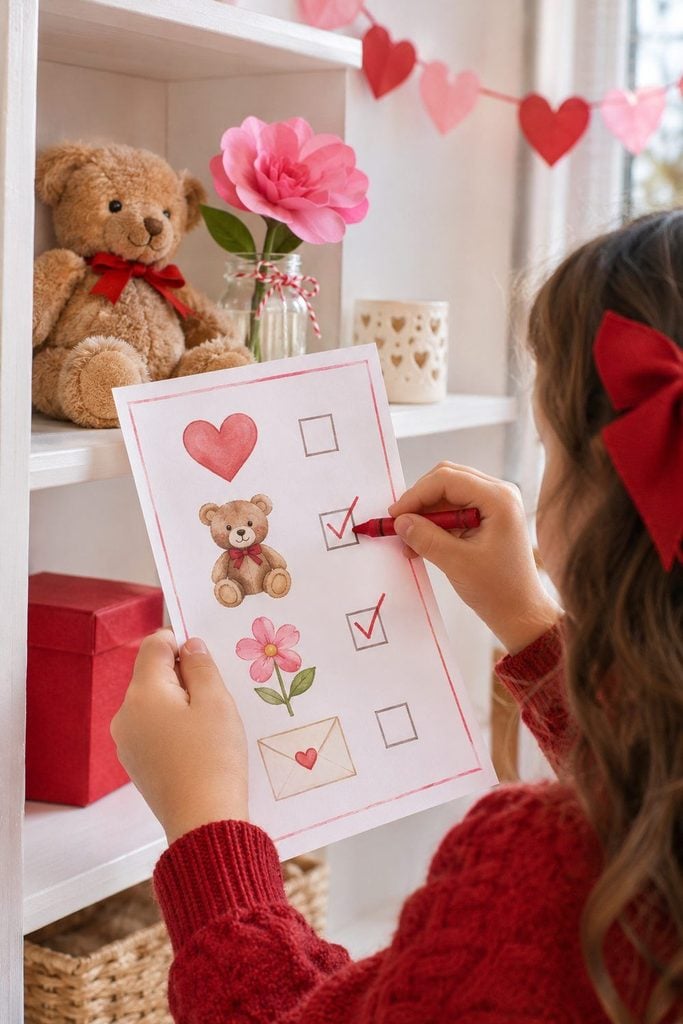
Instead of collecting hidden hearts, kids search for specific Valentine pictures on a checklist.
You’ll need: Paper picture cards, checklists, and optional kids’ clipboards.
How to play: Hang pictures of a teddy bear, envelope, heart, cupcake, flower, and bow around the room. Children find each one and check it off without taking it down.
For older players, put a different number beside each picture. They record the numbers, then arrange them in checklist order to reveal a final code.
32. The Great Valentine Mailbox Mix-Up
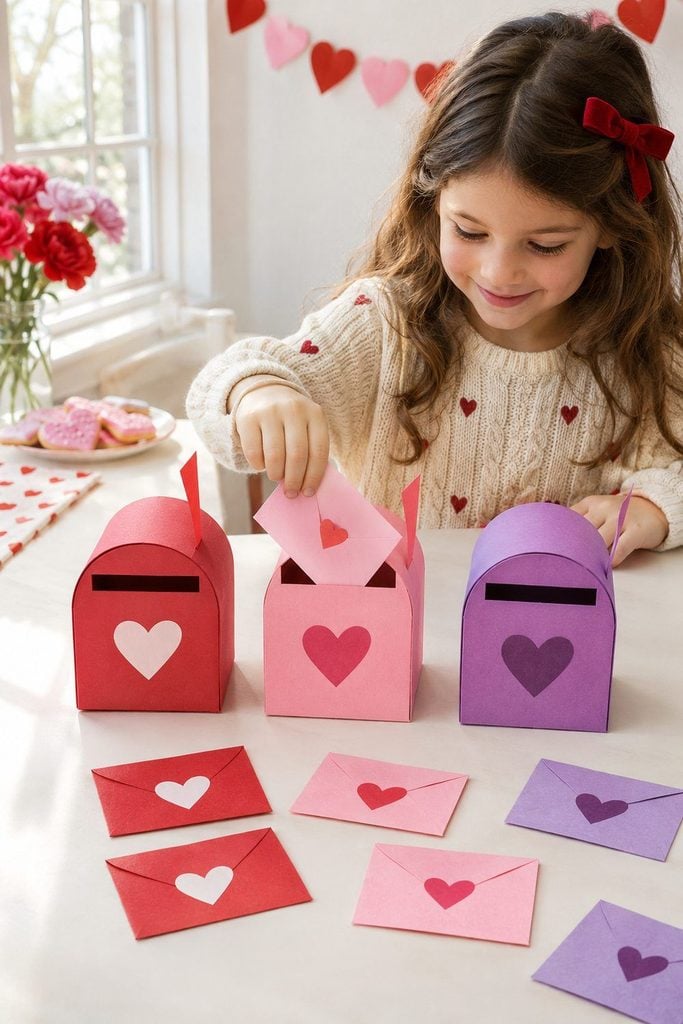
Finish with a sorting game that feels like rescuing a very confused mail delivery.
You’ll need: Four boxes, heart stickers, and paper envelopes.
How to play: Label each mailbox with a different symbol, such as a heart, star, flower, or teddy bear. Mark each envelope with one matching symbol and mix the envelopes in a basket. Kids work together to get every Valentine into the correct mailbox before a two-minute timer ends.
For older children, use written addresses or simple addition problems instead. Keep real classroom Valentines separate so nobody’s actual cards get misplaced.
How to Plan a Valentine’s Day Party Without Overdoing It
For a 30-minute party, choose one arrival game, one movement game, and one quieter group activity. Picture bingo, Valentine Delivery Relay, and Heart-to-Heart Team Drawing make an easy combination.
For a classroom, set up three or four stations and rotate small groups every five to seven minutes. Put the supplies and a short instruction card at each station so helpers can get started quickly.
A few practical details make the games easier to run:
- Demonstrate one turn first. Kids understand a quick example faster than a long explanation.
- Prepare equal supply sets. Put each team’s materials in a separate bag or basket.
- Keep prizes simple. Stickers, pencils, bookmarks, or choosing the next song all work.
- Choose suitable materials. Use large pieces for younger children and keep small craft items away from children who still put objects in their mouths.
- Offer different ways to join. A seated throwing line, a drawing partner, or a scorekeeping role can help more children take part comfortably.
Which Valentine’s Day Games Work Best for Different Ages?
For preschoolers: Start with Cupid Says, Musical Hearts, Feed the Valentine Monster, and Valentine Picture Bingo. Keep rounds short and use picture directions.
For elementary-age kids: Try Heart Puzzle Dash, Valentine Delivery Relay, Valentine Cup Tower Builders, and Build a Bridge for Teddy.
For older kids: Increase the challenge with Valentine Word Scramble, coded scavenger hunts, timed drawing rounds, and more complicated team builds.
For mixed ages: Use cooperative goals and let children choose their difficulty. A younger child can toss from a closer line while an older child plays from farther away.
You don’t need a packed schedule to make Valentine’s Day fun. A few well-chosen games, room for everyone to participate, and time to enjoy the silliness are plenty.