Healthy Bedtime Snacks for Toddlers: Nutritious Ideas for Better Sleep
Quick Answer: The best bedtime snacks for toddlers pair a little protein or healthy fat with complex carbs — think peanut butter toast, cottage cheese with fruit, or a hard-boiled egg — served in a small portion about 30-60 minutes after dinner. Skip anything sugary, and watch for choking hazards like whole nuts or uncut grapes at this age.
Healthy bedtime snacks for toddlers can make a big difference in helping your little one wind down and sleep through the night.
Whether your toddler is going through a growth spurt or just needs a little something in their tummy before bed, choosing the right nighttime snack matters.
The key is to offer options that are filling, calming, and low in sugar—without creating a second dinner.
In this guide, we’ll cover the best nutritious bedtime snacks for toddlers, plus practical tips for making them part of your evening routine.
Heads up: This post may include affiliate links. As an Amazon Associate, I earn from qualifying purchases—at no extra cost to you. Full privacy policy and disclosure here.
Why Healthy Bedtime Snacks for Toddlers Matter
A bedtime snack isn’t just about topping off a hungry belly — for toddlers, it’s also about steadying blood sugar through the night. A snack that combines protein or healthy fat with a complex carbohydrate digests slowly, which helps prevent the early-morning wake-ups that come from an empty stomach around 4 or 5 a.m. That’s different from a purely sugary snack, which spikes blood sugar fast and can actually make sleep more restless as it crashes a couple of hours later.
The other piece is portion and timing. A bedtime snack should be small — a few bites, not a second dinner — and ideally offered 30 to 60 minutes before the wind-down routine starts, so it has time to settle without making your toddler too full to lie down comfortably.
9 Healthy Bedtime Snacks for Toddlers (and Why They Work)
1. Peanut Butter on Whole Grain Toast
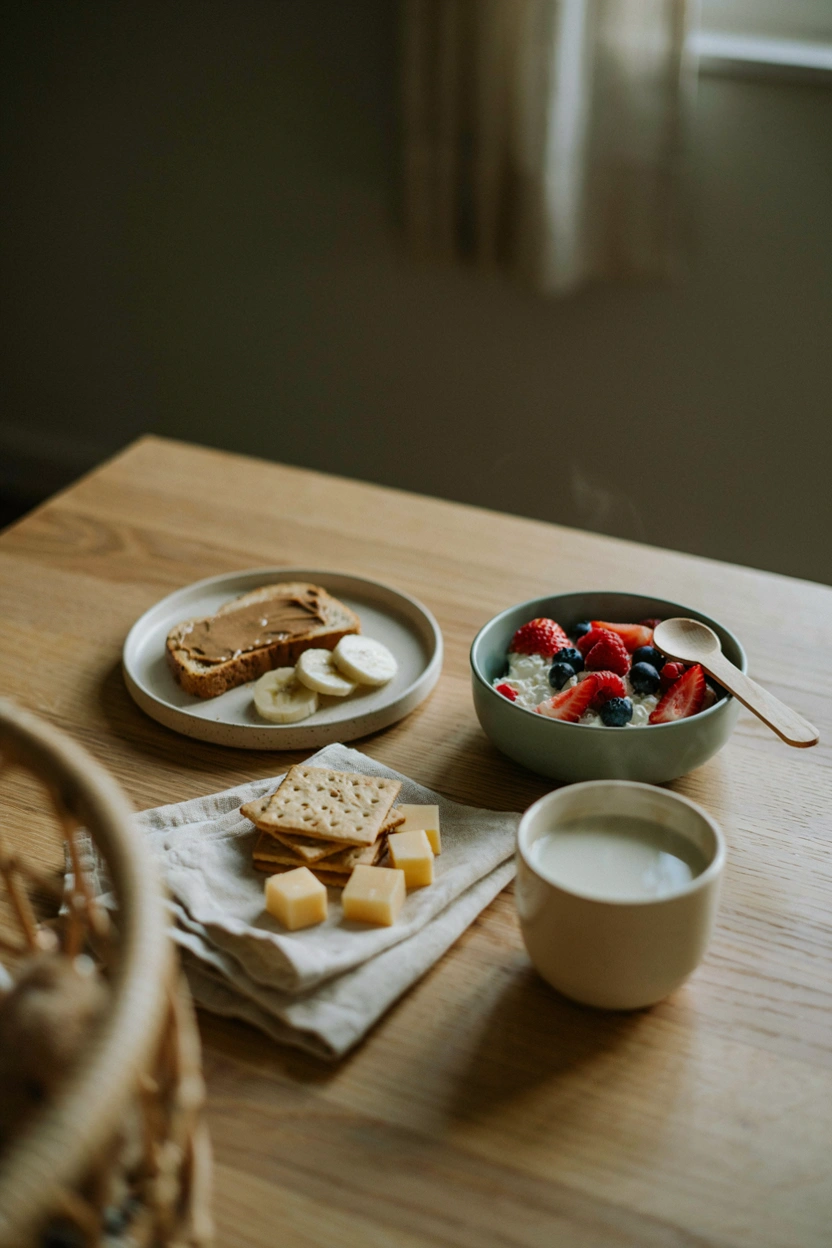
Peanut butter is a great source of healthy fats and protein. Spread a thin layer on a slice of whole grain toast for a mix of complex carbohydrates and protein, which helps maintain blood sugar levels overnight. Cut the toast into small strips rather than leaving it whole — easier for toddlers to manage, and a thin spread reduces the chance of a big sticky glob becoming a choking hazard for kids under 4.
2. Cheese Sticks and Whole Grain Crackers
Cheese sticks paired with whole grain crackers offer a balanced snack with protein and complex carbs. Dairy products like cheese are also rich in calcium and vitamin B, which are essential nutrients for little kids. If your toddler is under 3, slice string cheese lengthwise or into small coins rather than handing it over as one long stick — the rubbery texture makes whole pieces a genuine choking risk. Learn more about the benefits of whole grains for toddlers.
3. Warm Milk with Toast or Crackers
A glass of warm milk is soothing before bed largely because of the ritual itself — a warm drink and a quiet moment signal to your toddler’s body that the day is winding down. Pair it with a few whole grain crackers or a slice of toast so it’s not just a sugary-feeling drink on its own but part of an actual snack with some protein and carbs attached. Keep the portion to half a cup or so; a full glass right before lying down can mean a middle-of-the-night diaper change instead of a full night’s sleep.
4. Cottage Cheese and Fresh Fruit
Cottage cheese is packed with protein and casein specifically, a slow-digesting protein that some research on adults links to steadier overnight blood sugar — though the research is much thinner in toddlers specifically, so think of this as a solid protein source rather than a proven sleep hack. Add some soft, diced fresh fruit — banana, ripe pear, or well-cut strawberries — for natural sweetness without the added sugar found in flavored cottage cheese cups. More on why cottage cheese is a good option for children’s diets.
5. Homemade Granola Bars
Making homemade granola bars lets you control the ingredients so they’re free from the excessive added sugar in most store-bought versions. A simple base of oats (a good source of complex carbs), a mashed banana or nut butter as the binder, and a small amount of ground (not whole) nuts or seeds keeps things toddler-safe while still giving the bar enough fat and protein to be genuinely filling. Skip whole nuts, seeds, and dried fruit pieces in the mix if your toddler is under 4 — grind or chop them small instead.
6. Hard-Cooked Egg
A hard-cooked egg is a perfect small snack packed with protein and genuinely filling for its size. Pair it with a piece of whole grain toast or a few sliced veggies for a more balanced bedtime snack. Always quarter or dice the egg rather than handing over a whole one — a whole hard-boiled egg is a classic choking hazard for toddlers, since it can lodge in the airway if bitten off in a large piece.
7. Mashed Avocado on Whole Grain Crackers
Mashed avocado provides healthy fats and fiber, and the creamy texture makes it easy for toddlers to eat without much chewing. Spread it on whole grain crackers, or for younger toddlers, offer it on a soft cracker or spoon-fed straight, since firmer crackers can be harder to manage for kids still working on molars.
8. Banana with Almond Butter
A banana with a thin layer of almond butter is one of our favorite healthy bedtime snacks for toddlers — it’s fast, needs zero prep beyond slicing, and covers all three bases (carbs from the banana, healthy fat and protein from the almond butter). Slice the banana into coins rather than handing it over whole, and spread the almond butter thin rather than in a thick spoonful, since a big glob of any nut butter is a choking risk for toddlers regardless of how soft it seems.
9. Tart Cherry Juice
Some smaller studies suggest tart cherry juice may modestly support sleep due to its natural melatonin content, though the research is mostly in adults and older kids rather than toddlers specifically. If you want to try it, serve a small amount (2-4 oz) alongside a more substantial snack like whole grain cereal rather than on its own, since juice alone doesn’t offer the protein or fat that actually helps a toddler stay asleep.
Tips for Success
When planning your grocery list, keep a rotating stock of a few of these ingredients on hand — plain yogurt, oats, whole grain crackers, and a couple of cheese and nut butter options — so you’re never scrambling to put a snack together at 7:30 pm.
- Snack Schedules: Establishing a set time for bedtime snacks can help create a predictable routine. It’s usually best to offer snacks about 30 minutes to an hour after dinner ending but not too close to bedtime.
- Portion Sizes: Keep portions small to avoid an overly full stomach, which can interfere with sleep. A good rule of thumb is a few bites — enough to take the edge off hunger, not a second meal.
- Avoid Sugary Snacks: Steer clear of sugary foods and juice drinks that can spike blood sugar levels and disrupt sleep a couple of hours later.
- Watch for Choking Hazards: Toddlers under 4 are still at risk with whole grapes, whole nuts, large chunks of meat or cheese, popcorn, and thick globs of nut butter. Cut, dice, or thin-spread accordingly at every snack, not just bedtime.
- Introduce New Foods Slowly: If your toddler is a picky eater, introduce new foods gradually and alongside their current favorites, and always introduce a new allergen (like a nut butter) earlier in the day rather than right before bed, in case of a reaction.
Bottom Line
Healthy bedtime snacks are an important part of a toddler bedtime routine. They provide nutrients that support a good night’s sleep, and the ritual of a small, predictable snack can genuinely help reduce bedtime pushback for toddlers who resist winding down.
By choosing snacks that offer a balance of protein, healthy fats, and complex carbs — and cutting or thinning anything that could be a choking risk — you can help your toddler enjoy sweet dreams every night.
Always consult with a registered dietitian or pediatrician if you have any concerns or need personalized medical advice for your child’s dietary needs, especially around allergen introduction or any existing feeding difficulties.
Keep a shortlist of go-to healthy bedtime snacks for toddlers posted on the fridge so you’re never scrambling at night.