30 Wellness Activities for Kids by Age (Free Printable)
Quick Answer: Wellness activities for kids range from simple breathing exercises (any age) to guided yoga and mindfulness practices (ages 5+). The best activities are the ones you’ll actually do, so we’ve organized more than 30 ideas by age group and time required to help you find the perfect fit for your family.
Parenting is beautifully chaotic. But sneaking in even five minutes of calm—the kind where your kid actually stops moving and you hear yourself think—can change everything. For them and for you.
The problem is knowing where to start. Most activity lists dump a random mix of yoga, breathing, and meditation into one pile, leaving you to figure out what actually works for a two-year-old versus a seven-year-old. Or how to introduce yoga to a kid who thinks sitting still is punishment.
Wellness activities don’t have to be complicated. They’re not about your kid becoming a zen master. They’re about giving their nervous system a chance to reset, helping them notice their own feelings, and creating pockets of calm in the day when everything feels loud.
Heads up: This post may include affiliate links. As an Amazon Associate, I earn from qualifying purchases—at no extra cost to you. Full privacy policy and disclosure here.
| Age | Best Activities | Time Needed |
|---|---|---|
| 1–3 | Bubble breathing, water play, sensory play | 1–5 min |
| 3–5 | Yoga, gratitude, grounding games | 3–5 min |
| 6–10 | Journaling, meditation, nature walks | 5–15 min |
Why Wellness Activities Matter for Kids (and Your Sanity)
When kids practice simple wellness activities—even just breathing exercises or five minutes of stretching—their nervous systems get a chance to downshift. Many kids today experience constant stimulation from busy schedules, screens, extracurricular activities, and everyday life.
What does that look like in real life? A kid who’s overstimulated might seem hyperactive, clingy, anxious, aggressive, or unable to focus. They might have trouble sleeping or emotional meltdowns that seem to come out of nowhere. None of this is character flaws. Their system is just flooded.
Wellness activities work because they activate what’s called the parasympathetic nervous system—the one that says relax, it’s safe instead of everything’s a threat. Research from the American Academy of Pediatrics shows that mindfulness practices can help children build resilience, reduce stress, and strengthen emotional regulation. The National Center for Complementary and Integrative Health also notes that mindful breathing and meditation can support stress management and overall mental wellness.
The benefits show up everywhere: better focus at school, easier bedtime transitions, fewer meltdowns, less anxiety, and—this part is huge—more emotional awareness. Kids who practice these emotional regulation activities start noticing their own feelings instead of just exploding. Since quality sleep also plays a major role in emotional wellness, don’t miss these tips on how sleep affects children’s emotional regulation.
There’s another benefit for parents too: these quiet moments often give you a chance to reset alongside your child, making the rest of the day feel a little easier.
Wellness Activities for Toddlers (Ages 1–3)
Toddlers have attention spans of about 90 seconds. This means their wellness activities need to be short, sensory, and frankly, fun. They’re not going to sit for guided meditation. But they will copy you doing stretches, move to music, or try deep breathing if you make it a game.

Breathing and Body Awareness for Toddlers
Bubble Breathing: Pretend to blow bubbles. Slow, deep breaths as they watch you blow, then they copy. This naturally slows down their breathing without them knowing they’re doing “breathing exercises.” One minute, ages 12 months+. If your toddler has endless energy, you’ll also love these calming activities for high-energy toddlers.
Teddy Breathing: Lay a stuffed animal on their belly. Breathe slowly and watch the teddy go up and down. “Teddy is sleeping. Let’s help teddy sleep.” They’ll naturally slow their breath. Two minutes, ages 18 months+.
Starfish Stretches: Lay down and stretch out like a starfish. Have them copy. Wiggle your toes, shake your fingers, then relax. Very silly, very effective. Two minutes, ages 18 months+.
Sensory and Movement Activities
Scarves and Streamers: Give them lightweight scarves or streamers to move around slowly. Dance softly, wave them in the air, or drag them on the ground. The movement is calming and the visual tracking settles their nervous system. Three to five minutes, ages 12 months+.
Water Play (Calm Version): Filling and pouring water in the bath or a shallow bin is deeply calming for toddlers. No rushing, just sensory exploration. Five to ten minutes, ages 18 months+.
Texture Exploration: Soft blankets, velvet cloth, soft brushes, or a feather. Let them touch and feel. “Soft, soft, soft.” The tactile input naturally supports body awareness and self-regulation. Five minutes, ages 12 months+. You can build on these skills with these fun body awareness activities for kids.
Music and Dance for Calm
Slow Dancing: Hold them or sit together and sway to slow music. Classical, lullabies, or any gentle song works. The rhythm and closeness together hit the reset button. Three to five minutes, ages 12 months+.
Instrument Exploration: Soft maracas, bells, or a xylophone. Slow, gentle sounds. Let them make noise without pressure to be musical. Two to three minutes, ages 18 months+.
Singing Together: Any song. Nursery rhymes, lullabies, or made-up songs about what they’re doing. The vibration of your voice while they’re close to you is calming. Five minutes, any age.
Wellness Activities for Preschoolers (Ages 3–5)
Preschoolers can sit for slightly longer (three to five minutes) and they start understanding simple instructions. They’re also mimics—they’ll copy your yoga poses even if they don’t understand yoga. This age group responds well to activities with a little structure and a lot of imagination.
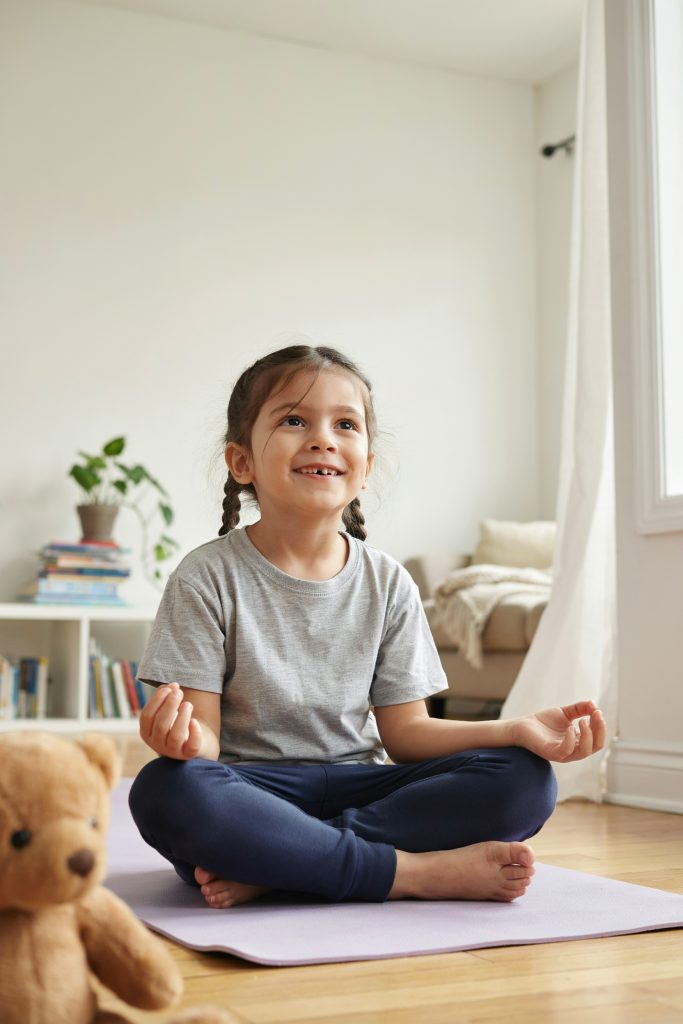
Guided Mindfulness and Breathing
Color Breathing: “Breathe in the calm blue color. Breathe out the silly/mad/loud color.” You can pair it with actual colors or just imagine them. Kids love this because it gives their breath a story. Three minutes, ages 3+.
5-4-3-2-1 Grounding Exercise: Name five things you see, four things you can touch, three things you hear, two things you smell, one thing you taste. This brings them into the present moment. Three to five minutes, ages 4+.
Sleepy Breathing: “Breathe in for four counts, hold for four, out for four.” You might simplify it to just slow breathing. Pair it with “imagine you’re getting sleepier and sleepier.” Two to three minutes, ages 3+.
Glitter Jar Calm: Watch a homemade glitter jar (jar of water with glitter and glue) settle. “Watch the sparkles float down. When they’re all calm, your body is calm too.” No instruction needed—just observation. Two to three minutes, ages 3+.
Simple Yoga Poses
Cat and Cow: On hands and knees, arch your back like a stretching cat, then dip your belly down like a cow. Repeat slowly. Kids love this because it’s silly and they understand it immediately. Two minutes, ages 3+.
Tree Pose: Stand on one leg with the other foot pressed against your inner thigh (or however they can manage it). “You’re a strong tree. The wind can blow but you stay standing.” Balance work is calming. One to two minutes, ages 3+.
Child’s Pose: Kneel, fold forward so your forehead touches the ground or your hands, and relax. “You’re a little seed resting.” One to two minutes, ages 3+.
Downward Dog: Hands and feet on the ground, bottom in the air. “You’re a friendly dog saying hello.” Kids find this hilarious and it’s an excellent stretch. One minute, ages 3+.
Gratitude and Emotional Check-Ins
Thankful Thoughts: “Tell me one thing you’re glad about today.” Keep it simple. Even if they say “snack,” that counts. Two minutes, ages 3+.
Feelings Check-In: “How are you feeling in your body right now? Is your belly calm or wiggly? Are your hands happy or frustrated?” This simple activity helps children recognize body cues connected to their emotions while building emotional wellness. Two to three minutes, ages 4+. For more playful ideas, explore these emotional regulation activities for kids.
Three Good Things: At the end of the day, everyone says one good thing that happened. It trains their brain to notice positives. Three minutes, ages 4+.
Wellness Activities for School-Age Kids (Ages 6–10)
School-age kids can hold attention for longer and they start caring about doing things “right.” They’re also more self-conscious, so activities that feel like play (not therapy or meditation) work better. This age group responds well to activities with a purpose they understand.

Mindfulness and Meditation Practices
Body Scan Meditation: Lying down or sitting comfortably, guide them through their body: “Notice your toes. Are they warm or cool? Wiggle them gently. Now notice your feet…” Continue all the way up to their head. Five to seven minutes, ages 6+. You can do this together silently or read it slowly.
Mindful Eating: Eat something small (a raisin, a piece of chocolate, a berry) without talking. Look at it, smell it, taste it slowly. Notice the texture, the flavor, how it changes as you chew. This is one of the most accessible mindfulness practices. Five minutes, ages 6+.
Quiet Sitting: Set a timer for five minutes. Sit together in silence. No phone, no talking, no activity. Just sitting. Sounds easy but it teaches their brain what calm actually feels like. Five to ten minutes, ages 7+.
Worry Stone Practice: Hold a smooth rock or stone. When worries come to mind, say them out loud or think them, then imagine passing them to the stone. “I’m giving my worry to the stone.” This externalized worry is helpful for anxious kids. Five minutes, ages 6+.
Yoga and Stretching Routines
Sun Salutation (Simplified): A sequence kids can learn and repeat: start standing, raise arms up, fold forward, step or jump back to plank, lower to the ground, push up, downward dog, step forward, and stand. One complete sequence takes two to three minutes. Ages 6+.
Bedtime Yoga Sequence: Child’s pose, forward fold, reclined twist, legs-up-the-wall pose (lie on your back with legs up a wall or on a chair). Each pose for one to two minutes. Perfect before sleep. Ten minutes total, ages 5+.
Stretching Break: Stand and reach both arms up high and stretch. Side stretch left, side stretch right. Forward fold. Back bend (hands behind back, gentle). Gentle neck rolls. Two to three minutes, anytime they need a reset, ages 6+.
Creative Wellness Activities
Feelings Journaling: No pressure to write perfectly. Just doodles, words, or sentences about how they’re feeling. “Draw what today felt like,” or “Write one thing that made you happy.” Journaling encourages positive self-expression, emotional awareness, and healthy coping skills. Five to ten minutes, ages 6+. Pair this activity with these positive words of affirmation for children to help build confidence and resilience.
Mindfulness Coloring: Provide a coloring page and let them color slowly with no time pressure. The repetitive motion and focus is calming. Ten to fifteen minutes, ages 6+. If your child struggles with frustration, these emotional regulation strategies pair beautifully with coloring activities.
Nature Observation: Go outside and sit quietly. Listen for sounds, watch for movement, smell the air. No talking required. Spending time outdoors is one of the easiest ways to support mental wellness for children while encouraging mindfulness. Ten to twenty minutes, ages 6+. Here are even more benefits of outdoor play for kids.
Gratitude Jar: Write down things they’re grateful for throughout the week (help them spell if needed) and drop them in a jar. Read them together on a hard day. Ongoing, ages 6+.
No-Prep Wellness Activities (For the Busy Days)
These activities require zero setup, zero materials, and zero planning. They work right now, wherever you are.
| Activity | Time Required | Best For |
|---|---|---|
| Slow breathing (counting breaths) | 2–3 minutes | Any age; quick reset |
| Walking meditation (slow, focused walking) | 5–10 minutes | Ages 5+; getting outside without rushing |
| Progressive muscle relaxation (tense and release each body part) | 5 minutes | Ages 6+; before bed or after school |
| Starfish pose (lie down stretched out) | 2–5 minutes | All ages; when they need to decompress |
| Cloud watching (lie down, watch clouds slowly) | 5–10 minutes | Ages 4+; outdoor calm |
| Humming or singing (any tune, slow) | 3–5 minutes | All ages; regulates the nervous system |
| Dancing to slow music | 3–5 minutes | All ages; joyful movement |
| Talking about feelings | 5 minutes | Ages 3+; emotional connection |
How to Actually Get Your Kid to Do These Activities
You can have the world’s best activity list, but if your kid refuses to try it, none of it matters. Resistance is normal. Here’s how to work with it instead of against it.
Make It Routine, Not Optional
The moment something feels new or forced, kids push back. But if it’s just part of the day (like brushing teeth), they stop fighting it. Try anchoring one wellness activity to something you already do: after breakfast, after school pickup, before bed, or before screen time.
Say it matter-of-factly: “After lunch we do stretching” instead of “Do you want to try yoga?” Framing it as part of the routine removes the negotiation.
After a week or two of consistent practice, kids stop resisting. Their body remembers the calm it gets from the activity and they start asking for it. If you’re looking for even more practical parenting strategies that reduce power struggles while building cooperation, I highly recommend Positive Parenting Solutions. Their step-by-step approach pairs beautifully with these wellness activities and positive parenting techniques.
Frame It as Play, Not Medicine
The minute you say “This will help you calm down,” some kids (especially anxious or strong-willed ones) will reject it immediately. They don’t want to be fixed. They want to have fun.
Instead: “Let’s pretend we’re cats stretching” works. “Breathe like you’re blowing bubbles” works. “Watch the sparkles settle like you’re watching snow” works. Activities with a game or imagination attached don’t feel like therapy.
Your energy matters too. If you’re tense or frustrated while doing the activity, they’ll pick that up. Try it alone first. Actually enjoy it. Then invite them in.
Start Small and Build Slowly
Trying a ten-minute meditation sequence on a resistant kid is setting everyone up to fail. Start with 60 seconds of one simple activity. That’s it. One minute of bubble breathing. Or 90 seconds of stretching.
Once that feels normal, add a second activity or extend the time. This takes patience. You’re building a foundation, not forcing an Olympic athlete.
Some kids warm up after watching you do the activity for a few days with zero pressure. They see you enjoying it, and their curiosity does the work for you. If your child is especially energetic or spirited, you’ll appreciate these practical tips for parenting a high-spirited child.
Quick-Start Implementation Cards (Printable)
We’ve created a printable set of activity cards—one card per activity—with the age range, time needed, and exactly three steps to do it. You can print them, cut them out, and keep them in your kitchen or car. When you need a calm-down activity, just pull a card.
How to use them:
- Print the card set: Download and print the full card set (link below). One card per activity, organized by age.
- Keep them visible: Put them in a basket on the kitchen table, tape them to the fridge, or keep them in your bag for car rides and waiting rooms.
- Grab as needed: When your kid is overwhelmed or you both need a reset, pull a card. No thinking required.
Download your free Wellness Activity Quick-Start Cards:
Each card includes the activity name, recommended age range, how long it takes, three simple steps to do it, key benefits, and one tip for kids who resist.
Sample card format:
Activity: Bubble Breathing
Ages: 12 months+
Time: 1 minute
Steps: 1. Make slow blowing motions like you’re blowing bubbles. 2. Have them watch or copy. 3. Breathe together for one minute.
Why it works: Naturally slows breathing, activates calm.
If they resist: Blow actual bubbles first. Let them chase and pop them. Then add the breathing.
FAQ: Wellness Activities for Kids
How long should wellness activities for kids last?
Toddlers: One to three minutes. Preschoolers: Three to five minutes. School-age kids: Five to fifteen minutes. The rule is simple—end when they’re still interested or before they get frustrated. It’s better to do two minutes every day than to force ten minutes once a week. Consistency matters way more than length.
What if my kid refuses to do wellness activities?
Don’t force it. Start by doing the activity yourself—alone, without pressure. Breathe slowly, stretch, sit quietly. Let them watch. Many kids will join in after a few days of observation. If not, offer a choice: “Do you want to do stretching or breathing today?” Giving control back to them reduces resistance. You might also try pairing the activity with something they love (wellness activity after their favorite snack, for example).
Do kids need special training to do yoga or meditation?
Absolutely not. Kids understand simple concepts like “breathe in calm, breathe out worry” without any special instruction. They can copy yoga poses from watching you. Meditation for kids is just sitting quietly, which anyone can do. You don’t need a certification or experience. Keep instructions simple, playful, and short. Your willingness to try is enough.
What’s the best activity for an anxious kid?
Grounding exercises (the 5-4-3-2-1 activity), body scans, and breathing exercises are particularly helpful for anxious kids because they bring awareness back to the present moment instead of the worry. Avoid high-pressure activities. Pair them with reassurance: “Your body is safe.” For severe anxiety, these activities can support professional help but shouldn’t replace it.
Can wellness activities help kids sleep?
Yes. Yoga stretches, breathing exercises, and body scans before bed signal to their nervous system that it’s time to wind down. Progressive muscle relaxation is particularly effective. Try a five-to-ten-minute bedtime yoga sequence or slow breathing 15–20 minutes before sleep. Consistency matters—doing this the same time every night works better than random attempts.
How often should kids practice wellness activities?
Ideally daily, even if just for a few minutes. Think of it like brushing teeth—it’s maintenance for their nervous system, not a treatment. If daily feels unrealistic, three times a week will still help. More frequent practice = faster results.
Are there activities for hyperactive kids?
Yes. Hyperactive kids often need movement-based wellness activities, not stillness. Try dancing, stretching sequences, walking meditation, or activities that combine movement with calm like slow yoga. High-energy kids may need their movement *before* quieter activities work. Tire them out gently, then try breathing or sitting. You can also find more practical ideas in this guide to helping kids develop self-regulation skills.
Can yoga or breathing help with focusing at school?
Yes. A five-minute breathing or stretching break before homework or schoolwork can significantly improve focus. The reset allows their brain to shift modes. Morning yoga before school can help too—it sets children up for a calmer, more focused day. The American Academy of Pediatrics notes that mindfulness can support children’s emotional health, resilience, and attention skills.
What if my kid is too young for sitting still?
Don’t wait for sitting still. Toddlers benefit from sensory activities, movement, music, and rhythm. Body awareness starts early. Your one-year-old doing scarves play is getting as much nervous system regulation as a five-year-old doing stretches.
Do meditation apps work for kids?
Some do, but they work better as a supplement to activities you do together. While apps can introduce mindfulness, the biggest benefits come from practicing calming activities together as a family. Shared experiences strengthen connection while teaching lifelong self-regulation skills.
Can wellness activities reduce tantrums?
They can help reduce the frequency and intensity of tantrums by teaching children healthy ways to calm their bodies before emotions become overwhelming. While they won’t eliminate every meltdown, regular practice builds emotional regulation skills over time.
What is the best time of day for wellness activities?
Many families find success after school, before homework, or as part of the bedtime routine. The best time is the one you can stick with consistently.
Key Takeaways
- Wellness activities aren’t about making your kid a zen master. They’re about giving their nervous system a reset button that actually works.
- Age matters. A two-minute activity for a toddler is the right amount. Forcing a ten-minute sequence is what fails.
- Consistency beats perfection. Five minutes every day is better than an hour once a month.
- Your energy sets the tone. If you do the activity with genuine calm and presence, they’ll pick that up. If you’re tense, so will they.
- The printable cards are your friend. When you’re overwhelmed and your kid is dysregulated, pulling a simple card removes decision fatigue.
- Start small. One minute of one activity. That’s enough to begin.
Ready to Start? Here’s What to Do Right Now
Download the printable wellness activity cards. Pick one activity for tomorrow. Do it for just one minute (seriously—that’s enough to start building healthy habits). As these simple wellness activities for kids become part of your family’s routine, you’ll likely notice calmer transitions, stronger emotional regulation, and more meaningful moments together.
Wellness doesn’t require a perfect routine or special equipment. It simply requires a few intentional moments each day. Whether you begin with bubble breathing, a quick stretch, or a quiet walk outside, these simple mindfulness activities for kids can help build resilience, emotional wellness, and healthy coping skills that last a lifetime.
Related reading: Ways to Help a Child Regulate Their Emotions, Calm Down Corner Ideas for Kids, and 5 Steps to a Peaceful Toddler Bedtime.