How to Help Your Shy Child Gain Confidence (Without Forcing Them)
Quick Answer: Build a shy child’s confidence by validating their feelings first, then giving them small, low-pressure chances to practice social skills — like ordering their own food or greeting one familiar adult. Avoid labeling them “shy” out loud, and let confidence build gradually through repeated small wins, not forced exposure.
You watch another kid run up and introduce themselves at the park while yours hides behind your leg, and it’s hard not to wonder if you did something wrong.
Shyness isn’t a flaw to fix. It’s a temperament, and for most kids, confidence grows through small, low-pressure practice — not being pushed into the spotlight.
How you respond in these moments matters. Push too hard, and you can accidentally teach your child that their discomfort doesn’t matter. Protect too much, and they never get the practice they need to feel steadier next time.
This guide walks you through how to tell shyness apart from anxiety, what to say instead of “don’t be shy,” and age-specific ways to help your child build real, lasting confidence.
Heads up: This post may include affiliate links. As an Amazon Associate, I earn from qualifying purchases—at no extra cost to you. Full privacy policy and disclosure here.
Is My Child Shy, Introverted, or Anxious?
These three get lumped together constantly, but they’re not the same thing — and knowing which one you’re dealing with changes how you respond.
| Trait | What It Looks Like | How They Respond to Practice |
|---|---|---|
| Shy | Hesitant with new people, warms up after a few minutes, may cling or go quiet at first | Gets more comfortable with repeated, low-pressure exposure |
| Introverted | Comfortable socially but drained by too much stimulation, prefers smaller groups | Doesn’t need “fixing” — needs recovery time, not more exposure |
| Anxious | Physical distress (stomachaches, meltdowns), avoidance that doesn’t ease with familiarity, sometimes can’t speak at all in certain settings | Often gets worse with forced exposure without support |
Signs It’s Just a Shy Temperament
A shy child usually warms up within the same visit. They might stand back at first, then join in once they’ve had a chance to watch. They’re uncomfortable, not distressed — and that discomfort fades with familiarity.
Signs It Might Be Social Anxiety
Watch for physical symptoms like stomachaches before school, complete silence in specific settings (like the classroom) despite chatting freely at home, or distress that doesn’t ease even after repeated exposure to the same people or places (Source: American Academy of Pediatrics). If your child goes silent in one environment but is completely themselves in another, that pattern is worth paying attention to — we’ll cover when to loop in a professional later in this guide.
Why Is My Child So Shy?
Shyness has a real, biological piece to it. Some kids are simply born with a more cautious temperament — researchers call it “behavioral inhibition,” and it shows up as early as infancy in how a baby reacts to new sounds, faces, or environments (Source: NIH).
Environment plays a role too, but it’s not about doing something wrong. A cautious kid paired with a lot of new experiences, moves, or changes may lean more heavily into shy behavior simply because their nervous system is working overtime to keep up.
What matters most isn’t the cause — it’s how you respond. A child who feels accepted for who they are, rather than pushed to be someone else, tends to build confidence faster than one who feels like their temperament is a problem.
What NOT to Say to a Shy Child
Most of us have said at least one of these without thinking twice. The good news: a small shift in language makes a real difference.
| Say This | Not This |
|---|---|
| “You’re taking your time to warm up, and that’s okay.” | “Don’t be shy!” |
| “You can wave whenever you’re ready.” | “Say hi to Grandma!” |
| “It’s okay to watch first if that helps.” | “Why won’t you talk to anyone?” |
| “I noticed you tried something new today.” | “Sorry, she’s just shy.” |
The common thread: avoid labeling your child as “shy” out loud, especially in front of others. Kids often live up to labels they hear repeated about themselves, so describing the behavior (“taking your time”) works better than naming an identity (“being shy”).
Forced greetings and apologies on your child’s behalf send the message that their discomfort is inconvenient. Instead, model the greeting yourself and let them join in when they’re ready.
How to Help Your Shy Child Gain Confidence, By Age
What works for a toddler won’t land the same way with a tween, so here’s how to adjust your approach as your child grows.
| Age Group | What to Try |
|---|---|
| Toddlers & Preschoolers (2–5) | Stay physically close, narrate what’s happening, let them observe before joining |
| Early Elementary (6–8) | Practice specific scripts at home, give them small jobs that require speaking (ordering food) |
| Tweens (9–12) | Involve them in the plan, respect their need for control, focus on one skill at a time |
Toddlers & Preschoolers (2–5)
At this age, your presence is the confidence tool. Stay nearby during new situations, and narrate what’s happening in a calm voice: “That’s your cousin Ben. He’s building with blocks. You can watch for a bit.”
Let them stay in your lap or behind your leg as long as they need to. Pushing a toddler to perform a greeting rarely works — but giving them a front-row seat to watch, with you as their safe base, builds the comfort that leads to joining in on their own timeline.
Early Elementary (6–8)
Kids this age can practice specific phrases ahead of time. Try role-playing at home: “What could you say if someone asks your name at recess?” Keep it short and low-pressure — one or two lines is enough.
Give them small, real-world speaking jobs, like ordering their own food at a restaurant or answering the door for a delivery. These low-stakes moments build the habit of using their voice without the weight of a big social event attached. Naming feelings out loud also helps at this stage — a resource like this feelings activity book can give your child the words to describe what nervousness actually feels like, which makes it easier to talk through before a stressful moment instead of shutting down.
Tweens (9–12)
Tweens want control, so involve them in the plan. Ask what would make an upcoming event easier — arriving a few minutes early, texting a friend ahead of time, or having an exit plan if they need a break.
Focus on one skill at a time rather than a full personality overhaul. If speaking up in class is the goal this month, don’t also pile on expectations about parties. Small, specific wins build more confidence than vague pressure to “come out of your shell.”
Confidence-Building Activities to Practice at Home
Confidence grows through repetition, not big moments. These activities give your child low-pressure practice in a place where they already feel safe.
- Practice ordering: Let your child order their own meal at a restaurant or drive-through, with you standing close by as backup.
- Rehearse greetings: Role-play meeting someone new before a playdate or family gathering, using simple, predictable scripts.
- Give them a job with a voice component: Answering the phone, greeting a delivery person, or asking a store employee where something is.
- Read books with shy characters: Stories where a character feels nervous and works through it help kids see their own experience reflected back.
- Celebrate effort over outcome: Notice when they tried something new, even if it didn’t go perfectly — the trying is the win.
Some kids build confidence best through structured responsibility rather than social scripts alone. Giving a shy child ownership over a task — like a daily chore they’re fully in charge of — teaches them they’re capable, and that sense of capability tends to carry over into social situations too. A tool like a magnetic responsibility chart can make that ownership visible and concrete for younger kids who respond well to seeing their own progress.
To keep track of progress without turning it into pressure, try a simple weekly tracker where your child (or you) jots down one small win — even something as small as waving at a neighbor counts. Progress in shy kids is rarely linear, and having a record helps you both notice growth that’s easy to miss day to day.
Helping Your Shy Child at School and Social Events
School and social gatherings tend to be where shyness shows up the most — and where parents feel the least in control.
Preparing for the First Day of School
Visit the classroom ahead of time if possible, and talk through what the day will look like in simple, concrete terms. Knowing what to expect reduces the unknown, which is often the biggest driver of first-day anxiety for a cautious kid.
A quiet transition period after school also helps. Many shy and introverted kids spend so much energy managing social interaction all day that they need downtime to reset before they can talk about how it went. Building in quiet time after school gives them space to recover instead of piling more demands on an already-full tank.
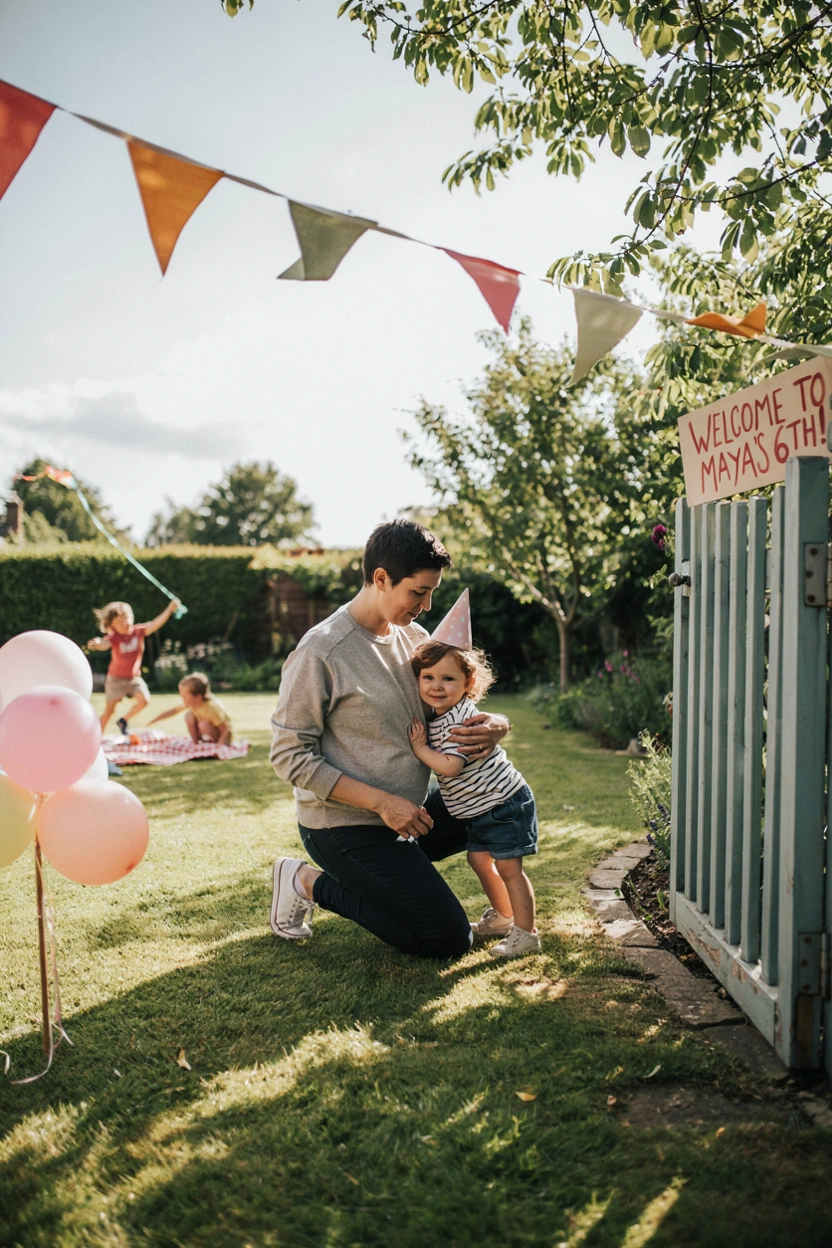
Surviving Birthday Parties and Playdates
Arrive a few minutes early so your child can settle into the space before it fills with people — walking into a room already full of activity is much harder than walking into an empty one and watching it fill up.
Give them permission to take breaks. A shy child who needs to step away from the noise for five minutes isn’t being antisocial — they’re regulating. Scoping out a quiet spot ahead of time, or setting up a calm-down corner at home for the comedown afterward, gives them a release valve so overwhelm doesn’t build into a full meltdown by the end of the event.
When to Talk to a Professional About Shyness
Most shyness is a normal temperament trait, not a disorder — but there are patterns worth flagging to your pediatrician.
Selective mutism is an anxiety disorder where a child is physically unable to speak in specific settings, despite talking normally elsewhere, and typically requires professional support to address (Source: American Academy of Pediatrics).
“Is It Time to Talk to Someone?” Checklist
- Silence in one setting (like school) lasting a month or more
- Physical symptoms — stomachaches, nausea, panic — before social situations
- Distress that doesn’t ease even with repeated, gentle exposure
- Shyness interfering with friendships, learning, or daily functioning
- Sudden onset of shy or withdrawn behavior after a specific event
If your child checks two or more of these boxes, it’s worth a conversation with their pediatrician (Source: CDC). This doesn’t mean something is wrong with your child — it just means they may need more support than home strategies alone can provide.
Sometimes shyness shows up alongside big emotional reactions when a child feels cornered or overwhelmed — a quiet kid who suddenly melts down before a party isn’t being dramatic, they’re overloaded. If that pattern sounds familiar, a book on explosive behavior in kids can offer a helpful framework for understanding what’s happening underneath the meltdown and how to respond in the moment.
It’s also worth knowing that shyness and a strong-willed streak aren’t mutually exclusive — plenty of kids are cautious with strangers but assertive at home. If that’s your child, resources like Parenting the Strong-Willed Child or The Strong-Willed Child can help you navigate that combination without mistaking determination for defiance.
Frequently Asked Questions
Does shyness go away with age?
For most kids, yes — shyness softens as social skills and familiarity grow, especially with gentle practice. Some children stay naturally reserved into adulthood, and that’s a personality trait, not a problem to fix.
Is shyness genetic?
Temperament research suggests shyness has a hereditary component, but environment and parenting response shape how much it affects a child’s daily life and confidence.
Should I force my shy child to socialize?
No. Forcing interaction usually backfires and increases anxiety. Small, low-pressure exposure with an escape option builds confidence far more effectively than being pushed into the spotlight.
Can a shy child become an extrovert?
Rarely, and that’s not the goal. The goal is a confident shy or introverted child, not a personality transplant — confidence and extroversion aren’t the same thing.
Is it bad to call my child “shy” in front of them?
Labeling can become self-fulfilling. Kids often live up to labels they hear repeated, so it’s better to describe the behavior (“taking your time to warm up”) than the identity.
How do I help my shy toddler around other kids?
Stay physically near them at first, narrate what’s happening, and let them observe before joining play — toddlers build comfort through repeated, low-stakes exposure.
What causes selective mutism?
Selective mutism is an anxiety disorder, not defiance or extreme shyness — a child physically cannot speak in certain settings despite speaking normally elsewhere, and it typically needs professional support.
How do I help my shy child speak up in class?
Practice at home first with low-stakes speaking, like ordering at a restaurant or answering the phone, then coordinate with the teacher on small, private ways to participate before whole-class ones.
What’s the difference between shy and introverted?
Shyness involves discomfort or fear in social situations; introversion is simply a preference for less stimulation and smaller groups — an introverted child can still be socially confident.
My child is fine at home but silent at school — why?
This pattern is common and can range from normal warming-up time to a sign of selective mutism if it persists for a month or more and interferes with participation.
Key Takeaways
- Shyness is a temperament, not a flaw — the goal is confidence, not turning your child into an extrovert.
- Watch for physical distress or silence that doesn’t ease with familiarity — those are signs it may be more than shyness.
- Describe the behavior instead of labeling your child “shy,” especially in front of others.
- Confidence builds through small, repeated, low-pressure practice — not being forced into the spotlight.
- Adjust your approach by age: presence for toddlers, scripts for early elementary, involvement for tweens.
You’re Not Doing Anything Wrong
A cautious kid isn’t a reflection of your parenting — it’s who they are, and that’s okay. Your job isn’t to change their temperament, it’s to help them feel steady enough to move through the world on their own terms.
You’ve got this, even on the days it feels like your child is the only one hiding behind your leg. Small wins add up faster than they feel like they do in the moment.
Try just one low-pressure practice moment this week — ordering their own snack, or rehearsing a simple greeting before your next family visit — and notice how it goes.
You might also love: